








Kinexin Convention Management Expands Global Education Partnership With World Inclusion Congress and IFIP
Partnership discussions focus on positioning India as a long-term host for the World Inclusion Congress
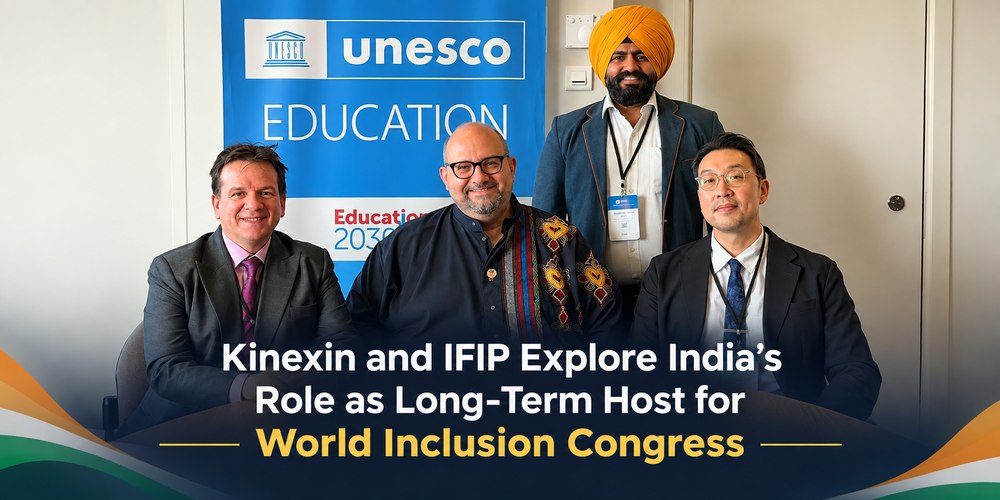
Phil Chung, CEO of Kinexin Convention Management Pvt. Ltd., the operating company of Yashobhoomi (India International Convention & Expo Centre), visited UNESCO Headquarters in Paris from September 9 as part of discussions focused on the future of inclusive education, digital learning and international cooperation.
During the visit, Chung met representatives of the International Forums of Inclusion Practitioners (IFIP), the organisation behind the World Inclusion Congress (WIC) that works in partnership with UNESCO. Discussions examined opportunities to expand the World Inclusion Congress and related international education forums across India and Korea.
The meetings brought together representatives from Kinexin Convention Management and IFIP, including IFIP Senior Director Ben Gudgeon, IFIP Founder and Chair Daniel Sobel, Chung and Prabhjot Singh Bedi, Head of Convention Sales at Kinexin Convention Management.
Yashobhoomi Discussed as Long-Term WIC Venue
A major focus of the discussions was India's potential to become a long-term host country for the World Inclusion Congress. IFIP and Kinexin Convention Management discussed plans to host the Congress at Yashobhoomi beginning in 2026, with the broader objective of developing the venue as a permanent Indian home for the event rather than moving it between different cities.
As an advisor to the initiative, Chung participated in conversations with the organising committee and highlighted India's expanding role in education, technology and digital transformation. The discussions also considered the potential for closer cooperation between Kinexin Convention Management and IFIP in areas including digital learning, artificial intelligence in education, inclusive education, educational technology, vocational education and future skills.
India’s Growing Role in Global Education
Chung said India's importance in international education is linked not only to the size of its education system but also to the country's pace of technological and economic development.
He noted that international education platforms such as the World Inclusion Congress could provide opportunities to connect Indian educators, government representatives, technology leaders and practitioners with international expertise and professional networks. Participants also discussed India's changing education environment and the potential value of bringing international education conferences and conventions to the country.
India-Korea Education Cooperation
The discussions extended beyond India and included opportunities for cooperation between Indian and Korean stakeholders. Participants explored how Korean universities, educational associations, technology companies and other organisations could work with Indian partners through future World Inclusion Congress initiatives.
Such cooperation could create opportunities for knowledge exchange in areas such as education technology, artificial intelligence, inclusive learning and workforce skills, while connecting institutions and practitioners across the two countries.
Building an International Platform for Inclusive Education
Chung said continued cooperation between Kinexin Convention Management and IFIP could contribute to a wider international platform linking educational expertise, digital technologies and inclusive education practices across Asia and other regions.
Through his continuing advisory role, Chung is expected to support the development of international conferences and education-focused initiatives for IFIP across multiple cities. The Paris discussions reinforced the shared objective of developing a sustainable international platform where India can have a growing role in conversations around inclusive education, digital learning and the future of education.
With Yashobhoomi positioned as a major international convention venue, the collaboration could create additional opportunities for India to host educators, policymakers, technology leaders and inclusion practitioners from around the world. It also provides a framework for strengthening education-related cooperation among India, Korea and wider international communities.
Editor’s Note
International education is increasingly shaped by conversations that extend beyond traditional classrooms. Inclusive learning, artificial intelligence, digital education and future skills are creating new areas for institutions and organisations to collaborate across borders. Initiatives such as the World Inclusion Congress can provide a space where these different perspectives meet.
India’s proposed role as a long-term host for the World Inclusion Congress also reflects the growing importance of international conventions as platforms for educational exchange. The involvement of Yashobhoomi, alongside organisations such as IFIP and Kinexin Convention Management, could connect India’s expanding education and technology ecosystem with practitioners and institutions from other parts of Asia and the world.
Frequently Asked Questions
1. What is the World Inclusion Congress?
The World Inclusion Congress is an international platform focused on inclusive education and related issues, bringing together educators, practitioners and other stakeholders.
2. Who is organising the World Inclusion Congress?
The Congress is led by the International Forums of Inclusion Practitioners (IFIP), which works in partnership with UNESCO.
3. What is Kinexin Convention Management?
Kinexin Convention Management Pvt. Ltd. is the operating company of Yashobhoomi, also known as the India International Convention & Expo Centre.
4. What was Phil Chung’s role in the discussions?
Phil Chung, CEO of Kinexin Convention Management, participated as an advisor in discussions concerning the development of international education conferences and the World Inclusion Congress.
5. Why was Yashobhoomi discussed in the meetings?
The discussions considered Yashobhoomi as a potential long-term Indian host venue for the World Inclusion Congress.
6. When could the World Inclusion Congress be held at Yashobhoomi?
The discussions included plans to hold the Congress at Yashobhoomi beginning in 2026.
7. What areas of education were discussed?
The discussions covered inclusive education, digital learning, artificial intelligence in education, EdTech, vocational education and future skills.
8. How could India and Korea cooperate through the initiative?
Korean educational institutions, associations, technology companies and other stakeholders could collaborate with Indian partners through future World Inclusion Congress initiatives.

Skoobuzz

 Skoobuzz
 Skoobuzz
 Skoobuzz
 Skoobuzz


0 Comments (Please Login To Continue)