






Ohio State’s STILSA Internship Gives STEM Students Global Career Experience
Ohio State's STILSA internship prepares students for global careers
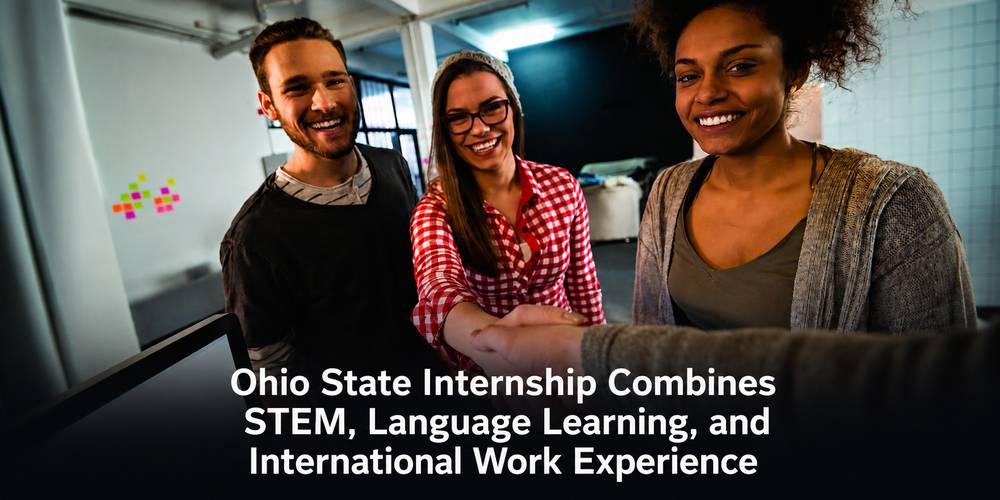
For many students pursuing careers in science, international exposure is becoming just as valuable as technical knowledge. Recognising this shift, The Ohio State University has expanded opportunities through its Students in Life Sciences Abroad (STILSA) internship. This programme combines STEM education, language learning, and professional international experience.
Designed for students studying biology-related disciplines, the paid internship allows participants to develop workplace skills while collaborating with universities and industry partners across several countries. Beyond gaining practical experience, students strengthen their cross-cultural communication skills, apply foreign language skills in professional settings, and contribute to global education initiatives that support future cohorts of students.
What Is the STILSA Internship Program?
The Students in Life Sciences Abroad (STILSA) programme is an international education initiative that provides paid, credit-bearing experiential learning opportunities for undergraduate and master's students studying life sciences and other STEM disciplines.
The programme has established academic and industry partnerships in several countries, including:
- France
- Belgium
- Norway
- Brazil
- Colombia
- The French West Indies
Rather than focusing solely on laboratory or research placements, STILSA enables students to gain experience supporting international collaborations that connect Ohio State with institutions around the world.
Bridging Science and Language Education
One of the programme's defining features is its interdisciplinary approach. Students combine scientific knowledge with language proficiency—particularly French—to communicate with international partners, translate professional documents, and support collaborative projects.
According to Professor Patrice Hamel, who coordinates STILSA alongside Assistant Director of Experiential Learning Joi Brihm-Spann, the internship was designed to help students understand how international education partnerships are built and maintained while allowing them to actively apply their language skills in real professional environments.
Preparing Students for International Careers
The internship goes beyond traditional classroom learning by exposing students to the day-to-day operations behind global education programmes.
Participants contribute to activities such as:
- coordinating with international university partners
- scheduling meetings
- responding to professional correspondence
- maintaining programme websites
- creating marketing materials
- translating documents between French and English
- supporting incoming student communications
These responsibilities help students develop communication, organisation, project management, and professional collaboration skills that employers increasingly value.
Supporting the Next Generation of STEM Students
One important responsibility for interns involves helping incoming students prepare for international opportunities. Interns regularly communicate with prospective participants, explain programme expectations, arrange interviews, and provide guidance before overseas experiences begin.
This peer-to-peer engagement creates a more personalised experience for future students while allowing interns to strengthen leadership and mentoring skills.
Learning Beyond the Laboratory
For biomedical science student Estelle Apewokin, the internship offered an opportunity to combine her interests in life sciences and French while helping other students access similar international experiences.
Using French in a professional business environment represented a significant shift from classroom language learning, allowing her to practice communication within an authentic international setting.
Similarly, biology and French double-major Matthew Wolfe viewed the programme as a natural extension of his academic interests, demonstrating how language and science can complement one another in today's global workforce.
Building Career Readiness Through Practical Experience
Both students emphasised that the internship developed workplace skills difficult to replicate inside traditional classrooms. Beyond scientific and analytical thinking, they strengthened abilities in:
- adaptability
- professionalism
- organisational planning
- problem-solving
- intercultural communication
- stakeholder management
These transferable skills prepare graduates for careers that increasingly require collaboration across disciplines, cultures, and international borders.
Why International Experience Matters for STEM Students
Global scientific research increasingly depends on international collaboration. By combining STEM education with language learning and cross-border partnerships, programmes like STILSA expose students to the realities of today's interconnected research and innovation landscape.
The initiative also seeks to improve student retention in STEM disciplines while easing the transition from university into the workforce through meaningful experiential learning.
Key Benefits of the STILSA Internship
Benefit | Student Impact |
Paid internship | Financial support while gaining experience |
Academic credit | Integrates with degree progression |
International collaboration | Exposure to global research networks |
Professional language practice | Real-world communication beyond the classroom |
Leadership development | Mentoring and supporting future participants |
Career readiness | Workplace and transferable professional skills |
Why This Matters
International education is evolving beyond study abroad semesters and research exchanges. Today's students are increasingly looking for opportunities that combine academic learning with practical workplace experience.
Programmes like STILSA demonstrate how universities can integrate international collaboration into students' everyday learning while equipping graduates with the communication, cultural awareness, and adaptability needed in an increasingly global workforce. As employers continue to value cross-cultural competencies alongside technical expertise, initiatives that bridge STEM education, language learning, and professional experience are likely to become an increasingly important part of higher education.
Editor's Note
Global careers are no longer reserved for graduates who relocate overseas after university. Increasingly, international experience begins while students are still on campus—through collaborative projects, multilingual communication, and partnerships that connect classrooms with institutions around the world.
The success of programmes like STILSA prompts an important question for universities: should international education be viewed as a separate opportunity for a select group of students, or should global learning become an integrated part of every student's academic journey? As higher education prepares graduates for an interconnected world, creating accessible pathways to international experience may prove just as valuable as the degrees themselves.
Frequently Asked Questions (FAQs)
1. What is the STILSA internship?
STILSA (Students in Life Sciences Abroad) is Ohio State University's paid experiential learning programme that combines STEM education, international collaboration, and professional workplace experience.
2. Who can participate in STILSA?
The programme is open to undergraduate and master's students studying STEM disciplines, particularly biology-related fields.
3. Which countries partner with STILSA?
STILSA collaborates with universities and businesses in France, Belgium, Brazil, Colombia, Norway, and the French West Indies.
4. What kind of work do interns perform?
Interns assist with programme administration, international communications, document translation, student engagement, website updates, marketing, and partnership coordination.
5. Why is language learning important in the programme?
Students use French and other language skills in professional settings, helping them develop communication abilities that complement their scientific education.
6. How does STILSA improve career readiness?
The internship develops transferable workplace skills, including project management, leadership, intercultural communication, professionalism, adaptability, and problem-solving.
7. Why is international experience valuable for STEM students?
Global scientific research increasingly relies on international collaboration, making cross-cultural communication, global networks, and professional adaptability essential skills for future STEM professionals.

Skoobuzz
 Skoobuzz
 Skoobuzz
 Skoobuzz
 Skoobuzz

0 Comments (Please Login To Continue)