








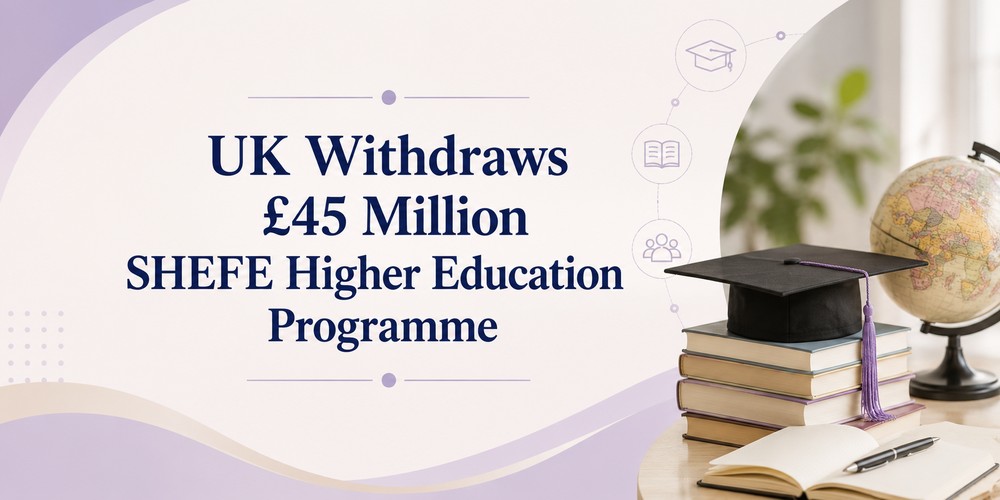
UK Aid Cuts Continue to Impact International Education
UK aid cuts end a £45m higher education programme for women and girls across Africa, Asia and the Middle East
The UK government's decision to withdraw a flagship overseas higher education programme for women and girls has reignited concerns over the future of global education initiatives. The programme, designed to expand access to higher education for one million female students across Africa, Asia, and the Middle East, has been cancelled just two years after its launch as part of wider reductions to the UK's international aid budget.
The move has drawn criticism from education leaders, parliamentarians, and international development organisations, many of whom argue that the decision undermines the UK's long-standing commitment to promoting education, gender equality, and economic opportunity worldwide.
UK Ends £45 Million Higher Education Programme for Women
The Strengthening Higher Education for Female Empowerment (SHEFE) programme was introduced by the previous Conservative government with a budget of £45 million. Its objective was to improve access to higher education for women and girls across developing regions, supporting approximately one million learners through university partnerships and education initiatives.
The UK Foreign, Commonwealth and Development Office (FCDO) has now confirmed that the programme's tender has been withdrawn following broader government decisions to reduce overseas development spending.
The cancellation comes despite repeated government statements emphasising that advancing opportunities for women and girls remains a priority within UK foreign policy.
Why Higher Education for Women Matters
Access to higher education has long been recognised as one of the most effective drivers of gender equality and long-term economic development.
Research consistently shows that women who pursue higher education are significantly less likely to marry during childhood, are at lower risk of experiencing gender-based violence, and often achieve substantially higher lifetime earnings. Increased educational attainment also contributes to healthier families, stronger local economies, and greater civic participation.
Supporters of programmes like SHEFE argue that expanding university access creates lasting social and economic benefits that extend well beyond individual students.
Growing Concerns Across the Education Sector
The cancellation has prompted criticism from organisations working across higher education and international development.
Members of Parliament and education advocates have warned that reducing investment in women's higher education could reverse years of progress in expanding educational opportunities for disadvantaged communities.
Some observers argue that international university partnerships not only strengthen education systems overseas but also benefit UK institutions through collaborative research, academic exchange, and global engagement.
Education organisations have called for renewed long-term investment once public finances allow.
Aid Cuts Extend Beyond One Programme
The withdrawal of SHEFE follows several other reductions affecting international education initiatives.
Earlier this year, plans for a major education programme supporting girls and children with disabilities in South Sudan were also cancelled. Previous funding reductions have similarly affected education programmes operating in countries including the Democratic Republic of the Congo, Ethiopia, Sierra Leone, Nigeria, and Zimbabwe.
According to sector representatives, these decisions reflect a broader shift in UK overseas development priorities following reductions to the foreign aid budget.
Additional Barriers for International Students
Alongside programme cancellations, recent policy changes have also affected opportunities for prospective international students.
Restrictions on new study visa applications from countries including Afghanistan, Sudan, Myanmar, and Cameroon have raised concerns among education organisations, particularly for women whose access to higher education within their own countries remains limited.
Critics argue that reduced scholarship opportunities combined with stricter visa policies may further limit educational access for some of the world's most vulnerable learners.
Global Education Funding Faces Wider Challenges
The UK's decisions come amid a broader international decline in education funding.
Analysis from UNICEF projects that international aid allocated to education could fall by approximately $3.2 billion by 2026, representing a reduction of nearly one-quarter. The organisation estimates that millions of additional children could be out of school if current funding trends continue, with humanitarian settings expected to be particularly affected.
Education experts note that sustained investment remains essential to improving literacy, reducing poverty, and expanding opportunities in lower-income countries.
Balancing National Priorities and Global Commitments
The UK government has stated that reductions to overseas aid are intended to support increased national defence spending.
Government representatives maintain that protecting women and girls remains a foreign policy priority and have indicated that funding for programmes addressing violence against women has been protected.
However, many organisations working in higher education and international development argue that expanding educational opportunity should remain a central component of those commitments, particularly as universities continue to play an important role in promoting gender equality and international cooperation.
Why This Matters for Global Higher Education
The cancellation of SHEFE reflects broader questions about the future of international education funding and the role governments play in supporting global access to higher education.
Universities increasingly rely on international partnerships to strengthen research, expand student mobility, and promote knowledge exchange across borders. Programmes supporting women and girls have often served as important pathways into higher education for students facing significant social, economic, or political barriers.
As governments reassess spending priorities, education leaders continue to emphasise that investment in higher education remains one of the most effective long-term strategies for advancing equality, economic development, and global stability.
Editor's Note
Higher education continues to be recognised as one of the strongest drivers of social mobility and economic growth worldwide. While governments face competing fiscal and security priorities, reductions in education funding can have long-lasting consequences that extend far beyond universities themselves.
The debate surrounding the UK's aid reductions highlights a broader global challenge: how countries can balance domestic priorities while maintaining investments that expand educational opportunity, strengthen international partnerships, and support sustainable development for future generations.
FAQs
1. What was the SHEFE programme?
The Strengthening Higher Education for Female Empowerment (SHEFE) programme was a UK-funded initiative designed to improve access to higher education for one million women and girls across Africa, Asia, and the Middle East.
2. Why was the programme cancelled?
The UK government withdrew the programme as part of wider reductions to its overseas development assistance budget, citing broader spending priorities.
3. Why is higher education for women considered important?
Higher education contributes to improved employment opportunities, increased lifetime earnings, reduced child marriage, greater gender equality, and stronger economic development.
4. What other education programmes have been affected?
Recent aid reductions have also impacted education initiatives in South Sudan, the Democratic Republic of the Congo, Ethiopia, Sierra Leone, Nigeria, and Zimbabwe.
5. How could these aid cuts affect global education?
Education organisations warn that reduced international funding may limit access to schooling and higher education for millions of learners, particularly women, girls, and children living in humanitarian or low-income settings.

Skoobuzz
 Skoobuzz
 Skoobuzz
 Skoobuzz
 Skoobuzz
 Skoobuzz


0 Comments (Please Login To Continue)