








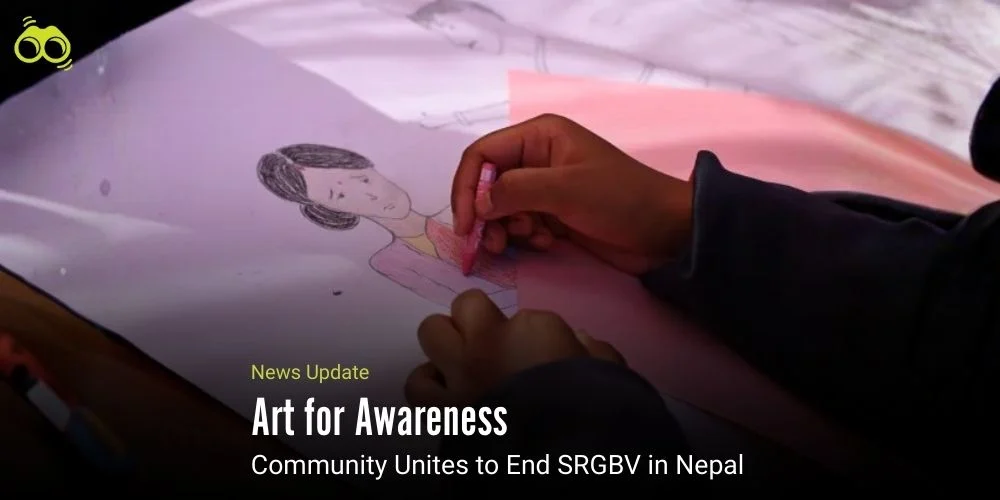
UNESCO Nepal Event Highlights School-Related Gender-Based Violence Prevention
Community Awareness on School Violence Through Art, Poetry, and Drama
Each year, millions of people around the world are faced with an issue called gender-based violence (GBV); one woman in every three across the globe is being physically or sexually abused at some juncture in her life. Education, health, and economic participation have all been devastated in some way by GBV; in fact, it is regarded as a significant public health and human rights challenge.
In this regard, UNESCO proceeded to organise a community awareness programme on the school-related prevention of GBV, in collaboration with the Bank UNESCO Club and the Education Unit of Bansgadi Municipality, following the release of numerous reports. It happened from November 28, 2025, and adheres to the UNESCO SRGBV campaign, but also the global 16 Days Activism against Gender-Based Violence campaign under the theme Joining the UNiTE campaign to end digital abuse.
With this event taking place in Nepal Rashtriya Secondary School within the Bansgadi district, it will bring together students and teachers from more than 20 schools, with parents and local leaders. As per officials, this will be to create awareness by SRGBV in the community through art focusing on harassment, bullying, and cyberbullying. It was further narrated that Bansgadi, Ms Indira Chaudhary, Deputy Mayor, insisted that GBV in educational institutions is jeopardising the prospects of children and requires collective efforts to combat it.
Students' Artistic Expression Against School Gender-Based Violence
Define the programme as a platform for artistic expression among students against school-related gender-based violence. Through student poetry and drama initiatives for gender equality, participants used painting, poetry, and drama to shine a light on the issue and demand solutions. Reports stated that students from 24 schools participated in a poetry competition addressing various issues such as early marriage, gender discrimination, and GBV. Children from 21 schools exhibited drawings depicting school bullying and harassment challenges while providing suggested solutions for preventing them.
A group of 14 artists performed an educational drama presentation based on the real-life incidents from which student art and drama can end gender-based violence in schools. UNESCO's Representative to Nepal, Mr Jaco Du Toit, is reported to have reiterated the importance of GBV in relation to safe-not schools and inclusive education and to have urged schools that it should be put in place reporting systems, and that parents should keep a watchful eye open, as senseless use of social media has become a source of exploitation.
Impact and Significance
Observers explained that the event symbolises the role of student creative expression in raising awareness about school violence. It captured the ripple effect of artistic projects on school safety and gender equality while stressing what schools can do towards prevention besides using the art forms. It epitomised the multitude of global initiatives currently enshrined in school violence prevention and an example of SRGBV interventions in schools of Nepal (Bardiya, Bansgadi).
The success of the event, therefore, marks a milestone in the commitments of Nepal to safe schools, inclusive education, and gender equity. Art, mentorship, and community dialogue solutions brought by the programme proved that creative expression is a potent weapon against violence and discrimination at school. It showed a case study of SRGBV awareness events at the community level in Nepal 2025, demonstrating how age engagement for ending SRGBV will build real change for the future.
More broadly, the initiative represents UNESCO's global school safety programmes, challenging schools to adopt SRGBV awareness programmes, develop student-focused art-based campaigns against violence, and develop anti-bullying projects run by students in schools. The commitment that was forged in Bansgadi is considered the light of hope for the entire region to safeguard the right of every learner to a safe, violence-free education.
Editor’s Note:
Continuing with the onward movement is an ever-urgent reminder of gender-based violence (GBV), which is a complicated global challenge concerning education, health, and equality. In Bansgadi Bardiya, the initiative led by UNESCO will manifest one way in which these broad international campaigns can result in action locally with schools, communities, and young people addressing school-related gender-based violence (SRGBV). The event aims to place students at a central point in the awareness-raising efforts through poetry, painting, and drama. It would lean towards rather giving one powerful voice to the issues of bullying, harassment, and discrimination, but also hopefully providing practical steps on how these can become effective. It showed clearly that creative participation can strengthen prevention and build safer, more inclusive schools.
Skoobuzz mentions that the programme is set to strengthen Nepal's commitment towards safe schools and gender equity, and also contribute greatly to a global agenda on school safety under UNESCO. The programme synthesised arts, mentorship, and dialogue to emphasise collective responsibility towards ensuring violence-free education for learners.
FAQs
1. Who are the artists for gender-based violence?
Artists against gender-based violence are people who use their creativity, such as painting, poetry, music, or drama, to speak out against violence and discrimination. They may be students, teachers, or professional performers who raise awareness through their art.
2. What can learners do to reduce gender-based violence?
Learners can help by showing respect to everyone, refusing to take part in bullying or harassment, and speaking up when they see unfair treatment. They can join awareness programmes, support classmates, and use art, writing, or discussion to spread positive messages about equality.
3. What are the examples of school-related gender-based violence?
Examples include teasing or bullying because of gender, harassment in classrooms or online, unfair treatment of girls or boys in school activities, and cyberbullying through social media. It can also include pressure for early marriage or discrimination in learning opportunities.
4. What kinds of creative activities are used to raise awareness about school violence?
Students often use poetry, painting, drawing, drama, and music to show the harm caused by school violence. These activities help express feelings, share stories, and encourage others to take action for safer schools.
5. How to prevent school-related gender-based violence?
Prevention starts with education and awareness. Schools can set clear rules against bullying and harassment, create safe spaces for reporting, and involve parents and teachers in support. Encouraging respect, equality, and student-led projects, such as art campaigns or anti-bullying clubs, can make schools safer for everyone.

Skoobuzz
 Skoobuzz
 Skoobuzz
 Skoobuzz



0 Comments (Please Login To Continue)