








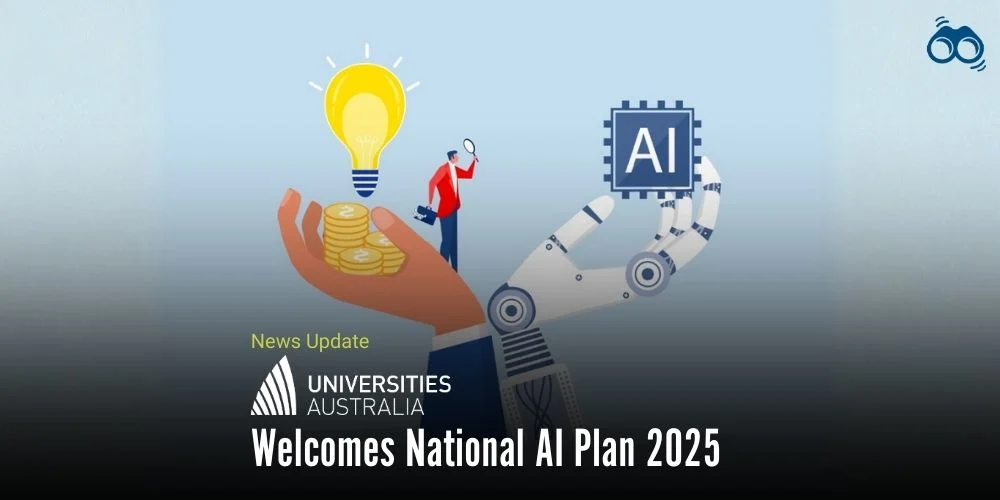
How AI Adoption Will Drive Productivity and Innovation in Australia’s Universities
Universities Australia Response to AI Plan Highlights Role of Higher Education
Artificial intelligence is perhaps the fastest-introduced influencing technology in our lives. From redesigning industries, transforming research, to changing the educational landscape, it is creating countless opportunities. However, safety, ethics, and governance are important questions raised along these lines.
Universities in Australia welcomed the Australian National AI Plan 2025 released by the Albanese Government as a very timely move directed towards achieving a safer, more productive and competitive nation. The plan emphasises national adoption, development and governing of AI, ensuring that Australia can harness its benefits responsibly but still compete in the global marketplace.
According to Luke Sheehy, CEO of Universities Australia, the strategy had created a needed direction for Australia as to how to responsibly harness AI while unleashing its economic and social potential. According to him, this had already begun taking place through changes in jobs, research and daily life; and that the plan brought Australia an important part of the framework to ensure the responsible and competitive use of AI.
Universities Australia Response to AI Plan
The opportunity, Sheehy said, was enormous for Australia. Artificial intelligence productivity in higher education and across industries would raise national output, give birth to new sectors and create high-value jobs, provided it was coupled with the right policy settings and investment.
A key message put across in the statement was that universities would form the backbone of Australia's future in AI. Commentators suggested that adoption of AI by Australian universities would be instrumental-from world-leading research and commercialisation right through to training the specialised workforce required to develop and govern AI systems. The plan was adequately said to recognise that all parties, including government, industry and universities, need to come together to ensure safety and competition with AI.
Higher Education’s Role in Australia’s AI‑Driven Economic Growth
According to commentators, with the right safeguards, funding and long-term planning, Australian universities could help to ensure that Australia was not merely a consumer of AI technologies, but a world-leading developer of them, surely driving and correlating innovation, economic strength, and national prosperity.
Analysts further added that the AI plan's influence on both employment and innovation in Australian universities would be significant, as institutions contributed to developing AI skills for the future workforce of Australia and supported the transition in the Australian education sector. Higher education in Australia would have its AI adoption linked to job growth in Australia 2025, regarding AI, signalling how it would contribute to research and career opportunities.
Thus, the overview of Australia's National AI Plan and its aspirations demonstrates how one envisages the 2025 strategy in terms of productivity, jobs and innovation. The analysis of the universities' roles in implementing AI strategy emphasises their research training mobility with respect to human resources and governance. Universities Australia was looking to work with government, industry and the whole community in making sure AI was deployed in ways that benefit all Australians. The pros and cons of AI adoption in Australian higher education will continue to cast shadows on the future of the nation on the path to worldwide competitiveness and sustainable growth.
Editor’s Note
Artificial intelligence has quickly ascended to become one of the most critical technologies in the shaping of modern society. It redesigns industries; transforms research; and alters how people live and work. Most importantly, it invites safety, ethical, and governance questions with respect to proper use. In this regard, the release of the National AI Plan for Australia 2025 by the Albanese Government has received an enthusiastic welcome from Universities Australia, as a timely and strategic response to the development of the national framework for the adoption, development, and governance of AI, ensuring that Australia can access its benefits responsibly and remain globally competitive. Luke Sheehy, the CEO of Universities Australia, stated that the strategy provides much-needed guidance for unlocking AI's economic and social potential at the same time as safeguarding its use. The analysis indicates that universities will serve as key agents in this transition. Their contribution extends from world-leading research and commercialisation to training a specialised workforce capable of developing and governing AI systems. Experts concurred that higher educational institutions are not only central to AI-driven productivity within Australia’s education sector, but also job providers, innovation sources, and long-term economic builders. With the right controls, funding, and collaboration between government, industry, and academia, universities can ensure that Australia is not merely a consumer of AI technologies but a global leader in their development. The Universities Australia response to the AI plan marks both the opportunities and challenges of AI adoption in higher education. The success of the plan depends on sustained funding, strong governance, and inclusiveness in collaboration. If those are achieved, AI will not only redefine the Australian economy but also its status as a world leader in innovation, research, and education, with the resultant benefits actually extending beyond the classroom into the broader society.
Skoobuzz observed that the National AI Plan 2025 highlights both promise and responsibility for Australia’s future. With strong collaboration and investment, AI adoption in higher education can drive innovation, create jobs, and secure Australia’s place as a global leader in research and economic growth.
FAQs
1. What is Australia’s National AI Plan 2025?
The Australia National AI Plan 2025 is a government strategy designed to grow the country’s AI industry and build a world‑class AI ecosystem. It focuses on investment in infrastructure such as advanced data centres, AI skills development, and public safety measures. The plan aims to ensure that AI benefits are shared across all regions, industries, and communities, while relying on existing laws to manage risks.
2. How will the National AI Plan affect Australian universities?
The plan highlights the role of higher education in AI adoption. Universities are expected to contribute through world‑leading research, commercialisation of AI technologies, and training the specialised workforce needed to govern and develop AI systems. This positions universities at the centre of Australia’s AI capability, ensuring they remain globally competitive.
3. Can AI create new jobs in Australia’s higher education sector?
Yes. Analysts noted that AI could create over 200,000 new roles in Australia by 2030, including positions in AI engineering, data science, and ethical AI governance. Within higher education, AI adoption will generate demand for specialised teaching, research, and support roles, helping universities prepare students for the future workforce.
4. Will Australian universities lead AI research and innovation?
Australian universities are already recognised for world‑class AI research, with 22% of their AI publications ranked in the global top 10%. Institutions such as UNSW, the University of Sydney, and the University of Adelaide are leading centres for AI innovation. Under the National AI Plan, universities will continue to drive research excellence, innovation, and collaboration with industry and government, ensuring Australia is not just a consumer but a developer of AI technologies.
5. How does AI adoption boost productivity in Australia?
The plan explains that AI adoption will lift productivity, improve essential services, and create well‑paid jobs in future industries. By integrating AI into education, healthcare, and business, Australia can close service gaps, enhance efficiency, and strengthen economic competitiveness. The government estimates that AI could contribute up to $116 billion to the economy if adopted responsibly.

Skoobuzz

 Skoobuzz
 Skoobuzz
 Skoobuzz
 Skoobuzz



0 Comments (Please Login To Continue)