








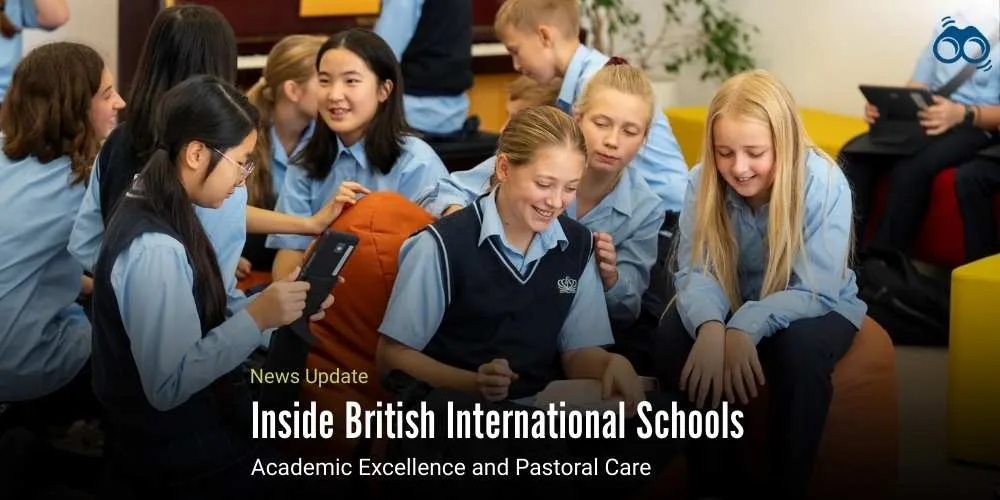
Features of British International Schools: Holistic Development, Pastoral Care, and Academic Success
Why Parents Choose British International Schools for Global Education and Student Well-being
Education has long been one of the UK's greatest exports, shaping and influencing minds and societies well beyond its borders. Recently, during a conference, it was stated in conversation with Sir Nick Gibb, former schools minister, that British education continues to cast a positive light on the UK throughout the world. Indeed, he reflected that British international schools not only teach English but also serve as models of education admired worldwide. This perspective highlights how the features of British international schools—from academic excellence and cultural heritage to pastoral care and holistic development—make them distinct compared with other international schools.
British education has long been characterised by a combination of academic excellence, tradition, innovation, and character-building. Among the oldest in the world, the schools and universities of the United Kingdom carry a cultural inheritance that spans from William Shakespeare and Jane Austen to Charles Darwin and Tim Berners‑Lee. This amalgam of culture has been described as the best explanation for the global recognition of British international schools, particularly when combined with the British curriculum in international schools, which is seen as one of the reasons why these schools are acknowledged worldwide.
It was further explained how the UK leads globally in curriculum design. For instance, Cambridge International was highlighted by many as the most sought‑after programme for international schools. The British Council was also referred to as a cultural powerhouse, promoting creativity in education, art, music, and design. Attention was drawn to institutions such as COBIS, which help raise standards, and the British Schools Overseas accreditation, which ensures a level playing field within the international British school system. This network was built to address challenges arising from rapid changes in technology, artificial intelligence, and social trends. These values are not uniquely British, yet British characteristics in international schools—such as safeguarding, governance, and transparency—are admired worldwide.
Brexit has not diminished this influence; rather, it has increased the need for British education within Europe and across the globe. The British international school model is considered timeless and continues to grow without being tied to political decisions. Speakers noted that international schools commonly have outward‑facing cultures linked to global networks, fostering diversity, global citizenship, and intellectual curiosity. Parents reportedly choose British schools for the holistic development in British international schools, offered through clubs, student councils, counselling, and tutor systems. Such structures prepare students for universities, careers, and life beyond school.
Great education is not about spoon‑feeding. British international schools are designed to prepare students for universities worldwide, equipping them with skills, knowledge, and confidence. This is why the model is valued by so many families, particularly in terms of transition and mobility for expatriate families. Observers explained that pastoral care and student wellbeing in UK schools remain central. A child’s happiness, safety, and care are prioritised, alongside teachers’ enthusiasm for inspiring a love of learning. This balance ensures that students achieve academically while also growing personally.
British international schools stand out from other international schools because they strike a balance between tradition and innovation, academic excellence and pastoral care, and global recognition with local impact. The National Curriculum for England, followed from EYFS to A‑levels, shapes learning in a way that is both structured and flexible. These are among the reasons why the benefits of the British curriculum and A‑levels in international schools continue to attract families worldwide.
Editor’s Note:
British education has always been regarded as one of the strongest exports of the United Kingdom, shaping young minds and influencing societies across the world. The benefits of attending British international schools, as discussed by Sir Nick Gibb, extend far beyond learning English. They embody a model of education admired globally, combining academic strength, cultural heritage, pastoral care, and holistic development. UK schools and universities, among the oldest in the world, carry a cultural inheritance that spans authors from Shakespeare and Jane Austen to Charles Darwin and Tim Berners‑Lee. This mix of tradition and innovation explains why British international schools are so widely recognised, particularly when combined with qualifications such as A‑levels. The UK continues to lead in curriculum design. Cambridge International remains one of the most popular programmes for international schools, while the British Council promotes creativity in education, art, music, and design. Organisations such as COBIS and British Schools Overseas accreditation complete the landscape of standard‑setting and quality assurance. Importantly, Brexit has not reduced this impact; rather, it has increased the relevance of British schooling in Europe and beyond. Parents often choose British international schools for their holistic programmes, which include clubs, student councils, counselling, and tutor systems. These prepare students for university, careers, and life beyond school. Balance is maintained: strong academics alongside pastoral care and student wellbeing. Happiness, safety, and self‑esteem come first for a child, while teachers are encouraged to inspire a love of learning. This combination enables students to achieve academically and develop personally. What differentiates British international schools from others is their ability to combine tradition with innovation, global recognition with local impact, and academic excellence with pastoral care.
Skoobuzz underlines that the National Curriculum for England, covering the Early Years Foundation Stage through to A‑levels, continues to attract families worldwide. It offers both structure and flexibility, which is why the British curriculum and A‑levels remain highly valued by expatriate and globally mobile families.
FAQs
1. What are the main advantages of British education?
The advantages of British education include world‑renowned universities, high teaching standards, and globally recognised qualifications. Students benefit from shorter degree courses, strong research excellence, and vibrant cultural experiences. Graduates from UK institutions are often highly employable worldwide.
2. What are the key benefits of attending an international school?
The benefits of international schools lie in their global curriculum, multicultural environment, and holistic approach. They prepare students for both local and international success, encourage adaptability, and promote open‑mindedness. International schools also offer pathways to top universities and careers across the world.
3. Why is the British education system considered to be so strong?
The British education system is valued for its blend of tradition and innovation. It offers rigorous academic standards, opportunities for early specialisation through A‑levels, and qualifications recognised worldwide. Prestigious universities such as Oxford and Cambridge enhance their reputation, while shorter course durations make study efficient.
4. How do British schools compare with American schools?
British schools tend to emphasise depth of study, with structured stages (primary, secondary, sixth form) and exam checkpoints such as GCSEs and A‑levels. American schools focus more on breadth, offering wider electives and credit‑based graduation. British schools also maintain traditions such as uniforms and house systems, while American schools often highlight extracurricular variety like sports and bands.
5. Is British education regarded as the best in the world?
British education is consistently ranked among the top globally. The UK often appears in the top five countries for education quality, alongside Germany, Iceland, and Nordic nations. While not always ranked first, the UK’s system is admired for its academic excellence, cultural influence, and international recognition.
6. What qualifications do British international schools usually offer?
British international schools typically follow the National Curriculum for England, offering IGCSEs (International GCSEs) at the end of Key Stage 4 and A‑levels (Advanced Levels) at the end of Key Stage 5. Some schools also provide the International Baccalaureate Diploma. These qualifications are globally recognised and open doors to leading universities worldwide.

Skoobuzz



 Skoobuzz

 Skoobuzz


0 Comments (Please Login To Continue)