








Innovate Cambridge's inclusive growth strategy strengthened by University and hospital collaboration
Roland Sinker Cambridge appointment marks new phase in innovation and community engagement
In recent months, Cambridge has been nationally recognised for its expanding innovation and development. The Government has announced significant investment in the city, acknowledging Cambridge as a leading UK innovation hub and setting clear expectations for inclusive growth. In response, the University has been strengthening its civic engagement, ensuring that technological progress benefits not only local communities but also the wider economy.
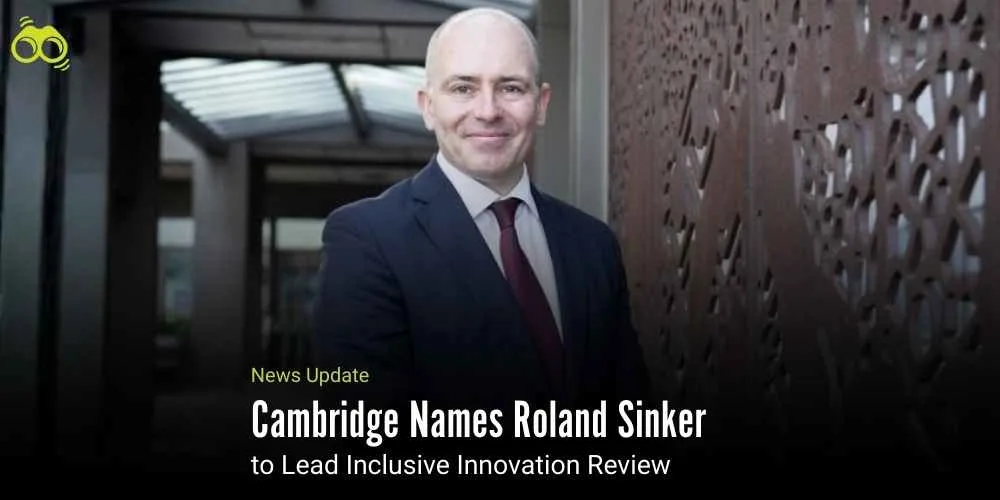
Within this context, the University of Cambridge has stated that it is entering a new phase of growth and innovation. Vice-Chancellor Professor Deborah Prentice has asked Roland Sinker to lead a major review into inclusive innovation and growth. The Roland Sinker Cambridge appointment is seen as part of the wider Cambridge inclusive innovation roadmap 2026, designed to ensure that the benefits of innovation are shared across the community.
Observers noted that the role had been in development for several months and will work closely with the Innovate Cambridge inclusive growth strategy. The review is expected to build on existing momentum, using the University’s academic excellence and resources to accelerate progress. Investment will be directed towards the Cambridge University deep-tech and life sciences growth, particularly at West Cambridge, and towards the use of health data and artificial intelligence to strengthen life sciences research.
Commentators explained that the review will run for 12 months from January 2026, engaging partners across the region. It will connect with national priorities such as the OxCam Corridor innovation partnership and collaboration with Manchester. The work will also involve Cambridge University Hospitals and research collaboration, reinforcing the University’s civic and community role. Analysts highlighted that this forms part of the Cambridge roadmap for innovation benefits to the local community, with clear KPIs to measure progress.
Government representatives welcomed the appointment, describing it as proof of Cambridge’s commitment to rapid delivery. Roland Sinker was praised for his strong record as CEO of Cambridge University Hospitals and his previous role as NHS England National Director for Life Sciences. Alongside his new responsibilities, he will continue to oversee projects at the Cambridge biomedical campus and life sciences innovation, including the Cancer Research Hospital and the Children’s Hospital. This reflects the wider university-industry collaboration in Cambridge, UK, positioning Cambridge as a world-class innovation hub by 2026.
The collective effort is framed under the inclusive growth strategy of Cambridge University, aligning with the evolution of the deep-tech cluster. It combines academic knowledge, industry partnerships, and community participation to deliver inclusive innovation. The expected impact of the Cambridge innovation ecosystem expansion will be significant, offering opportunities to collaborate with Cambridge University on innovation projects, apply for research or start-up opportunities at the Cambridge innovation hub, and partner with the Cambridge Biomedical Campus for life sciences innovation.
Editor’s Note:
Cambridge is entering a decisive stage in its innovation journey. National recognition and government investment have raised expectations, and the University is responding with a clear focus on inclusion and public benefit. The aim is to ensure that growth in deep tech and life sciences strengthens the economy while also supporting local communities. The appointment of Roland Sinker to lead a 12‑month review beginning in January 2026 reflects a practical approach. Academic excellence will be aligned with industry partnerships, building on the momentum of Innovate Cambridge and setting measurable KPIs. In simple terms, this is about turning strategy into visible action. The priorities are well defined: expand the deep‑tech and life sciences cluster at West Cambridge, use health data and artificial intelligence responsibly to advance life sciences, and connect local delivery to national goals through the OxCam Corridor and collaboration with Manchester. These steps are reinforced by close work with Cambridge University Hospitals and ongoing projects at the Biomedical Campus.
Skoobuzz underlines that Cambridge is therefore setting out a pragmatic roadmap for inclusive innovation. If delivery matches intent, by 2026 the city will have consolidated its role as a leading UK hub, deepening its capabilities in technology and life sciences while ensuring that benefits are widely and responsibly shared.
FAQs
1.What is the Innovate Cambridge Strategy 2025?
The Innovate Cambridge Strategy 2025 is a ten‑year plan launched in 2024 to strengthen Cambridge’s role as a global innovation hub. It sets ambitious goals such as doubling the number of science and innovation companies, increasing investment in start‑ups, and expanding the Cambridge cluster of deep‑tech and life sciences firms. The strategy also includes national partnerships, such as with Manchester, and government endorsement for a Cambridge‑based innovation hub.
2.Is it the University of Cambridge or the University of Cambridge?
The correct name is simply the University of Cambridge. It is one of the world’s oldest and most respected universities, based in Cambridge, UK.
3.What is the mission and vision of Cambridge University Press?
The mission of Cambridge University Press & Assessment is to spread knowledge, spark curiosity, and aid understanding worldwide. Its vision is to open a world of possibilities through education, research, and publishing. It provides qualifications, assessments, and academic resources, reinvesting its success to benefit society and address global challenges such as climate change.
4.Is Cambridge better than MIT?
Both Cambridge and MIT are world‑leading universities. Cambridge is consistently ranked among the top three globally, while MIT often holds the number one position in international rankings. Cambridge is known for its breadth across sciences, humanities, and social sciences, while MIT is more specialised in technology and engineering. Which is “better” depends on the field of study and personal goals.
5.Will Cambridge's growth strategy benefit communities beyond academia?
The Cambridge growth strategy is designed to deliver benefits beyond the University. It focuses on inclusive innovation, civic engagement, and community wealth building. Plans include tackling inequality, supporting local businesses, and ensuring that investment in deep‑tech and life sciences also strengthens local communities. The aim is to make Cambridge’s success more widely shared, not limited to academia.

Skoobuzz



 Skoobuzz
 Skoobuzz



0 Comments (Please Login To Continue)