








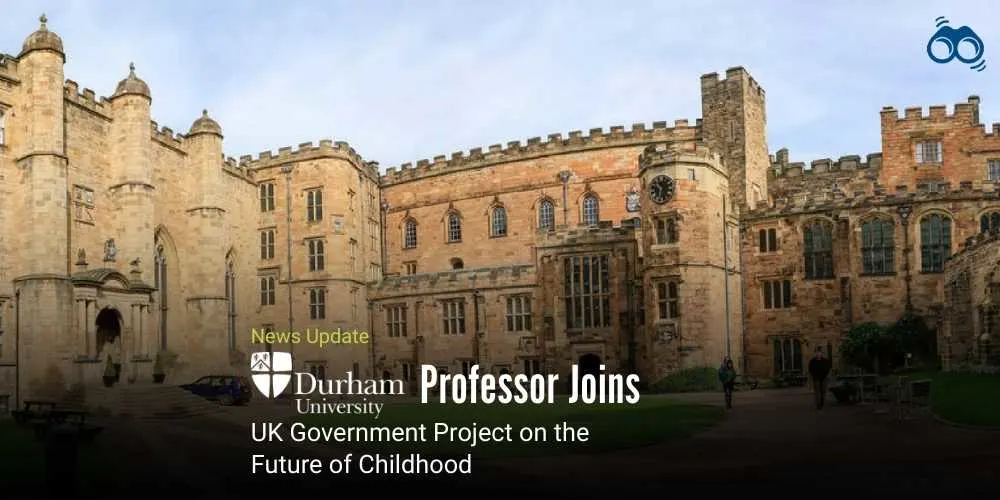
UK Future of Childhood Project to Study Impact of AI, Social Cohesion and Health
Durham Humanities Expertise to Inform UK Childhood and Adolescence Policy
A Durham University humanities researcher government project future of childhood, has been announced, with Prof Arlene Holmes-Henderson appointed to the UK Future of Childhood and Adolescence project. This UK Government Office for Science childhood research initiative will study how certain societal, environmental, and technological changes, such as AI, social cohesion, and health, will affect future research related to the lives of the young in the coming decades.
Contribution from Durham Humanities Expertise
Prof Holmes-Henderson, who has already contributed extensively to UK education policy, is the first Humanities specialist to take up the Expert Exchange Programme run by the Department of Science, Innovation and Technology. As a Durham humanities expert contributing to cross-government policy research, she will ensure that evidence from the Arts and Humanities is considered alongside STEM and Social Sciences, thus creating a holistic childhood evidence base for arts and humanities research for policymakers.
With over ten years of classroom experience and research on oracy, educational inequalities, and youth justice, she will bring a wealth of real-world insight to the project. Her appointment is evidence of the nourishing engagement of Durham University's humanities expertise in UK government childhood policy research while strengthening the interdisciplinary positioning toward child development.
Secondment and Teaching Commitments
In this secondment appointment, Professor Holmes-Henderson will work two days a week with teams in the Government Office for Science, split between Whitehall in London and the Darlington Economic Campus in Northeast England. The childhood research secondment in London and Darlington, UK, will run until the summer of 2026, culminating in the delivery of the final report.
Alongside this, she will be teaching at Durham, including her new MA module, Engaging Policymakers with Arts and Humanities Research. The module connects students directly with civil servants, helping them anchor theoretical research in professional practice.
Driving for Positive Change
Professor Holmes-Henderson indicated that bringing a Humanities perspective to a cross-government project of this size was both exciting and relevant. It would support the strengthening of policy evidence for that project and provide an avenue for more Humanities researchers to join government expert teams.
Strengthening National Collaboration
The Future of Childhood and Adolescence project represents an extragovernmental research initiative on a childhood strategy in the UK. It will study what factors are being analysed in the Future of Childhood project, including AI, social cohesion, and health outcomes, to ensure that policymakers can plan for both opportunities and challenges facing children and adolescents. This collaboration highlights the importance of including arts and humanities perspectives in policy research, alongside science and technology. It also underlines the role of interdisciplinary research in supporting child and adolescent policymaking mechanisms in the UK.
The University of Durham's contribution through Prof Holmes-Henderson to the research on national childhood illustrates the value of the Humanities in shaping national policy. Development of the Government Office for Science evidence over the Future of Childhood research from Durham University embodies the institution's commitment to international collaborative endeavours and evidence-based policymaking. The final report expected in 2026 will contextualise Durham University's contribution to the Future of Childhood Research, aligning UK policy on childhood and adolescence with both scientific and humanistic insights.
Editor’s Note:
The inclusion of Professor Arlene Holmes-Henderson in the UK Future of Childhood and Adolescence project is a significant milestone for both Durham University and national policy. Being part of this childhood research initiative by the UK Government Office for Science, she advocates for weaving in strong inputs from the Humanities into an otherwise STEM and Social Sciences-heavy domain. Her appointment demonstrates how Durham University's humanities proficiency can realise added value to government research. With her oracy, educational inequalities, and youth justice experience, she would give realistic insights connecting classroom experiences to policymaking. It thus ensures evidence from the Arts and Humanities gets considered alongside scientific data, making a complete picture of childhood. The study project will investigate how factors such as AI, social cohesion, and health outcomes may shape children's and young people's lives. A mixture of disciplines, which lays the foundation for better policy analysis in new opportunities and challenges that the future presents. Professor Holmes-Henderson's secondment serves to underscore the need for partnership. While leading such endeavours in London and Darlington, as she continues her teaching work at Durham, she builds bridges between universities and government. That strengthens national research while opening doors for more Humanities scholars into the policy process.
In sum, the involvement of Durham University in this study fits well within this imperative to engage Arts and Humanities in shaping the future of childhood. The final report is expected in 2026 and will then show how interdisciplinary research can provide guidance for UK policy while ensuring that decisions regarding children and adolescents are based on scientific and humanistic perspectives.
FAQs
1.What is the Future of Childhood and Adolescence project in the UK?
The Future of Childhood and Adolescence project is a UK Government Office for Science childhood research initiative. It studies how societal, environmental, and technological changes – including AI, social cohesion, and health outcomes – will shape the lives of children and young people in the coming decades.
2.Who is Prof Arlene Holmes-Henderson and what is her role?
Prof Arlene Holmes-Henderson, a Durham University humanities researcher, has been appointed to the project. She is the first Humanities specialist to join the Department for Science, Innovation and Technology’s Expert Exchange Programme. Her role is to ensure that arts and humanities evidence is considered alongside STEM and Social Sciences in shaping UK childhood policy.
3.Why is Durham University involved in UK childhood research?
Durham University is contributing through Prof Holmes-Henderson’s secondment to the Government Office for Science. The University’s involvement highlights the importance of including arts and humanities perspectives in policy research, ensuring a more holistic evidence base for child development and policymaking.
4.Where will the UK childhood research project be based?
The project will be based in Whitehall, London, and the Darlington Economic Campus in North East England. Prof Holmes-Henderson will work two days a week with government teams in both locations until summer 2026.
5.What are the policy aims of the Future of Childhood project?
The project aims to provide evidence to help policymakers plan for future opportunities and challenges facing children and adolescents. It will examine key themes such as AI, social cohesion, health, and environmental change, ensuring UK policy is informed by both scientific and humanistic insights.
6.How will Durham University’s expertise benefit the project?
Durham University’s contribution ensures that humanities research is integrated into national policy discussions. Prof Holmes-Henderson’s background in oracy, educational inequalities, and youth justice will bring real‑world insights to the project, strengthening interdisciplinary collaboration and supporting evidence‑based policymaking.

Skoobuzz

 Skoobuzz
 Skoobuzz
 Skoobuzz
 Skoobuzz
 Skoobuzz


0 Comments (Please Login To Continue)