








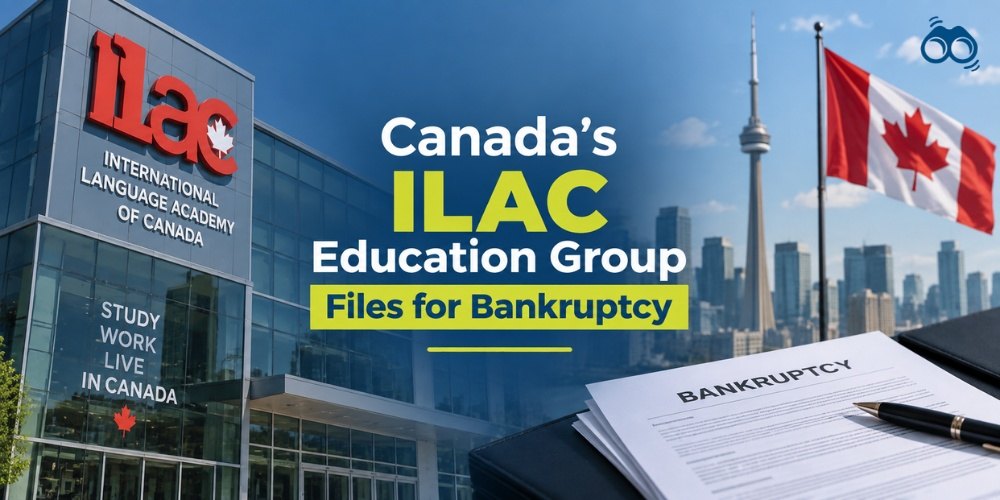
ILAC Education Group Files for Bankruptcy, Cancels Programmes in Canada
English-language education provider shuts operations in Toronto and Vancouver
Canada’s International Language Academy of Canada (ILAC) Education Group has filed for bankruptcy protection and ceased operations, abruptly ending classes and programmes at its Toronto and Vancouver campuses. The announcement came on September 18, shortly after another major English-language training provider, EC English, announced the closure of all its schools.
ILAC said it had faced growing financial pressures over the past three years, which it attributed to significant regulatory changes affecting the education sector. The organisation said it no longer had sufficient financial resources to continue operating.
The closure has left international students, employees and education partners seeking information about their next steps. ILAC said it was working with relevant regulators to minimise the impact and provide further information as the bankruptcy process progresses.
ILAC Ceases Operations Immediately
In a notice published on its website, ILAC confirmed that it filed for bankruptcy protection on Friday, September 18, and that all classes and programming were cancelled with immediate effect.
The organisation said its immediate focus was on supporting students and partners during the transition. It also stated that information about existing programmes, student services and subsequent steps would be communicated directly to affected individuals and updated on its website.
KPMG Inc. has been appointed as the licensed insolvency trustee under Canada's Bankruptcy and Insolvency Act. ILAC said further information about the process would be provided as it becomes available.
More Than Three Decades in Canada's International Education Sector
ILAC had operated for more than 30 years and became one of Canada's major English-language training providers, with campuses in Toronto and Vancouver. The organisation was founded by Jon Kolber, Ilan Cohen and Bernardo Riveros. Private equity firm ONCAP became a majority investor in the company in 2019.
Over the years, ILAC expanded beyond traditional English-language training and developed partnerships with Canadian higher education institutions as international education demand grew.
Expansion Into Public-Private Partnerships
From late 2020, ILAC increasingly moved into public-private partnership, or PPP, models with Canadian colleges. One of its early partnerships was with Georgian College. Announced in 2020, the arrangement involved Georgian College programmes being delivered from an ILAC campus in downtown Toronto.
ILAC subsequently announced a partnership with Fanshawe College in 2021, with plans to begin offering Fanshawe programmes from 2022. The partnership expanded further in 2023 when ILAC and Fanshawe opened a larger downtown Toronto campus. The facility had 44 classrooms and was serving approximately 1,200 international students from 29 countries at the time. ILAC also acquired Tamwood College in 2023 as part of its expansion within Canada's international education market.
Canadian Policy Changes Altered the Market
ILAC's expansion coincided with a period of significant growth in Canada's international education sector. However, changes to immigration and international student policies began to reshape the market.
In January 2024, the Canadian government announced measures to reduce international student numbers and introduced restrictions affecting graduates of certain PPP arrangements and their eligibility for the Post-Graduation Work Permit.
The new rules contributed to a major contraction in the market for private education providers that had built business models around international students progressing from language or pathway programmes into higher education and employment. ILAC subsequently announced changes to its business strategy in response to the new regulatory environment.
Shift Towards Digital Education and Recruitment
As part of its response to the changing market, ILAC expanded its digital operations. In 2024, the group acquired UniApplyNow, a digital international student recruitment platform. It also continued developing ILAC KISS, its online education offering.
These initiatives formed part of a broader effort to adapt the organisation's operations as Canada's international education and immigration environment changed.
Closure Follows EC English Shutdown
ILAC's bankruptcy comes only days after another major development in the English-language education sector. EC English announced earlier in September that it would close all 25 of its schools, citing challenging financial conditions and an inability to secure additional investment.
The two closures have generated concern among education-sector stakeholders about the financial pressures facing private English-language providers. Stephen Wharton, chief executive of Expo Vente a Canadá, described the impact of ILAC's closure as extending beyond the company itself, pointing to the wider network of students, agents, employees and other organisations connected to the institution.
The sequence of closures has also raised questions about the broader resilience of Canada's international English-language education market following several years of regulatory changes and declining student volumes.
Students and Partners Await Further Information
ILAC has said that it is working with regulators and relevant stakeholders to support students during the transition. However, detailed information about individual student programmes, services and alternative arrangements was not immediately available when the bankruptcy announcement was made.
The organisation has said affected students and partners will receive further information directly, while updates will also be published as the bankruptcy process develops. The immediate priority for students is therefore expected to be understanding their individual academic status, available alternatives and any implications for their immigration or study arrangements.
A Changing Landscape for International Education Providers
ILAC's closure illustrates the pressures facing parts of Canada's private international education sector as institutions adjust to a smaller and more tightly regulated international student market.
The organisation's trajectory—from language training and college partnerships to digital recruitment and online education—reflects the efforts made by private providers to adapt to changing student demand and government regulations.
Its bankruptcy now adds another significant development to a sector that has experienced substantial restructuring since Canada's international student policy changes began taking effect.
Editor's Note
ILAC's closure is significant because of the organisation's long-standing role in Canada's international education ecosystem and its connections with students, agents and higher education partners. Its move from English-language training into college partnerships also reflected the broader evolution of private education providers during a period of strong international student demand.
The development also highlights how regulatory changes can affect education providers whose operations are closely connected to international student mobility. For students currently affected, the most important developments will be the information released by ILAC, its insolvency trustee and relevant Canadian authorities regarding programme status and available next steps.
Frequently Asked Questions
1. What has happened to ILAC Education Group?
ILAC Education Group has filed for bankruptcy protection and ceased operations with immediate effect.
2. When did ILAC file for bankruptcy protection?
ILAC filed for bankruptcy protection on September 18, 2026.
3. What happened to ILAC's classes and programmes?
ILAC said all classes and programming were cancelled immediately following the bankruptcy filing.
4. Where did ILAC operate campuses?
ILAC operated campuses in Toronto and Vancouver.
5. Who has been appointed as ILAC's insolvency trustee?
KPMG Inc. has been appointed as the Licensed Insolvency Trustee under Canada's Bankruptcy and Insolvency Act.
6. How long had ILAC been operating?
ILAC had operated for more than 30 years before announcing its closure.
7. Which Canadian colleges partnered with ILAC?
ILAC developed partnerships with institutions including Georgian College and Fanshawe College.
8. What happened to Canada's international student policies in 2024?
Canada introduced measures to reduce international student numbers and changed rules affecting some public-private partnership programmes and Post-Graduation Work Permit eligibility.

Skoobuzz
 Skoobuzz
 Skoobuzz
 Skoobuzz




0 Comments (Please Login To Continue)