








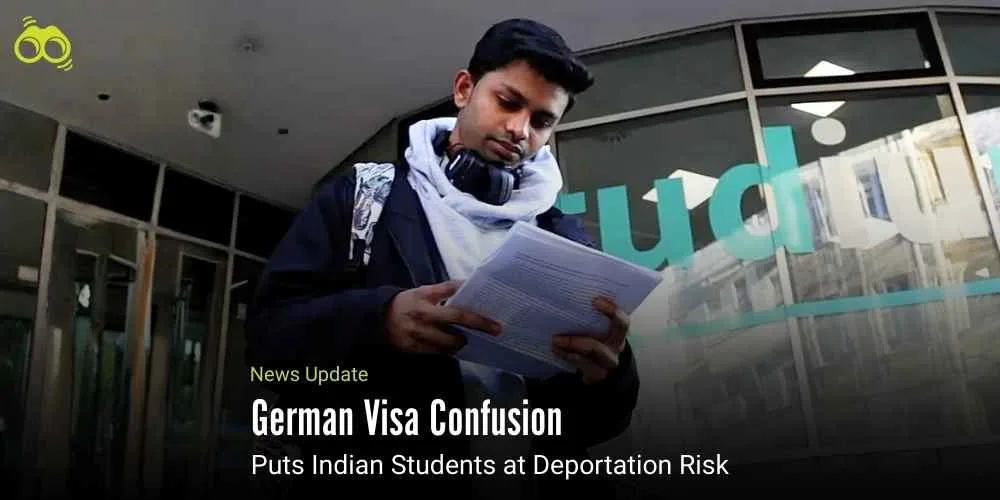
Hybrid Course Recognition Dispute Triggers Deportation Fears for Indian Students in Germany
Berlin University Visa Uncertainty Leaves Indian Students at Risk
Hundreds of Indian students in Germany stand on the verge of deportation instead of attending their graduations due to confusion over the recognition of study abroad courses in Germany and shifting interpretations of visa regulations. What was meant to be a turning point, a respected degree, good career prospects, and a chance to build a life in Europe, has instead become Berlin university visa uncertainty for Indian students, with notices, appeals, and fear replacing academic focus.
How the Collapse of the System Took Place
Reports said that the crisis resulted from a conflict concerning the marketing of hybrid versus in-person degree visa compliance, and how this is currently under scrutiny by immigration authorities. Students entered Germany legally, believing they were enrolled in bona fide in-person programmes. However, officials are now questioning whether these courses comply with face-to-face study requirements.
Education experts have pointed out that such international education regulatory challenges Germany faces bring into sharp focus the complex nature of global student mobility. Students usually make life-changing decisions based on programme details and guidance available at the time of enrolment. When rules or their interpretations change during the programme, uncertainty is created even for those who acted in good faith.
Caught Between Authorities and Universities
For the students affected, the consequences are severe. Many invested upwards of €20,000, mainly through loans taken in India. Some are now being told to complete their degree via distance learning, although they were promised on-campus education in Germany. Observers note that this should be regarded as a system-wide failure rather than the fault of any single institution. They clarified that international education involves universities, intermediaries, and immigration authorities; when these are not aligned, students are left in a vacuum.
Wake-Up Call for Indian Families
This incident has caused serious concerns among Indian families planning to support their children’s education abroad in Germany. Germany had long been perceived as an affordable and transparent option compared to countries such as the US or the UK. But incidents like this create a trust deficit. Experts recommended looking beyond admissions and fee payments and focusing on study abroad course verification in Germany, checking programme recognition, mode of instruction, attendance rules, and visa eligibility through official sources before committing. They explained that while this shifts responsibility onto students, it reflects the structured nature of modern global mobility.
When Education Models Outrun Visa Rules
The crisis also exposed discord between new education models and old visa policies. With hybrid and flexible degrees becoming common worldwide, visa requirements have not kept pace. Analysts recommended that clarity must be upheld to ensure such formats align with visa requirements. Early disclosure of expectations could reduce friction along the student journey.
Why It Matters Beyond Berlin
For now, many visa concerns for Indian students in Germany remain unresolved. They are legally present and registered for their studies, yet remain unsure of their stay until graduation. Experts emphasised that the international education system depends on predictability and trust. Students invest time, money, and aspirations in their decision to study abroad. Maintaining trust requires accurate information, harmonised systems, and commitment from all stakeholders to help students complete their education.
Conclusion
This episode stands as a cautionary tale for German student visa affairs: Indian students and their precarious position regarding student visas and course compliance. It explains why Indian students in Germany are at risk of deportation despite lawful entry, and how confusion over hybrid course recognition led to visa uncertainty. It signals the need to verify study abroad programme recognition. Students must research thoroughly before enrolment, using study abroad course verification services for Indian students or following official advice, to avoid immigration trouble.
Editor’s Note:
In Germany, hundreds of Indian students find themselves in an extremely precarious situation, which demonstrates how education systems and immigration rules interact in a fragile way. Ironically, what should have been a pathway to respected degrees and better careers has turned into a saga of uncertainty in visa regulations at a Berlin university. Very quickly, recognition of study abroad courses in Germany became an issue of distrust. The students entered the country legitimately, believing they had admission into valid in-person programmes. However, with changing visa interpretations, deportation is now a real threat. The students are not at fault. Trust has been undermined by the absence of coordination between universities, intermediaries, and immigration authorities. For Indian parents, this is a wake-up call. It stresses how important it has become to verify study abroad programmes before paying fees or securing loans. A programme’s recognition, mode of instruction, and visa eligibility must be checked with the concerned authorities. Otherwise, students may end up caught between promises of on-campus study and rules that demand in-person attendance. The wider lesson is clear: visa frameworks must keep pace with the rise of hybrid and flexible degrees worldwide. Otherwise, students will continue to face uncertainty. International education is built on two pillars, predictability and trust. To maintain that trust, we must have accurate information, organised systems, and collective accountability to ensure students can complete their courses.
Skoobuzz underscores that this issue transcends the confines of a single university or city. It reflects the critical need for immediate action to resolve international education regulatory issues, not only in Germany but globally. Addressing these challenges is essential to ensure that studying abroad remains a feasible option for students who dedicate their time, finances, and aspirations to forging a future internationally.
FAQs
1. Why are Indian students facing deportation in Germany?
Indian students are facing deportation in Germany because of confusion over study abroad course recognition and how immigration authorities interpret visa rules. Many enrolled in hybrid or online programmes, believing they were valid in-person degrees. Later, officials questioned whether these courses met face-to-face study requirements, leaving students legally enrolled but at risk of losing their visa status.
2. How can students verify a study abroad course before enrolling?
Students should always carry out study abroad course verification through official sources. This means checking:
- Whether the programme is recognised by the host country’s education authorities.
- The mode of instruction (in-person, hybrid, or online).
- Attendance requirements and visa eligibility conditions.
- Guidance provided by the university and immigration offices.
- Consulting trusted study abroad consultants or official embassy websites can help avoid later problems.
3. Can hybrid courses affect student visa eligibility in Germany?
Yes. Hybrid courses can affect visa eligibility if they do not meet Germany’s requirement for in-person study. Immigration rules often demand physical attendance, and hybrid or online formats may not qualify. Students must confirm with universities and immigration authorities whether their course structure is acceptable for visa compliance before enrolling.
4. What visa rules should Indian students know before studying abroad?
Indian students should be aware of:
- Minimum in-person attendance requirements.
- Proof of financial support and health insurance.
- Validity of the chosen programme for student visas.
- Rules about part-time work during study.
- Conditions for extending or converting visas after graduation.
- Understanding these rules helps avoid student visa compliance issues and ensures a smoother study abroad experience.
5. Is Germany still safe for Indian students to study?
Yes, Germany remains a safe and popular destination for Indian students. The current crisis is linked to visa compliance and course delivery formats, not to the safety or legality of studying in Germany overall. However, students must be cautious, verify programmes thoroughly, and ensure their course meets visa requirements. With proper checks, Germany continues to offer affordable education and strong career opportunities.

Skoobuzz

 Skoobuzz
 Skoobuzz
 Skoobuzz
 Skoobuzz
 Skoobuzz


0 Comments (Please Login To Continue)