








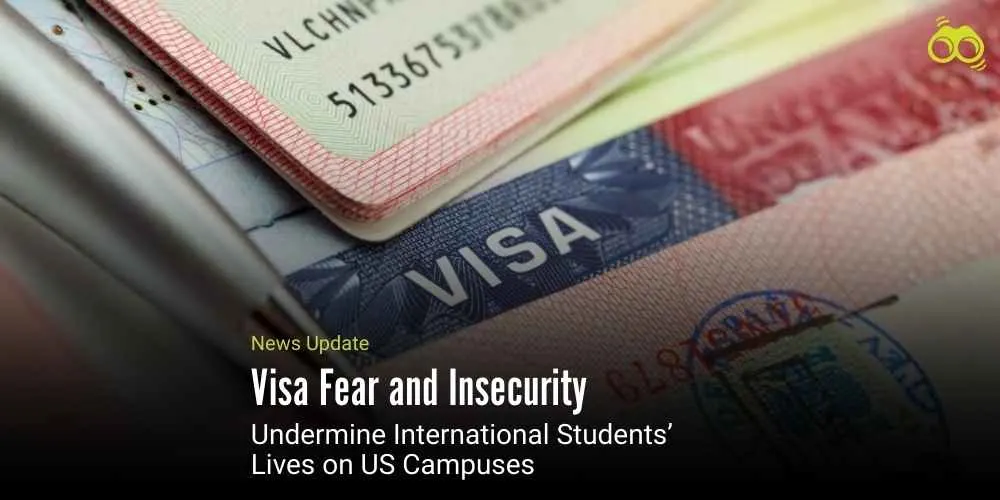
Erosion of Trust: How Trump’s Immigration Policies Affect International Students in US Higher Education
Visa Uncertainty and Fear Disrupt Academic Focus for International Students in America
International students' safety in the US under the Trump policies has become a serious concern. For decades, the United States was considered the stable heart of global higher education, promising not only degrees but safety, mobility, and opportunity. However, recent findings suggest that this promise is weakening, especially for those who once sustained the system. A report by Stop AAPI Hate titled Unsafe, Unwelcome, and Uncertain showed that only 4 per cent of international students feel safe under Trump's policies. And analysts noted, this did not represent a sudden collapse but rather a slow erosion of trust, belonging, and predictability across American campuses.
The survey received responses from 87 students across 36 US universities. Because 72 per cent of international students in the country come from Asian countries, the findings underscore the intersection of immigration policy, campus life, and racialised fear. Numbers showed that 53 per cent of them said they felt “not at all safe”. Close to 90 per cent were afraid of their visa status, and almost 88 per cent reported a lower sense of belonging and avoiding political engagement. About 86 per cent even changed their usage of social media because of fear.
Students spoke about their fears of illegal detention or deportation with no due process, with many using these concerns to draw parallels with previous Trump immigration policies. Many feared being separated from their families, while others were fearful that years of academic work could be eradicated through a single policy shift.
International Student Fear in the US Campus Environment
The Chinese students, in particular, reported concerns about being watched and suspected. They said they feel watched, silenced, or treated as national security risks. Some went so far as to invoke the incarceration of Japanese Americans during the Second World War, not just as history but as precedent.
In such a climate, silence became a survival strategy. This political disengagement is not considered apathy but a response to a system perceived as unpredictable and punitive, which mirrors the wider international student anxiety of the US political climate.
Ripple Effects of Immigration Policy
Experts said immigration rules do not simply determine who crosses borders but also mould daily life. Ever-changing visa policies, aggressive enforcement, and hostile rhetoric caused ripple effects in academic, professional, and personal decisions. These are students who lived in fear of losing healthcare if detained, of not being able to gain employment or sponsorship, and of having their academic trajectories disrupted due to visa delays or summary revocations. These were not imaginary threats but administrative facts. A missed deadline or belated approval assumed exaggerated importance when the condition of legality was precarious. This implies that US visa uncertainty affects not only the well-being but also the academic focus of international students.
International Students' Support in US Universities - With Gaps
Most respondents said that their institution was supportive to some extent, offering services such as mental health and advice on travel and visa policy. Yet gaps in support did persist: only 48% said they received guidance on completing studies under current conditions, and just 38% reported having access to legal support. Many simply didn't know if key services existed on campus.
Such uncertainty was perceived as being institutional as well as federal. When there was much more at stake, the support systems, either fragmented or overstretched, could do little to reassure the students. US campuses needed more robust international student support services, according to the survey.
US Higher Education Losing Its Global Reputation
Perhaps the most telling finding was on the question of advice to future students. The respondents said they would not recommend peers apply to the US. Some bluntly said, “America is no longer the land of dreams.” Others felt treated as political tools or scapegoats during economic and geopolitical tensions.
This reflects the US higher education global reputation. International education depends as much on reputation as on ranking, and when students encourage others not to come, the damage overshadows campuses and to country's standing as a global academic destination.
What Comes Next – Recommendations
The report diagnosed the problem, but besides diagnosing, it gave some recommendations, including:
Strengthen mental health services tailored to international students, ensuring support is accessible and responsive.
Expand access to trusted legal information and provide emergency funds to help students manage visa disruptions.
Communicate policy changes clearly and proactively, so students receive timely updates and reassurance.
Offer “Know Your Rights” workshops to replace panic with planning and empower students with practical knowledge.
Provide academic flexibility through online or hybrid study options, adaptable enrolment timelines, and recognition of immigration‑related stress as valid grounds for extensions.
Encourage collective leadership, with institutions working together to challenge federal policies and clarify their real‑world impacts.
Shift from quiet compliance to visible advocacy, showing students that universities are actively defending their interests.
Conclusion
The trend of international student perceptions due to the policies of Trump reflects a climate of fear and uncertainty. Where only 4 per cent of students feel safe, this is no longer a question of perception, but reality. The impact of the Trump administration has engendered deep anxieties among foreign students, disrupted their academic focus, and harmed the country's reputation abroad.
The future of US college destinations for international students depends on how far universities go to rebuild trust, actually support them, and keep them safe. If not, students will increasingly start to compare study abroad destinations for international students and choose alternatives in Europe, Asia, or Canada. It is because every time international students claim that the US is no longer the "land of dreams," the promise of American higher education is potentially lost.
Editor’s Note:
International students’ safety in the US under Trump’s policies has become a serious concern. Once seen as the secure heart of global higher education, America now faces declining trust, especially among Asian students who make up the majority of its international population. Stricter immigration enforcement, fluctuating visa rules, rising fees and hostile rhetoric have created insecurity, with students anxious not only about studies but also about immigration, healthcare and future work. A survey by Stop AAPI Hate revealed that only 4 per cent of international students feel safe. Many fear detention or deportation without due process, while Chinese students report being watched or treated as security risks. Silence and withdrawal from public debate have become survival strategies. Visa delays and sudden revocations disrupt academic focus, and although universities offer some support, gaps remain in legal aid and clear guidance. The reputational damage is clear: students now advise peers not to apply, saying “America is no longer the land of dreams.” Trust and safety matter as much as rankings, and when these are lost, students turn to Europe, Asia or Canada.
According to Skoobuzz, a better future requires stronger mental health services, reliable legal advice, emergency funds for visa issues, proactive communication, and academic flexibility. Most importantly, institutions must act together, challenging harmful policies and showing visible support. International education depends not only on excellence but also on reputation and trust. Unless safety is assured, America risks losing its place as a leading destination.
FAQs
1.Which state in the USA is safe for international students?
Reports highlight that New Hampshire, Maine, Vermont, Massachusetts, and New Jersey rank among the safest states for international students, based on low crime rates and strong education systems. States like Utah and Virginia are also considered safe and welcoming.
2.What is the situation of international students in the USA?
In 2025, international student enrolment in the US declined slightly by 1%, according to IIE and NAFSA surveys. Policy changes, visa delays, and stricter enforcement have created uncertainty. While the US still hosts over 1.1 million international students, its dominance as the top destination is slowly declining.
3.Is it safe for Indian students to study in the USA?
Indian students remain one of the largest groups in US universities. However, surveys show that only 4% of international students feel safe under Trump’s policies, with many fearing deportation or visa issues. While academic opportunities are strong, Indian students face stress from visa crackdowns, rising costs, and political rhetoric.
4.What are the disadvantages of studying in the US?
High tuition fees – among the most expensive globally.
Costly living expenses – especially in cities like New York, Boston, and California.
Visa restrictions – complex rules, limited work opportunities, and uncertainty about extensions.
Cultural adjustment challenges – adapting to American customs and academic systems can be difficult.
Limited financial aid – international students often cannot access US federal aid, making scholarships highly competitive.
5.What are the new rules for international students in the USA in 2025?
The US government tightened visa rules in 2025. Key changes include:
Higher visa application fees.
Mandatory social media checks during visa processing.
Fixed visa durations with reduced grace periods.
Stricter background checks and increased risk of visa revocation for violations.
Restrictions on programme changes without reapplying for a visa

Skoobuzz
 Skoobuzz
 Skoobuzz
 Skoobuzz
 Skoobuzz
 Skoobuzz


0 Comments (Please Login To Continue)