








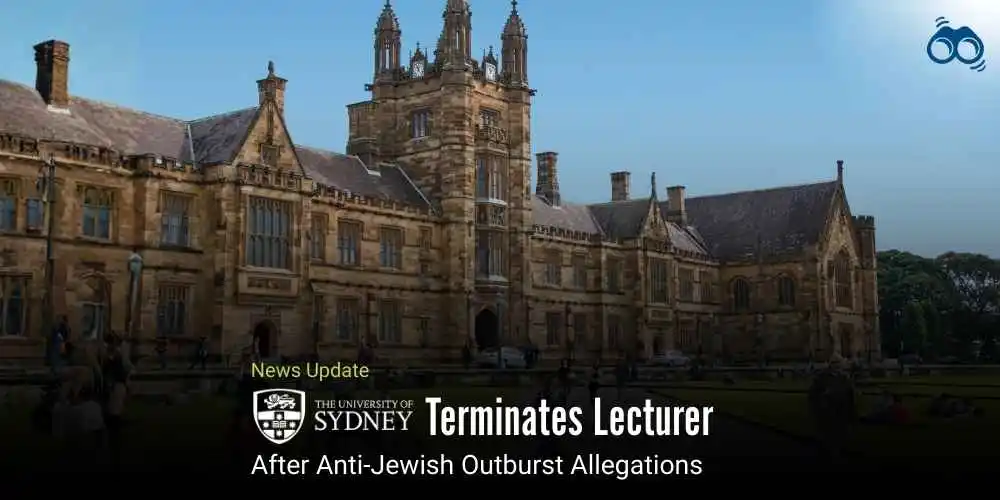
Government Pledges Tougher Hate Speech Laws Amid Campus Antisemitism Concerns
Sydney University Confirms Zero Tolerance for Hate Speech Following Staff Misconduct
Jewish students in Australia have expressed concerns about their safety on campuses, noting an increase in harassment and hostility. Community leaders have warned that antisemitism is becoming more frequent at universities, particularly during public and religious events. In response to these warnings, the government pledged to introduce stricter laws against hate speech to ensure that campuses remain safe and inclusive.
An incident at the University of Sydney in October illustrated these concerns. During the Jewish festival of Sukkot, students were celebrating when a lecturer, Rose Nakad, was recorded shouting at them. The university acted swiftly, suspending her immediately and later dismissing her for serious misconduct. Officials stated that her behaviour was unacceptable and emphasised that harassment and hate speech would not be tolerated on campus.
Jewish academic Sarah Aamidor, who was present at the time, reported that Nakad had shouted “Free Palestine” at the stall. Aamidor explained that the students were simply marking a religious holiday and considered the remarks antisemitic. She added that Nakad had described herself as an Indigenous Palestinian and claimed that Zionists were “rubbish” and harming children. According to Aamidor, the students asked Nakad to move away from the stall.
The university later stated on 15 December, describing the incident as “serious misconduct” and “deeply distressing.” It confirmed that the lecturer had been suspended as soon as the video circulated online and subsequently dismissed. The statement reaffirmed the university’s zero‑tolerance policy towards antisemitism, hate speech, and harassment, stressing the importance of maintaining safe and welcoming campuses. Leaders also apologised to affected staff and students and reminded the community that free counselling services were available.
The incident occurred just one day after Prime Minister Anthony Albanese announced tougher hate speech laws, following the Bondi Beach mass shooting. The government indicated that religious leaders promoting violent ideologies would face severe consequences. Analysts have observed that pro‑Palestinian tensions on campuses have negatively affected student wellbeing, with Jewish students in New South Wales losing confidence in inclusion policies.
Community leaders have noted that antisemitism has been rising across Australian campuses. The Sydney University case has been seen as part of this wider trend, linked to the ongoing Israel–Gaza conflict. Last year, several campuses witnessed pro‑Palestinian demonstrations, with students demanding that universities cut ties with Israel. Sydney University’s vice‑chancellor, Mark Scott AO, rejected those demands, but tensions have persisted.
The broader conflict has created a humanitarian disaster. Reports from Gaza’s Health Ministry suggest that more than 60,000 Palestinians have been killed, while Israel’s military actions have displaced most of the population. The war began after Hamas‑led militants killed around 1,200 people and abducted hundreds more. Observers believe that the Sydney University case demonstrates the institution’s commitment to addressing antisemitism and harassment. While the response has been welcomed as part of broader diversity and inclusion efforts, analysts caution that rising hostility linked to the wider conflict makes a return to calm uncertain.
Editor’s Note
The incident at Sydney University last October highlighted the growing problem of antisemitism faced by Jewish students. Many have said they no longer feel safe, particularly during public or religious events. The behaviour of lecturer Rose Nakad was unacceptable, and the university’s decision to suspend and later dismiss her for serious misconduct was an important step. Officials described her actions as deeply distressing and made clear that hate speech and harassment have no place on campus. Analysts have pointed out that rising pro‑Palestinian tensions have harmed student well-being and eroded trust in inclusion policies. The way the university handled this case shows a serious commitment to diversity and sends a strong message that antisemitism will not be ignored. Community leaders have been warning about this trend for some time, and the government’s move to strengthen hate speech laws reflects the urgency of the issue.
Skoobuzz highlights that this case should be seen as a wake‑up call. Protecting students must remain a priority, and inclusion cannot be limited to words alone; it requires action. With emotions running high, campuses must remain respectful and open to dialogue, even when conversations are difficult. Only then can every student feel safe and supported.
FAQs
1.What happened in the Sydney University antisemitism incident?
The Sydney University antisemitism incident took place in October during the Jewish festival of Sukkot. A lecturer, Rose Nakad, was recorded shouting at Jewish students while they were celebrating at a campus stall. Witnesses reported that she used pro‑Palestinian slogans and made offensive remarks about Zionists. The university described the behaviour as “deeply distressing and utterly unacceptable” and treated the matter as serious misconduct.
2.Did Sydney University fire a staff member for harassing Jewish students?
Yes. Sydney University suspended the lecturer immediately after the video surfaced online and later dismissed her following a formal investigation. Officials confirmed that her actions amounted to serious misconduct and emphasised that harassment and hate speech have no place on campus.
3.How does Sydney University handle hate speech and harassment complaints?
Sydney University has a zero‑tolerance policy towards hate speech, antisemitism, and harassment. Complaints are investigated promptly, and disciplinary action is taken where misconduct is proven. The university also provides counselling services for affected students and staff, and regularly reaffirms its commitment to diversity and inclusion.
4.Are antisemitic incidents rising in Australian universities?
Community leaders and analysts have warned that antisemitic incidents are increasing across Australian campuses. Jewish students have reported feeling unsafe, particularly during public or religious events. Rising tensions linked to the Israel–Gaza conflict have contributed to hostility, with several universities witnessing pro‑Palestinian demonstrations in recent years.
5.What policies protect Jewish students at Sydney University?
Sydney University enforces diversity and inclusion policies designed to protect all students, including Jewish students. These policies prohibit antisemitism, hate speech, and harassment, and ensure that campuses remain safe and welcoming. The university has also made counselling services available and has publicly reaffirmed its commitment to safeguarding student wellbeing.

Skoobuzz



 Skoobuzz

 Skoobuzz


0 Comments (Please Login To Continue)