








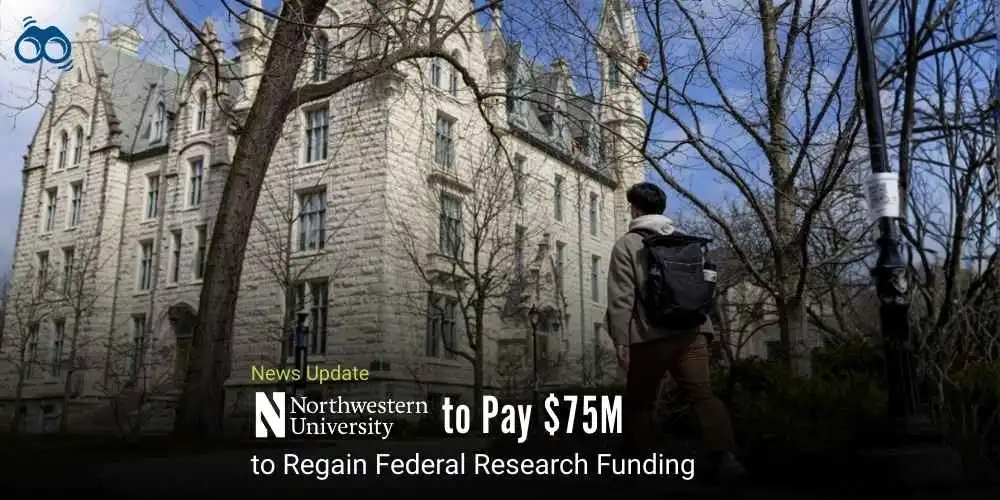
Northwestern $75 Million Settlement Explained: Compliance, Civil Rights, and Federal Grant Restoration
How Northwestern Settled With the US Government to Regain Nearly $790 Million in Research Funding
Reports confirmed that Northwestern University had entered into a $75 million settlement with the US government in connection to a series of investigations, thus allowing for about $790 million to be restored in federal research grants. Officials stated that the grants had been frozen under the prior Trump administration, citing that the university had insufficiently addressed issues of antisemitism. The freezing of grants resulted in lay‑offs and the resignation of Michael Schill, president of Northwestern, in September, underlining how freezing grants harmed research in the US.
According to the US university funding agreement 2025, Northwestern will pay the amount to the US Treasury across three years. Observers noted that revocation of the Deering Meadow deal signed in April 2024 to end a pro‑Palestinian protest encampment was also among the stipulations of the deal. Acting president Henry Bienen maintained that Northwestern refused to concede control over hiring, admissions, or curriculum, adding that he would not have signed the agreement without protections in those areas. The settlement further requires Northwestern to uphold federal civil rights compliance in higher education, including anti‑discrimination laws and Title IX. It must also create training materials to orient international students on campus norms, and provide sex‑segregated housing and facilities for those requesting it. Analysts explained that this was part of larger civil rights inquiries and increasing federal scrutiny in higher education. US Secretary of Education Linda McMahon proclaimed that the reforms demonstrated courageous leadership and would serve as a guide for other institutions in rebuilding public confidence in universities. Commentators added that the deal exemplified how the US government restores research grants to universities once compliance conditions have been met.
The Northwestern case in turn was seen as one among many funding crises in higher education in the US. Earlier, Columbia University had agreed to $200 million in a settlement, with Brown and Cornell also settling after investigations into antisemitism on US college campuses. Harvard, seen as the number one target of this administration, remains in negotiations after it sued over grant cuts and won a court order to restore funding. Analysts noted that the White House recently attempted a different route to direct favourable federal grant consideration to institutions willing to pursue policies aligned with the Trump agenda, although several universities rejected the proposal, fearing risks to academic freedom.
The funding recovery saga of Northwestern University in Illinois demonstrates how Northwestern University came to settle with the US government for nearly $790 million of research funding. The agreement shows what Northwestern had to commit to under the new federal agreement, including compliance with civil rights laws and revocation of concessions related to protest activity. Experts concluded that the episode underscores why the US government cut research grants to Northwestern and other elite universities in 2025 and how such freezes can disrupt research projects, staff placement, and the wider academic landscape.
Editor’s Note
With the $75 million settlement of Northwestern University with the government of the US, an important chapter in the debate about funding higher education opened. The university has now regained almost $790 million in frozen federal research grants in a period marked by extreme upheaval, including staff lay‑offs and the resignation of its president, following months of frozen grants over accusations of antisemitism. The agreement highlights the growing expectation of universities to abide by federal civil rights standards. Northwestern must now revoke earlier concessions relating to campus protests, conform to applicable anti‑discrimination laws, and set out explicit protections under Title IX. These reflect the broader scrutiny facing American universities, where compliance has become increasingly tied to funding. Reforms have been heralded as a demonstration of courageous leadership, with the suggestion that they could provide a model of behaviour for other institutions. The case, meanwhile, stresses the harm funding freezes inflict on research projects, weaken staffing, and corrode public trust. With Columbia, Brown, Cornell, and Harvard also drawn into disputes of similar nature, Northwestern’s settlement indicates that monetary settlements are altering the world of academia in the United States.
Skoobuzz highlights that this saga shows the balancing act that universities must conduct between academic freedom and government demands, while protecting their research and teaching. The settlement may reinstate equilibrium at Northwestern, but it also indicates the challenges lying ahead for higher education across the country.
FAQs
1. What was the reason behind Northwestern University’s funding freeze in 2025?
Officials explained that the Trump administration froze Northwestern’s federal research grants because it believed the university had not done enough to address antisemitism on campus. This freeze led to staff lay‑offs and the resignation of the university’s president.
2. How much money will Northwestern pay to settle with the US government?
Northwestern agreed to pay $75 million to the US Treasury over three years as part of the settlement.
3. Will Northwestern’s research funding be restored after the agreement?
Yes. The settlement allows nearly $790 million in federal research grants to be restored to Northwestern University, ensuring its research projects can continue.
4. What demands did the US government make in exchange for restoring funding?
The agreement requires Northwestern to:
- Revoke the Deering Meadow deal linked to campus protests.
- Follow federal civil rights and anti‑discrimination laws.
- Uphold Title IX protections, including housing and facilities for women.
- Provide training materials to help international students understand campus norms.
5. How will this deal affect future federal grants to US universities?
Analysts said the deal shows that federal grants are now closely tied to compliance with civil rights and government policies. Other universities may face similar conditions, meaning funding stability will depend on meeting federal requirements.

Skoobuzz

 Skoobuzz
 Skoobuzz
 Skoobuzz
 Skoobuzz
 Skoobuzz


0 Comments (Please Login To Continue)