








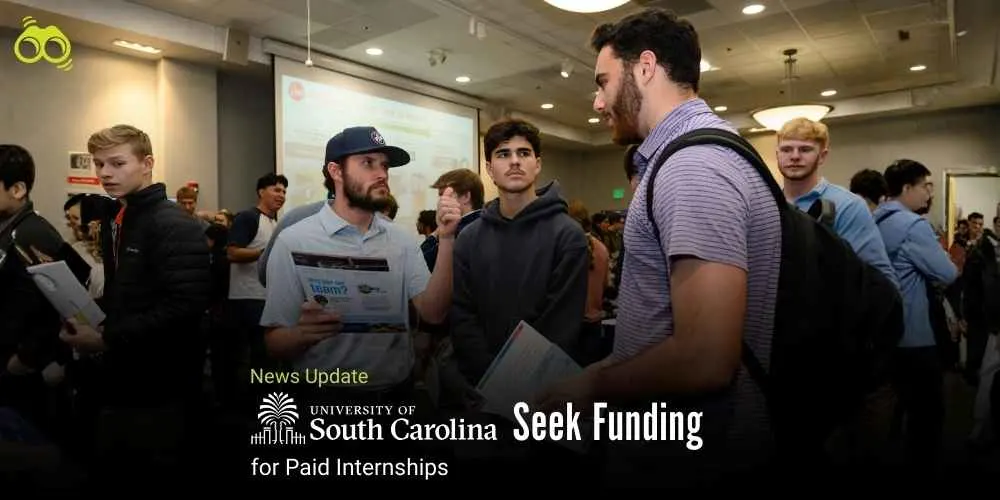
Lander University Seeks £500,000 to Fund Experience Your Education Internship Stipends
Coastal Carolina University Teal Works Programme Proposes $3,000 Internship Stipends
The need for paid internships in the United States is increasing, as higher educational leaders recognise consecutive barriers for students unable to afford these costs. This situation led to the further spread of summer internship stipends, supported by colleges in the US using state funds, to pay for student placements in support of workforce development in key industries. While this provides opportunities for undergraduates, the increase in local economies with these programs begins to connect student experience with employer needs.
Rumour has it that programs are increasingly gaining traction in South Carolina, whereby public universities work to expand direct-pay-for-internship student programs and create stronger pipelines for the workforce. Based on the success rates of Clemson University in increasing student participation in internships and the impact of the University of South Carolina internship stipend, two additional institutions have now sought the support of the state budget for internships for college students. With plans to establish public universities' stipend programs for summer internships in high-demand industries, these proposals will offer internship support models to help alleviate financial constraints and offer students wider accessibility.
Coastal Carolina University, Teal Works Programme
Teal Works internship stipends are to be presented to the legislature by Coastal Carolina University. The money in the state allocation of $390,000 annually was requested by the university for starting the Teal Works programme, awarding $3,000 stipends to 75 students on ten to twelve-week summer placements. For students working in rural or underserved areas of South Carolina, an additional stipend of $1,000 is available. The university said this would help eliminate financial barriers to internships in high-demand areas and provide students with skills for future careers.
Lander University, Experience Your Education, seeks to expand the stipend funding to $500,000. The institution seeks to add stipends to its long-established program already providing academic credit and awards for students completing 120 hours of internship. An official commented that many students are unable to participate in an internship without an economic contribution, as opportunities are rendered unaffordable by expenses like travelling and meals.
Funding Impact at Cornell and USC
State-funded internship stipends have proven to be a resounding success in South Carolina, where colleges have long had an operational internship system. Participation grew from about thirty students each summer to more than 400 since state funds were allocated. Their leaders explained that even relocation or living costs were outright barriers before.
Through a USC stipend-funded system, over 1,750 students have received $3,000 stipends totalling more than $5.2 million. Legislators have now sanctioned the recurring tax funding allocation of $2 million for USC and $4 million for Clemson, which will perpetuate the programs. Altogether, a request for $2.5 million annually from USC was made to restore the earlier funding level.
Broader Impact and Future Plans
Coastal Carolina has indicated plans to grow participation to 250 students by year five from state, federal, and private sources. Analysts say these US higher education funding internship initiatives form part of the larger landscape of internship workforce pipeline development in US colleges to equip students with real-life experience in high-demand industries and boost the local economy.
Editor note:
State funding for summer internship stipends in colleges in the US indicates that higher education is responding to the financial barriers faced by students. For many undergraduates, unpaid placements are not an option, due to costs involved, such as travel, meals, and accommodation. States will not only be removing barriers to these internships but will also ensure that students earn hands-on experience in industries that are in great demand with pay. This will link classroom learning with what employers require and boost the economy. South Carolina has become a leading example of this change. For instance, Clemson University's success in promoting internship participation and the effect of the University of South Carolina internship stipends have encouraged such institutions to join the bandwagon. Coastal Carolina University's Teal Works program and Lander University's Experience Your Education expansion show how public colleges are currently gaining state budget support for internships for college students. These all highlight the importance of creating public university stipend programs for summer internships that give access to opportunities not only for students who can afford them. The impact of the funds is already apparent. Participation at Clemson rose from 30 students to over 400 every summer once stipends were introduced. At USC, for instance, more than 1,750 students have benefited from the stipends of $3,000 that have been given, with legislators approving recurring allocations to sustain the programs. These are examples of improving internship workforce pipeline development in colleges within the US, preparing graduates in order to place them in productive careers and simultaneously promote the growth of the region.
Thus, the extended state-funded internship stipends of South Carolina colleges have more purposes than just providing financial assistance. It is a strategic investment in education, employability, and community building. By removing the barriers and introducing paid placements, universities create fair opportunities for all and make sure that students graduate not only with knowledge but also with practical skills. This is what higher education would look like in terms of dynamic adaptation to workforce needs, alongside the support lent to students in building meaningful futures.
FAQs
1. How much stipend do interns get in the USA?
The amount varies widely. Many state-funded summer internship stipends in US colleges provide around $3,000 for ten to twelve weeks, though private companies may offer higher or lower amounts depending on the industry.
2. Do you get paid for internships in the USA?
Yes, many internships are paid, especially in public universities' stipend programmes, summer internships and in high‑demand industries. However, some internships remain unpaid, which is why state budget support internships for college students have been introduced to remove financial barriers.
3. Can an Indian student do an internship in the USA?
Yes. Indian students can apply for internships in the USA, but they usually need the correct visa, such as a J‑1 exchange visitor visa. Universities and employers often provide guidance on eligibility and application processes.
4. Which US university gives 100% scholarships?
A few universities, such as Harvard, Yale, Princeton, and MIT, offer full scholarships to international students based on financial need. These are highly competitive and depend on the student’s academic record and financial circumstances.
5. Are US universities state-funded?
Yes, many universities are state-funded public institutions, such as the University of California system or the University of South Carolina. These receive government support but also rely on tuition fees and private funding.
6. Why doesn’t the United States have free college?
The USA does not have free college because higher education funding is shared between federal, state, and private sources. Policymakers argue that tuition fees help sustain universities, while debates continue about affordability and access.

Skoobuzz

 Skoobuzz

 Skoobuzz
 Skoobuzz
 Skoobuzz


0 Comments (Please Login To Continue)