








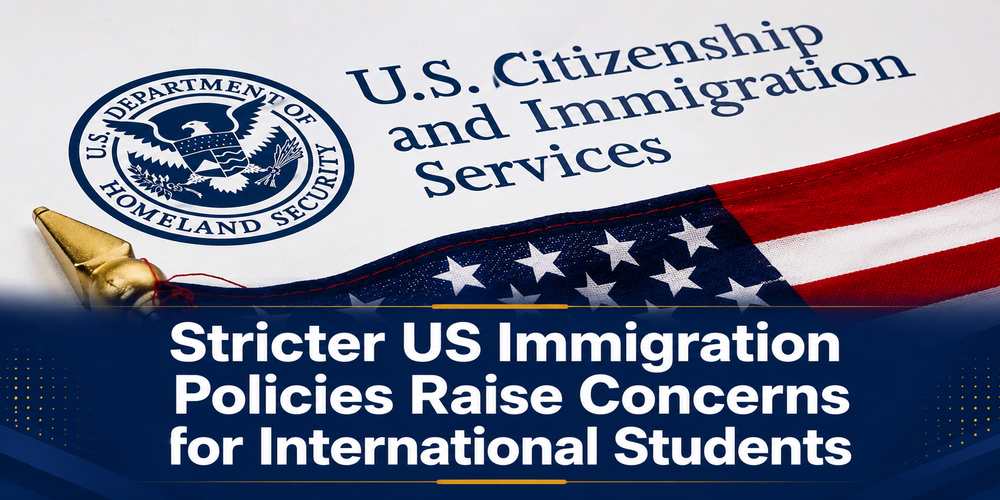
Stricter US Visa Policies Could Reduce International Student Enrolment by 110,000 in 2026
US international student enrolment reduced by 110,000, putting billions in economic contributions and jobs at risk.
The US higher education sector could face a significant decline in international student enrolment in Fall 2026 as stricter visa policies, increased uncertainty and changing immigration rules reshape how students evaluate studying in the country. A new report from NAFSA: Association of International Educators, prepared in collaboration with research firm JB International, projects that international student enrolment could fall by as many as 110,000 students compared with the previous academic year.
The projected decline could have consequences extending well beyond university campuses. According to the report, a reduction of this scale could result in approximately USD 3.4 billion in lost local economic spending and put an estimated 39,000 jobs at risk. The findings highlight the broader economic contribution international students make to the United States through tuition payments, housing, transportation, food, retail and other spending in the communities where they study.
The potential impact is particularly significant for India, which remains the largest source of international students in the US. More than 363,000 Indian students enrolled in US institutions during the 2024-25 academic year, making any changes to student visa policies especially relevant to Indian students considering American universities.
International Student Enrolment Could Fall Sharply
According to the NAFSA and JB International projections, international student enrolment in the US was estimated at approximately 1.169 million during Fall 2025-26. For the 2026-27 academic year, that figure could decline to around 1.057 million, representing a reduction of approximately 110,000 students. The projected decline comes amid a period of increased uncertainty surrounding US immigration and student visa policies. For international applicants, the decision to study abroad involves significant financial and personal commitments, meaning uncertainty over whether they will receive a visa, how long they can remain in the country and what opportunities will be available after graduation can influence where they ultimately choose to study.
The report suggests that these policy changes could therefore affect the attractiveness of the United States as a destination for international education. While the country continues to host one of the world's largest and most established higher education systems, students may increasingly consider alternative destinations if they perceive other countries as offering more predictable pathways for study, work and long-term career development.
India Remains a Major Source of US International Students
India is particularly important to the US international education ecosystem. With more than 363,000 Indian students enrolled in American institutions during the 2024-25 academic year, the country represents one of the largest international student communities in the United States. Indian students are present across undergraduate, postgraduate and doctoral programmes, with significant numbers pursuing fields such as engineering, computer science, business, data science and other technology-related disciplines. Many also view US universities as a pathway towards international research experience and professional opportunities.
Any significant reduction in international enrolment could therefore affect not only American institutions but also prospective Indian students and families who have traditionally considered the US a leading destination for higher education. The uncertainty may be particularly relevant for students making decisions several months or years in advance. International education requires substantial financial planning, and students may be reluctant to commit to expensive programmes if immigration regulations and post-study opportunities appear unpredictable.
Billions in Economic Contributions Could Be Lost
International students contribute considerably to local economies across the US. Their financial impact extends beyond the tuition and fees paid directly to universities, with students also spending on accommodation, transportation, groceries, restaurants, healthcare, entertainment and other everyday needs. NAFSA and JB International estimated that international students contributed approximately USD 41.77 billion to the US local economy during Fall 2025-26. Under the projected decline in enrollment, that contribution could fall to approximately USD 38.37 billion in 2026-27.
The difference represents around USD 3.4 billion in economic activity that could potentially disappear from communities across the country. This is important because international students support economic activity in both university towns and larger metropolitan areas. Their spending can benefit landlords, restaurants, retailers, transportation providers and other local businesses, while universities themselves depend on international enrollment as an important source of tuition revenue and campus diversity. A sustained decline could therefore have consequences that extend beyond admissions offices and international student departments.
Nearly 39,000 Jobs Could Be Affected
The economic implications could also translate into employment losses. The report estimates that the projected decline in international student enrolment could put approximately 39,000 jobs at risk. The employment impact is linked to the wider economic activity generated by international students. Universities employ staff to support education and student services, while local businesses benefit from the demand created by students living and studying in their communities.
Graduate-level enrolment declines are expected to be a particularly important driver of the projected economic losses, according to the report. Institutions with large international student populations could face greater financial pressure if fewer international students enrol. For universities that have invested heavily in graduate programmes, research facilities and international recruitment, changes in enrolment could affect both their immediate finances and longer-term academic planning.
Visa Uncertainty Could Influence Student Decisions
Visa policy has become an increasingly important factor in international students' decisions about where to pursue higher education. For prospective students, admission to a university is only one part of the process. They must also secure the appropriate visa and be confident that they can enter the country in time to begin their programmes.
The NAFSA report points to stricter travel policies and changing visa priorities as factors contributing to the uncertainty surrounding international enrolment. The US Department of State's prioritisation of visa processing for FIFA World Cup ticket holders over student applicants has also been identified as a factor that could affect university enrolment. Historically, student and scholar visa applications have received priority during peak periods to help international students arrive on US campuses before the academic year begins. Any delays during this period can create complications for students who have already received admission and made significant financial commitments.
New Four-Year Rule Creates Additional Uncertainty
Another policy change highlighted in the report concerns the US Department of Homeland Security's rule limiting the period international students can remain in the United States to four years without an extension. The change could create particular challenges for students enrolled in longer academic programmes, including some doctoral programmes that may require additional time to complete research, dissertations or other degree requirements.
Students who may previously have expected greater flexibility could now need to pay closer attention to programme duration and extension requirements when deciding where to study. The policy could also influence students who view US education as a pathway towards gaining professional experience after graduation. For international students, the possibility of remaining in the country temporarily to build work experience can be an important factor when comparing study destinations.
Graduate Programmes Could Face Greater Pressure
The report identifies declining graduate-level enrolment as a major driver of the projected economic losses. This is significant because international students make up an important part of graduate education and research at many American universities. International graduate students contribute not only through tuition and living expenses but also through research activity, teaching support and participation in laboratories and academic projects.
A decline in this population could therefore have implications for universities' research ecosystems as well as their finances. Institutions with large international graduate populations may have to reconsider recruitment strategies, programme planning and research capacity if enrolment remains below previous levels. The impact may not be evenly distributed across the sector. Universities that rely more heavily on international students could face greater exposure to changes in visa policy and international demand.
US Risks Losing Global Talent to Other Destinations
The implications of the changing visa environment extend beyond student numbers. The United States has historically positioned its universities as a major destination for global academic and professional talent, attracting students who later contribute to research, technology, healthcare and entrepreneurship. If international students begin choosing other countries because they perceive the US as less accessible or predictable, the consequences could become more long-term. Students who choose to study elsewhere may eventually build careers, research networks and businesses in those countries. This means that a decision made at the university application stage could influence where highly skilled talent develops over the following decades.
NAFSA Executive Director and CEO Fanta Aw argued that US policies can influence where international students decide to invest their futures and that these decisions can carry significant consequences for the country's society and economy. The concern is therefore not simply about fewer students arriving on American campuses for one academic year. It is about whether the US can continue to maintain its position as a preferred destination for global talent.
International Competition for Students Is Intensifying
The US is not the only country competing for international students. Universities across countries such as the United Kingdom, Canada, Australia and other education hubs are also seeking to attract global talent. Students increasingly compare destinations based on several factors, including university reputation, tuition costs, visa accessibility, post-study work opportunities, employment prospects, safety and the broader political environment. When visa policies become more restrictive or unpredictable, these factors can become even more influential.
For Indian students in particular, decisions about studying abroad often involve substantial financial investment. Families may therefore look closely at whether a country provides a clear pathway from admission to visa approval, study and employment. Greater uncertainty in one destination could make alternative countries more attractive.
A Potential Turning Point for US Higher Education
The projected decline of 110,000 international students would represent a significant change for the US higher education sector. While projections do not guarantee that enrolment will fall by the full amount, they highlight the potential consequences of policy uncertainty at a time when universities are already competing for students globally.
The issue is particularly important because international education has traditionally been one of the United States' strongest global assets. American universities attract students not only because of their academic reputation but also because they offer access to extensive research networks, professional opportunities and connections with global industries. Maintaining that appeal requires more than academic excellence. It also depends on whether international students believe they can realistically access and complete their education in the country.
Why This Matters
The debate around international student visas is often framed as an immigration or border policy issue. But the NAFSA projections demonstrate that it is also an education, economic and talent policy issue. International students are not simply temporary visitors to American campuses. They contribute to university finances, research programmes, local businesses and the wider workforce ecosystem. Many also go on to contribute to the US economy through research, entrepreneurship and highly skilled employment. For students from India and other major source countries, the question is equally consequential. If the US becomes harder to access or offers less predictable pathways, students may begin building their academic and professional futures elsewhere.
That raises a larger question for American higher education: How much does a country risk when the world's most ambitious students begin to believe that their future may be easier to build somewhere else? The immediate concern may be a projected decline in enrollment. The longer-term concern could be the gradual relocation of global talent, research and innovation.
Editor's Note
There is a number that stands out in the latest projections: 110,000. It is easy to read that figure as an enrollment statistic. A decline in students. A change in an annual admissions cycle. Another number in an increasingly complicated debate around immigration. But 110,000 is not really just a number.
Behind it are students who may have spent years preparing applications, taking entrance examinations, securing funding and imagining themselves walking onto an American campus. Behind it are families making some of the largest financial decisions of their lives. Behind it are researchers who may have hoped to work in American laboratories, engineers who may have wanted to join technology companies and young people who may have viewed a US degree as the beginning of a global career.
And behind those students are universities and communities that have come to depend on their presence. This is what makes the conversation around international student visas so complicated. A country has every right to determine who enters its borders and under what conditions. Immigration systems must address legitimate concerns around security, compliance and national priorities. But higher education operates on a different timeline.
For decades, American higher education has benefited from the belief that the world's brightest students should come to the United States. Those students have helped strengthen universities, research laboratories, hospitals, technology companies and local economies. Many eventually become researchers, entrepreneurs, doctors, engineers and academics whose contributions extend far beyond their original degrees.
Frequently Asked Questions
1. Could US international student enrolment fall in 2026?
According to the NAFSA and JB International report, international student enrolment in the US could decline by approximately 110,000 students in Fall 2026 compared with the previous academic year.
2. How much economic activity could the decline cost the US?
The projected decline could result in approximately USD 3.4 billion in lost local economic spending, according to the report.
3. How many jobs could be affected?
NAFSA and JB International estimate that approximately 39,000 jobs could be at risk if international student enrolment declines as projected.
4. How many international students are expected to study in the US?
The report estimates that international enrolment stood at around 1.169 million in Fall 2025-26 and could decline to approximately 1.057 million in 2026-27.
5. How important are Indian students to US universities?
India is the largest source of international students in the US, with more than 363,000 Indian students enrolling during the 2024-25 academic year.
6. Why could stricter visa policies affect enrolment?
International students may reconsider their study destinations if visa processing becomes more restrictive, uncertain or difficult to predict. Delays can also prevent students from arriving on time for their programmes.
7. Has visa prioritisation affected international students?
The report identifies the US Department of State's prioritisation of visa applications for FIFA World Cup ticket holders over students as another factor that could affect international enrolment during an important visa-processing period.
8. What is the new four-year rule for international students?
The Department of Homeland Security has finalised a rule that would limit international students' stay in the US to four years without an extension. This could create challenges for students in longer programmes, including some doctoral degrees.
9. Why could graduate programmes be particularly affected?
Graduate-level international enrolment is identified as a major driver of the projected economic losses. Many US universities rely heavily on international graduate students for tuition revenue, research and academic programmes.
10. Could international students choose other countries instead?
Yes. If students perceive other destinations as offering more predictable visa processes, stronger post-study opportunities or a more welcoming environment, they may increasingly consider alternatives to the US.
11. How much did international students contribute to the US economy?
According to the report, international students contributed approximately USD 41.77 billion to the local US economy in Fall 2025-26. The figure is projected to decline to around USD 38.37 billion in 2026-27 under the enrollment projections.
12. Why does international student enrolment matter beyond universities?
International students contribute to local economies through tuition, housing, transportation, retail and other spending. They also participate in research and can later contribute to industries such as technology, healthcare, science and engineering.

Skoobuzz

 Skoobuzz
 Skoobuzz

 Skoobuzz


0 Comments (Please Login To Continue)