






Ivy League Funding Controversy Deepens: Trump Challenges Harvard Court Victory
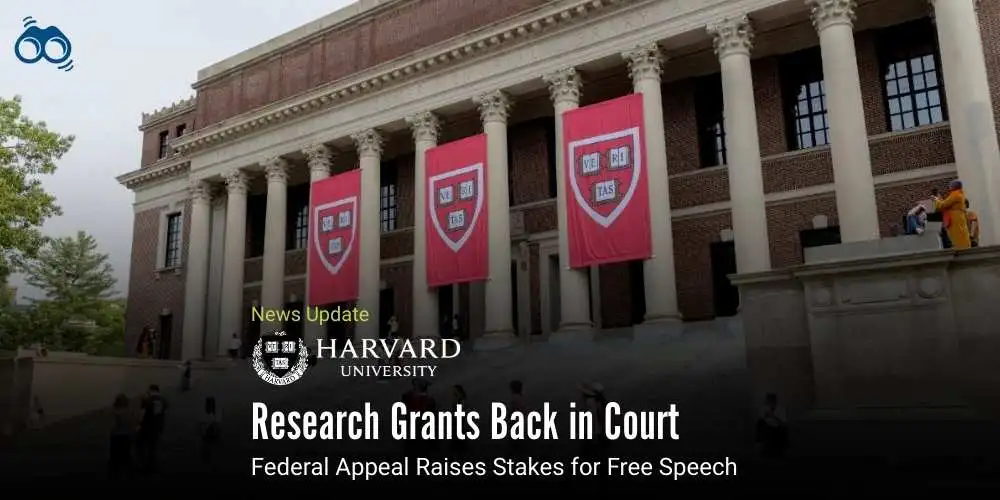
Harvard University Federal Research Grant Appeal Extends Legal Battle Over Civil Rights and Free Speech
Recent reports from Washington indicate that the Trump administration has also appealed the reversal of federal funds awarded to Harvard University, thus continuing the long-standing tussle over changes being pursued by the White House at the Ivy League institution. This represents a significant escalation of the ongoing litigation and a firm stance in the broader debate about academic freedom, civil rights, and the governance of federal research grants in the U.S.
It was explained that the Justice Department's appeal Harvard's funding decision had been filed late on Thursday in consolidated lawsuits brought by Harvard and the American Association of University Professors. Commentators noted that the case had tested the government’s power to influence Harvard, which had resisted pressure aimed at elite colleges across the United States. Observers recalled that Judge Allison Burroughs had ruled in September that the funding cuts violated Harvard’s First Amendment rights. Her judgment said the government had placed unconstitutional conditions on Harvard’s federal research grants and failed to follow civil rights procedures. Analysts described this as a milestone in the Harvard First Amendment funding lawsuit and a turning point in the wider academic freedom federal funding case.
It was reported that the Trump administration had cut more than $2.6 billion from Harvard, citing allegations of slow action against anti-Jewish bias. Burroughs rejected this claim, saying the government had used antisemitism as a “smokescreen for a targeted, ideologically motivated assault” on universities. The Harvard federal research grants reinstated by the judge were said to be vital for projects in science, medicine, and national security. The appeal notice filed by the Justice Department was described as the first step in seeking to overturn the ruling. Analysts pointed out that the filing did not yet include detailed legal arguments.
Harvard officials stated that they remained confident in their legal position. They explained that the reinstated funding advanced life-saving medical research, strengthened national security, and supported America’s competitiveness. The University stressed that the Harvard University federal research grant appeal had implications far beyond Cambridge, Massachusetts. Todd Wolfson, president of the AAUP, commented that the appeal was a continuation of efforts to halt critical research funding. He argued that the administration was attempting to discourage universities and faculty from speech and research that the President disfavoured.
Reports added that Harvard had been a central target in the Trump White House's higher education funding fight, while other Ivy League institutions, such as Columbia, Brown, and Cornell, had reached agreements with the government. Negotiations between Harvard and the White House were said to have continued during the legal battle. Trump had earlier indicated that a resolution was close, including a possible $500 million payment to create a “trade school” for American workers, but the deal never materialised. Analysts explained that there is no fixed timeline for the appeal. The timeline of Harvard funding cuts and federal appeals court review is expected to stretch into the new year. The Boston appeals court Harvard dispute will decide whether the reinstatement stands, and the impact of Trump’s appeal on Harvard research funding reinstatement could be significant for universities across the United States.
The Trump appeal judge's order to reverse Harvard's funding has become a high-profile dispute in the Harvard vs government funding cuts appeal. The Harvard funding appeal, explained for readers and students, shows that the case is not only about money but also about freedom of speech, civil rights, and the future of university research funding in America. The U.S. Department of Justice Harvard lawsuit appeal now moves to Boston, where judges will decide the long-term effects on Harvard’s scientific research and the wider university research funding controversy Trump has created.
Editor’s Note:
This appeal serves to highlight the increasing tensions between the government and universities for research funding. The broader issues of academic freedom, civil rights, and the condition of federal research grants in the United States are involved in the Harvard case. Judge Burroughs’ earlier ruling became significant as it linked funding decisions to free speech and civil rights. By dismissing the claims of government and condemning its actions as “an ideologically motivated assault,” her ruling places the discourse of political pressure on universities firmly within the realm of protection. The Justice Department’s appeal has now brought the case back to Boston, where the First Circuit Court of Appeals will determine whether the reinstatement of funding shall stand, thus delaying a decision until the new year and setting possible precedents for the treatment of higher education funding going forward. For Harvard, the reinstatement of the grants is hugely important. They support national security, medicine and science projects, and the University has made very clear the fact that losing them would have grave consequences. Some analysts believe the case is a part of a larger fight over federal research dollars, demonstrating how funding policy can shape both academic freedom and national priorities.
Skoobuzz underlines that this issue is less a financial argument and more a crucial examination of how universities and governments manage freedom, fairness, and accountability within the research environment. The decision to appeal elevates the conflict between funding and independence to a core issue in American higher education policy.
FAQs
1. What was the majority opinion in SFFA v Harvard?
The U.S. Supreme Court ruled in June 2023 that Harvard’s race-conscious admissions policy violated the Equal Protection Clause of the Fourteenth Amendment. The majority opinion, written by Chief Justice John Roberts, stated that race could not be used as a factor in university admissions.
2.How much federal funding was cut from Harvard originally?
Reports confirmed that the Trump administration froze or cut between $2.2 billion and $2.7 billion in federal research grants and contracts to Harvard University.
3.Who is the highest-paid professor at Harvard?
Public filings show that Srikant Datar, Dean of Harvard Business School, earned nearly $1 million in 2021, making him one of the highest-paid professors. Other senior administrators, such as former President Drew Gilpin Faust, have also received multi-million dollar compensation packages.
4.What court will hear the Trump administration’s appeal?
The appeal will be heard by the U.S. Court of Appeals for the First Circuit in Boston, Massachusetts, which will review the lower court’s ruling that restored Harvard’s funding.
5.Why did Harvard sue the federal government over funding cuts?
Harvard sued because the government froze billions in research funding, which the University argued was unlawful retaliation against protected speech and a violation of civil rights law. Harvard claimed the cuts were politically motivated and not genuinely linked to allegations of antisemitism.
6.Is Harvard getting its research funding back after the appeal?
Yes. Following Judge Allison Burroughs’ ruling in September 2025, Harvard has already received most of the reinstated funding. However, the Trump administration’s appeal means the outcome will depend on the First Circuit Court’s decision.
7.What is the impact of the appeal on Harvard research programmes?
The appeal has created uncertainty for Harvard’s long-term research planning. While most of the funding has been released, the ongoing legal battle could affect future grants and delay projects in medicine, science, and national security. Analysts note that the case has wider implications for academic freedom and federal oversight of universities.

Skoobuzz
 Skoobuzz
 Skoobuzz
 Skoobuzz
 Skoobuzz
 Skoobuzz


0 Comments (Please Login To Continue)