








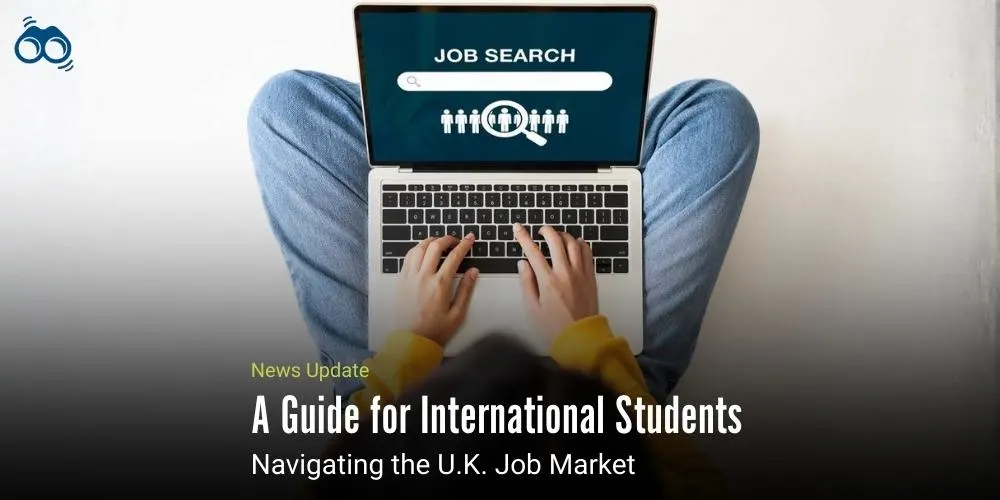
Graduate Route Visa Offers Hope Amid Tough UK Employment Outlook
Visa Sponsorship and Competition Define UK Careers for Foreign Students
For thousands of youthful aspirants, the life dream is to study in the United Kingdom. The UK offers world-class universities, a plethora of cities, and an experience of life in one of the most globalised countries. But for international students, this journey is not merely about earning a degree. As soon as they step into the country and often over a year after graduation, the job market for international students in the UK beckons.
Immersing oneself in understanding the operations behind employment in the UK, from cultural expectations to visa rules, becomes essential to make things more real. In very few instances is finding work anything but straightforward: opportunity versus challenge; visa sponsorship requirements; competition in an increasingly slowing economy; adaptation to British workplace culture. What 2025 incoming students need to know about becoming an international graduate employable for the UK market could spell the difference between success and frustration.
Start Early: Timing is Everything
One of the biggest misconceptions is that job hunting begins at the end of a course. Truth is, applications are often opened by many employers months ahead, even one year ahead of time. Within at least a few weeks of coming to the UK, international students are likely to discover that graduate schemes for students on one-year Master’s programmes often open then. This means that one needs to prepare early: updated CVs, company research, and registration with UK graduate-job portals-all this before classes even start for international students.
The graduate route visa UK job search offers two years after graduation in which to find work, although the competition is fierce. But even more so, in the area of financial services, consulting, engineering, and technology, candidates should have anticipated readiness long before graduation day.
Tailored Applications: How to Stand Out in the UK
Unlike several other countries where a single CV suffices everywhere, international students working in the UK rapidly learn that customised applications are the normal practice. Generic CVs seldom make it past the first stage. Motivation, personality, and transferable skills are the qualities that employers want to see.
This is where part-time jobs, volunteering, and belonging to student societies become important. Managing an amount in a club budget shows financial literacy. Helping peers from different backgrounds demonstrates cross-cultural communication. These prove to be experiences that make foreign students competitive in the UK job market, showing that flexibility and initiative matter as much as grades.
Visa Sponsorship: The Biggest Challenge
But among most foreign students, the moment they finish their graduation does not mean passing the test. The post-study work visa UK allows temporary employment before long-term jobs, often require passing certain criteria of the Skilled Worker visa requirements UK. Not every employer offers sponsorship, and this creates intense competition for roles that do.
For most international graduates, there is very limited competition among many businesses for sponsorship of a visa. Smaller companies and startups will seldom have room for sponsored visa slots. Students then must go after the big names in their industries, for they have been known to support foreign nationals. Students must proactively search for employers in the UK that offer such sponsorship. For Indian students and others, understanding the British visa rules for foreign graduates UK is critical. Without sponsorship, even the most talented graduates may struggle to stay in the country.
Labour Market Conditions: The 2025 Outlook
The wider economy shapes opportunities, too. The impact is real with regard to UK unemployment for international graduates, particularly as UK labour market conditions in 2025 are showing signs of slowing. Fewer vacancies mean tougher competition, and on top of that lie quite different visa policies.
That is why networking becomes quite a lifeline. And most opportunities lie in the "hidden job market," where sentiment prevails over job boards. Attend career fairs and professional groups, and touch base with alumni to reach those positions that never come out in public advertisements.
Interviews in the AI Age
Interviews in the UK are changing quickly. Given all the possibilities from traditional panels to AI-recorded video responses and gamified assessments, candidates must be ready for anything to test their technical ability and cultural fit. Mock interviews and an understanding of how the visa rules have changed, and how the slowing job market may affect international students, can make or break a case for acceptance.
Employers seek more than just skills; they want commercial awareness and a cultural fit. This means that students need to learn to speak the employer's language by making a clear, confident link with what they have done to meet business needs.
Building a Support System
The much-neglected area of international students is the ecosystem of career support available to them. International career guidance, peer mentoring, alumni networks, and online platforms are all provided by the university. A good number continue to support even post-graduation. From LinkedIn Learning to one-on-one coaching, such assistance offers a way to tackle the unique challenges of job hunting that foreign graduates in the UK face.
Real‑World Experience: Every Step Counts
Employers like initiative and growth. Whether it is a consultancy project, short internship, freelance, or community volunteering, all the experiences contribute toward increasing one's confidence and employability. The successful students invariably combine experiences, layering academic study with relevant part‑time jobs, industry projects, and continuous networking. This layering process adds extra significance to the job market for UK international graduates 2025, where competition is very high, and sponsorship policies are stringent. Resilience, adaptability, and curiosity stand candidates out.
The UK job market for international students is competitive, but it has opportunities. Success needs proactive work, visa awareness, and skill building beyond academics. The journey is more than just ticking boxes; it is about being curious, resilient, and building a career identity that knows no geographical barriers. Learning tips for international students to secure UK employment post-graduation will help graduates conquer roadblocks like sponsorship policies and unemployment trends. Arrive with ambition, prepare early, and take every opportunity for growth; the journey through the UK is not about getting a degree at all; it is really the beginning of your global career.
Editor’s Note:
For thousands of international students, studying in the United Kingdom represents more than earning an academic qualification. It symbolises building futures in one of the most competitive job markets; hence, understanding the realities of working in the UK becomes an important issue. Students arrive fairly high in spirit without early preparation: knowledge about visa rules, sponsorship issues, and expectations from employers, all of which can quickly convert hopes into feelings of frustration. Success in the UK job market does not commence after graduation but rather from the moment one sets foot in this country. Job advertisements are opened months ahead of time, and employers expect customised CVs, relevant experiences, and cultural awareness. For the student, every odd job, every volunteer stint, and every membership in university societies counts. Such experiences demonstrate initiative, adaptability, and the capability to work across cultural domains, all of which are as important to UK employers as academic achievement. There cannot be enough emphasis on the importance of this pathway. The slowing economy and strict visa sponsorship have made it a cut-throat competition for international graduates. The difference between thriving and just surviving is knowledge of how to prepare early, network, and build a strong career identity.
Skoobuzz emphasises a crucial message for the incoming 2025 students: studying in the UK is a foundational step not just for obtaining a degree, but for shaping a successful global career.
FAQs
1. Is it hard for international students to find jobs in the UK now?
Yes, it is challenging. The UK job market in 2025 is slowing down, with fewer vacancies and stricter visa rules. International students face strong competition, so success depends on early preparation, networking, and targeting employers who hire global talent.
2. Can foreign graduates get UK jobs with visa sponsorship?
Yes, but sponsorship is limited. Employers must be licensed to sponsor under the Skilled Worker visa. Large companies in finance, consulting, tech, healthcare, and engineering are more likely to offer sponsorship. Smaller firms and startups often cannot. Graduates should research employers that regularly sponsor international talent.
3. How long do international students have to find a job in the UK after graduation?
Graduates can apply for the Graduate Route visa, which allows them to stay and work for 2 years after completing a degree (or 3 years for PhD graduates) without needing sponsorship. After this period, they must switch to a Skilled Worker visa or another eligible route to continue working.
4. Which sectors in the UK are hiring international graduates in 2025?
Key sectors include:
Technology & IT – AI, cybersecurity, software development, data science
Healthcare & NHS roles – nursing, medical specialists, allied health professions
Engineering & Manufacturing – civil, mechanical, renewable energy engineers
Green industries – sustainability, Net Zero projects, clean energy
Finance & Consulting – graduate schemes in major firms
5. What are the visa requirements for international students to work in the UK?
Hold a valid Student visa during studies
Eligible to work part‑time (up to 20 hours/week during term) and full‑time during holidays
After graduation, apply for the Graduate Route visa (2–3 years stay)
6. What are the best UK companies offering visa sponsorship to international graduates in 2025?
Top employers include Big Four consultancies (PwC, Deloitte, EY, KPMG), major banks, global tech firms like Google, Microsoft, Amazon, and healthcare providers such as the NHS. These organisations regularly sponsor Skilled Worker visas for international graduates.
7. How can international students improve their employability in the UK job market?
Students can boost employability by:
Starting job applications early (graduate schemes open months in advance)
Tailoring CVs and cover letters for each role
Gaining part‑time work, internships, or volunteering experience
Joining student societies to show leadership and cross‑cultural skills
Building networks through career fairs, alumni connections, and LinkedIn

Skoobuzz

 Skoobuzz
 Skoobuzz
 Skoobuzz
 Skoobuzz


0 Comments (Please Login To Continue)