






Impact of New Publisher Deals on Open Access Transition and Research Visibility in UK Universities
UK Universities Secure Transformative Publishing Deals to Advance Open Access Research
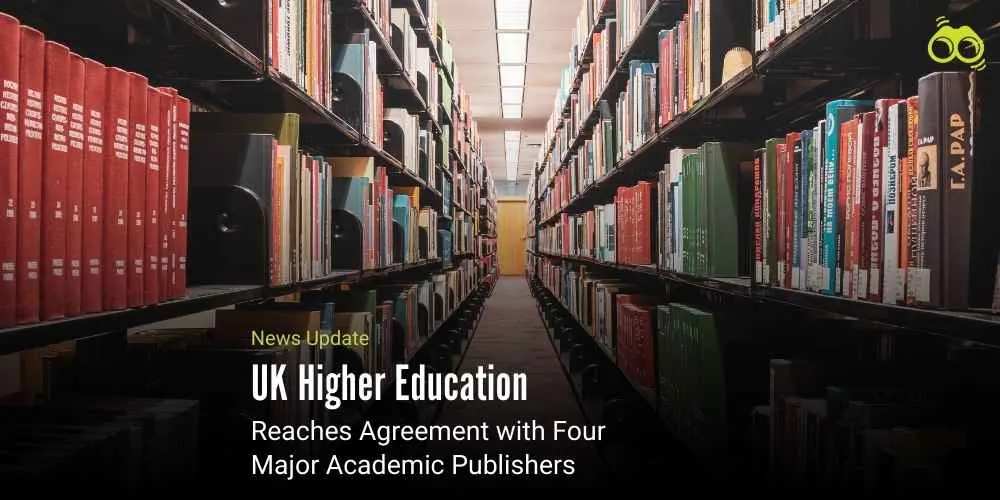
The UK higher education sector, through Jisc, has reached new open access publishing deals with four major publishers – Elsevier, Springer Nature, Taylor & Francis and Wiley – while talks with Sage are still ongoing. These agreements aim to move universities away from traditional subscription models and towards open access, making research more freely available. Although the deals mark progress, affordability remains a concern. Some universities may struggle to pay for them, and Jisc has prepared contingency plans to support institutions that cannot afford full participation.
The agreements also include pilot schemes to remove article‑processing charges from certain journals, which could lead to more titles becoming fully open access. This represents a fundamental shift in publishing models and is expected to improve the visibility and accessibility of UK research worldwide.
Agreements Reached, Details Pending
Jisc explained that, although agreements had been reached with four publishers, the final details were still being worked out before institutions could formally sign up. The organisation noted that it hoped the sector‑wide open access agreements would be ready before Christmas. At the same time, it was mentioned that Sage’s offer remained under consultation, with a decision expected later in December. Jisc also stated that grace access periods would be in place to cover any gaps once the current contracts expired at the end of the year.
Affordability Issue
Sector leaders acknowledged that some universities might not be able to afford the renewals of their deals. Jisc emphasised that affordability is ultimately a matter for institutions, which may need to make cuts in reading access or open access publishing. The body has prepared contingency plans for institutions, including options on alternative access and scenario modelling. This is indicative of the challenge in balancing transformative publishing deals in UK higher education with the financial realities facing institutions.
Open Access Progress Universities have been pushing for quicker movement on the research open access transition UK. Under the terms of the new deals, publishers have agreed to pilot the removal of article‑processing charges for specific journals, enabling UK authors to publish without paywalls. Anna Vernon, Jisc’s head of research licensing, said it was a “fundamental shift in business model” for some journals, which would fully move to open access if thresholds are met. Impact and Outlook Commentators explained that these transformative read and publish agreements represent a significant step in the UK open access publishing sector in 2025.
For researchers, the details of the UK sector‑wide open access agreements with Elsevier, Springer Nature, Wiley and Taylor & Francis mean greater visibility and accessibility of their work. The new deals struck with publishers are likely to make a serious impact on the open access transition and research visibility at UK universities, intending to help British universities strengthen their role in global research. In other words, the UK universities' open access publishing services have reached a point of bifurcation. The deals demonstrate progress toward one that is more open and equitable, yet affordability and implementation will decide how far-reaching those benefits will be throughout England, Scotland, and Wales.
Editor’s Note:
The new UK academic open access publishing deals show a balance between cost and wider access to research, driven by universities and publishers. It was explained that four major publishers – Elsevier, Springer Nature, Taylor & Francis and Wiley – have now agreed terms with Jisc, while talks with Sage are still ongoing. These agreements mean a lot to researchers in sharing their work more openly and minimising paywall barriers. At the same time, concerns about affordability remain: some universities could struggle to afford these new deals; this might mean reduced access to reading or publishing. To manage this, contingency plans and alternative options have been prepared. That progress is thus being made, but financial pressures continue to shape decisions in higher education. The move towards open access is a clear sign of change. Faster progress has been demanded by universities, and pilots to remove article‑processing charges have been a step in that direction. If successful, these transformative publishing deals make UK higher education research more visible and accessible, supporting both students and academics.
Skoobuzz underlines that the agreements mark a shift towards a fairer and more open system of publishing-even though challenges remain.
FAQs
1. What is open access in the UK?
Open access in the UK refers to a publishing model where research outputs are freely available online for anyone to read, download and reuse. It is designed to remove barriers to knowledge, making research more transparent and widely accessible.
2. What is open access publishing and how do UK deals support it?
Open access publishing means that academic articles are published without paywalls, so readers do not need subscriptions to access them. In the UK, recent open access publishing deals with major publishers such as Elsevier, Springer Nature, Taylor & Francis and Wiley support this by covering article‑processing charges and enabling more journals to move towards fully open access models.
3. How will the open access deals affect UK academic research funding?
These deals affect UK academic research funding by shifting costs from traditional subscriptions to open access models. While they increase the visibility and impact of UK research, they also raise affordability concerns. Some universities may struggle to pay for agreements, meaning funding pressures could limit participation or reduce publishing options.
4. What is the agreement between the United Kingdom and Elsevier?
The UK–Elsevier agreement, negotiated through Jisc, allows authors at participating institutions to publish open access without paying article‑processing charges in hybrid journals. It also provides discounts on fully open-access titles. This arrangement ensures UK researchers can share their work more widely while controlling costs.
5. What role does Jisc play in UK open access publishing agreements?
Jisc plays a central role in UK open access publishing agreements. It negotiates with publishers on behalf of universities, sets sector‑wide thresholds for acceptance, and ensures agreements reflect financial realities. Jisc also provides compliance support, benchmarking, and contingency planning to help institutions manage affordability and maintain access.

Skoobuzz

 Skoobuzz
 Skoobuzz
 Skoobuzz
 Skoobuzz
 Skoobuzz


0 Comments (Please Login To Continue)