








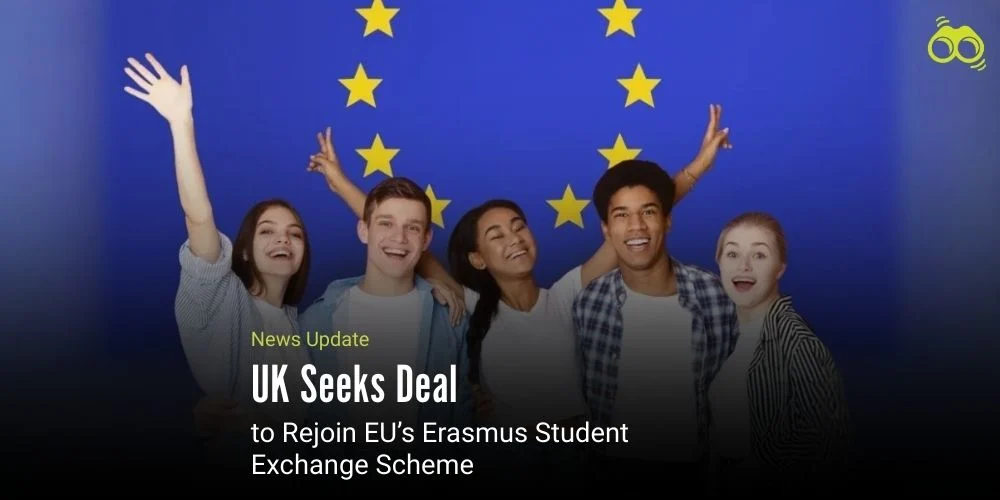
UK-EU Education Deal: Erasmus+ Student Exchange to Restart for British Universities
Brexit Impact: UK Students Regain Study Abroad Opportunities with Erasmus+ Return
Brexit was the most significant event in modern British history as the UK decided to depart from the European Union on 31 January 2020. This event occurred due to various reasons, including political, economic and social, along with sovereignty and immigration took a central stage in the debate. Moreover, this decision leaves the European Union with serious consequences for students and their universities. Among them, the visible ones included the withdrawal from the long-standing Erasmus+ programme of the EU, which promoted and worked for the mobility and study abroad of international students.
However, many students and universities counter that the substitute provision was woefully inadequate, resulting in diminished opportunities for studying abroad and weakened academic exchange across borders. It is against this backdrop that ministers have been eager to get a quick breakthrough on Erasmus as part of wider efforts to rebuild relations with Brussels.
Impact of Brexit on Student Mobility and UK-EU Relations:
Brexit has caused great havoc to UK student mobility to study abroad; many thought the substitute scheme was lacking in comparison. Hence, take home a quick breakthrough on Erasmus for Ministers, since it would do good for showing progress on relationship building with the EU after a defeat last week on defence talks. "The economy is suffering due to the Brexit deal and needs to get closer to the EU," Keir Starmer was quoted as saying. He maintained that the renewal of the economy and the move towards a closer relationship with Europe will require reducing trade friction. Stronger UK-EU ties would benefit prosperity, security, and democracy, added Pedro Serrano, EU ambassador to the UK.
Scope of Negotiation
According to UK officials, the negotiations on food standards and carbon emissions, and youth mobility were taking slow strides because the mandate of the EU had taken time to be agreed on much longer. Whereas the discussions on food and drink standards have started by mid-November, this year's youth mobility discussions began in early September.
In the balance hung speculation whether France would demand of Britons a dropping of a promise to forbid foie gras imports, whether the EU would not be lenient on genetically modified crops, and the question of a UK exemption from EU rules on mycotoxins on the grounds of natural presence in British oatcakes owing to its damp climate.
Opportunities for Students
The government representatives said that the UK is moving toward associating with Erasmus+ on the best terms for participation. National interest, which has thus far taken precedence, was aimed at forging trade and educational linkages that would take place to the benefit of jobs, costs, and borders.
Analysts were discussing how the UK intends to rejoin Erasmus+ so as to allow students to study abroad: participation reopening will then be in 2027, and relaunch international student mobility UK and Europe. A reset agreement between the UK and EU, as noted, translates to new opportunities for the exchange of British and European university students, facilitated by cross-border academic exchanges post Brexit.
Universities around Britain and the EU welcomed the move and expressed what British universities and their EU partners would say about the return to Erasmus+: that it would strengthen UK higher education and European exchange schemes, restoring European university mobility. The agreement was said to be groundbreaking for UK students who would then be studying in Europe after Brexit, since on this basis, they would have to apply for Erasmus+ exchange as soon as the UK rejoins, would be eligible for UK-EU study abroad university partnerships, and would be able to apply for a youth mobility visa for UK-Europe.
The UK was poised to rejoin Erasmus+, which signals a major break in relations with Brussels, and at the same time, restart the benefits of student exchange programs for UK and EU students. It would, thus, provide historical context to UK participation in Erasmus and, post-Brexit, impacts perceived on mobility, besides changes proposed by the UK-EU agreement on youth mobility and education.
Editor’s Note:
Brexit was the most important turning point in the modern history of Great Britain, the impact of which has been severe on education. When the United Kingdom left the European Union in January 2020, that also meant taking itself out of the Erasmus+ programme. This was a direct concern for students as well as universities, as Erasmus+ generally provided study abroad opportunities along with supporting professional exchange. Hence, a large number of students and institutions claimed that the alternative scheme provided was not up to the mark. That decreased the opportunity to study overseas, and the traffic of academic exchange across borders weakened, resulting in extreme exasperation and being clearly highlighted by how limited student mobility had become by Brexit. Rejoining Erasmus+ is one of the most important things that the UK is moving into right now. The UK will enable international study opportunities again and build closer ties with British and European universities, and rebuild trust in international education by allowing participation to resume in 2027. Erasmus+ exchanges will then be made accessible to students, along with participation in UK-EU university partnerships and youth mobility arrangements.
Skoobuzz asserts that rejoining Erasmus+ offers significant advantages, effectively beginning to open doors for young people that were closed due to Brexit. This move will restore opportunities for youth to engage with Europe, boost higher education mobility, and demonstrate the benefits of closer UK-EU cooperation for the next generation.
FAQs
1. Will UK students be able to join Erasmus+ again?
Yes. UK students will be able to join Erasmus+ again from 2027, once the UK completes its agreement with the EU. This will reopen opportunities for study abroad and student exchange across Europe.
2. When will the UK re-enter the Erasmus exchange programme?
The UK is expected to re-enter Erasmus+ in 2027. Negotiations are still ongoing, but ministers have said they want the right terms for participation before confirming the final deal.
3. How will Brexit-era restrictions on UK-EU student exchange change?
Brexit had limited student mobility, making study abroad harder and reducing exchange opportunities. With Erasmus+ returning, these restrictions will ease. Students will once again be able to take part in cross-border academic exchanges, join European universities, and benefit from simpler rules for study abroad.
4. What is the UK-EU youth mobility agreement under discussion?
The UK-EU youth mobility agreement is a plan to allow young people from both sides to live, work, and study in each other’s countries for several years. It is designed to replace some of the restrictions created after Brexit and to make student and work exchanges easier.
5. Which UK universities will benefit from rejoining Erasmus+?
All British universities linked to Erasmus+ partnerships will benefit. This includes major institutions such as the University of Birmingham, University of Oxford, University of Cambridge, University of Manchester, and many others. Rejoining will strengthen ties with European universities and give students more chances to study abroad.

Skoobuzz


 Skoobuzz

 Skoobuzz



0 Comments (Please Login To Continue)