








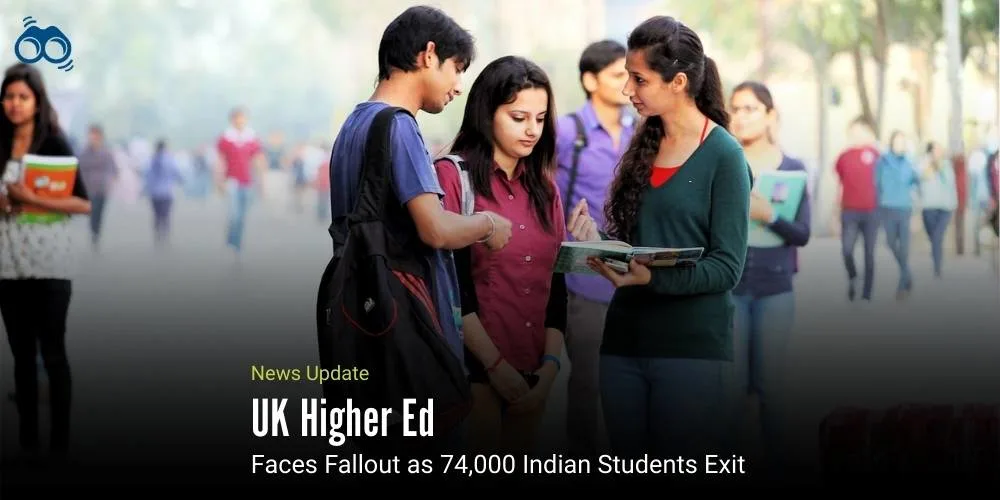
Visa Refusal Rates Push UK Universities to Cut Pakistani and Bangladeshi Admissions
Home Office Rules Force Student Intake Freeze for South Asian Applicants
British universities have now come under fire as restrictions hit student recruitment from Pakistan and Bangladesh. When the visa crackdowns hit in 2025, this will be one of the hottest realities in the UK. This gateway to international talent that once heralded great potential is now a battlefield on compliance, with the institutions forced to weigh diversity and survival very delicately.
The new Home Office rules, which allow the tolerance for visa refusals to be lowered considerably, thus making universities race frantically just to safeguard their sponsorship licences, while thousands of good students remain stranded in the process. Truly, these events resonate as the most spectacular twists in the story of UK higher education and immigration policy 2025, raising immediate queries regarding fairness, security, and the future of global learning in Britain.
Harsher Home Office Rules
The dynamic change happened, whereby reforms were introduced to the Basic Compliance Assessment. It creates the framework that determines whether or not universities can maintain their licence to sponsor international students. According to the new rules, the threshold must no longer exceed 5 per cent for visa applications, either approved or rejected. It was previously a 10 per cent threshold.
Thus, this has left the universities completely naked. Now, the Home Office student visa refusal rate in the UK shows Pakistan is around 18 per cent, while Bangladesh stands at 22 per cent in just the year to September 2025. These figures far exceed the newly introduced limit, meaning that should institutions continue recruiting heavily from these countries, the institutions will risk losing their sponsorship rights.
Which Universities Have Paused Recruitment?
Many of these institutions have now hurriedly put measures in place to shield themselves from compliance problems. The UK universities' Pakistan recruitment ban includes:
- University of Chester; it has halted any recruitment efforts from Pakistan up to autumn 2026.
- University of Wolverhampton; this has ceased to accept its undergraduate applicants from both countries.
- Universities such as East London, Coventry, Sunderland and others; these institutions temporarily halted their recruitment process.
- University of Hertfordshire, pausing intake until 2026 under a Home Office action plan.
- Oxford Brookes has stopped undergraduate recruitment for January 2026.
- London Metropolitan University has entirely stopped undertaking recruitment from Bangladesh.
- BPP University has temporarily paused recruitment from Pakistan.
This list exhibits the universities in the UK which have either called off or restricted the applications from Pakistan and Bangladesh, thereby marking the extent of the challenge.
Why Are Refusal Rates Rising?
Three factors have conspired now to raise refusal rates:
- Tighter scrutiny: The government now closely monitors outcomes regarding enrolment and attendance.
- Visas Misused for Settlement: A dramatic increase in the number of asylum claims from individuals who first entered on study visas has raised concerns about using these routes as backdoor solutions for settlement.
- Recruitment practices are uneven: Heavy reliance on overseas agents has led to inconsistent vetting, with strong applicants being mixed alongside weak or fraudulent cases.
Therefore, this tells us why UK universities stopped taking in students from Pakistan and Bangladesh in 2025.
Impact on Students
The implications of this are direct and immediate for thousands of bona fide applicants. Offers withdrawn, applications suspended, and forfeited deposits is what uncertain futures await. Students who had been preparing to go in early 2026 now find themselves adrift. There is heartbreak in families that have been affected by these restrictions on the Bangladesh-Pakistan student visa UK for 2025, with consultants billing it as "heartbreaking".
Sanctions Threaten Financial Stability
Sanctions for compliance breaches are very heavy. Losing a sponsorship licence for even just one year could entail up to hundreds of millions in lost tuition fees, course closures, and reputational penalties. According to officials, at least 22 universities would fail one compliance criterion without corrective action, while five are at risk of a complete loss of their licence.
This shows the influence the Home Office compliance has over UK higher education, especially for those mid‑ranked institutions that depend so much on international enrolments.
Institutional Responses
To mitigate risk, universities are raising deposit requirements so that applicants demonstrate stronger financial commitment before enrolment. They are tightening financial documentation checks to ensure that students can prove their ability to fund their studies and living costs. Institutions are also reviewing partnerships with overseas agents, aiming to reduce reliance on those who may have contributed to weak or fraudulent applications.
At the same time, universities are diversifying recruitment to other markets to spread risk and avoid over‑reliance on countries with high refusal rates. Finally, they are introducing stricter pre‑CAS interviews to test applicants' credibility and preparedness before issuing visa sponsorship documents. These measures demonstrate the larger international student recruitment risk mitigation strategies in the UK that are assumed to protect compliance for the safeguarding future of international admissions.
Migration Policy Context
The government maintains that the reforms will restore public trust in the student route. Ministers have also said that genuine students continue to be welcomed, but increased accountability will be bestowed on universities to screen more responsibly. Institutions, however, argue that this 2025 crackdown on higher education immigration in the UK will cause the top graduates to go elsewhere, limit the learning options for students from developing countries, and reshape recruitment strategies toward even more lucrative markets such as China and the Gulf.
What It Comes Down To
The international student admission freeze in the UK does not mean that universities are making political statements. Rather, it is a security measure against tougher immigration rules, but the effect is clear—thousands of South Asian students now find their plans for UK education derailed, delayed, or dropped, not because of their merit, but just because of the sudden change in the compliance system.
Editor’s Note:
UK universities have reported the edging out or putting on hold of recruitment from Pakistan and Bangladesh, due to growing difficulty in complying with the Home Office rules. These rules reduce the visa refusal rate stipulated, thereby setting higher compliance standards. According to the universities, they must take measures to protect their sponsor licences. In the end, many genuine students are left with no way forward after securing offers and paying deposits. The human toll is significant: those who followed the rules are facing upheaval, financial loss, and deferred plans. Families are let down, and trust is broken between universities, agents, and applicants. This also threatens the sector’s diversity and talent, weakening education and research. Compliance risks are severe; a failure could mean losing a licence for a year, leading to massive financial losses, course closures, and reputational damage. Institutions, especially those with lower fees, cannot afford this, explaining their harsh decisions with a wide social impact. Refusal rates rose due to enforced checks, driven by increased asylum claims on study routes and variable quality in agent‑led recruitment. The Home Office demands stronger screening, while universities are tightening requirements for deposits, documents, interviews, and agent partnerships to limit abuse and safeguard genuine students. For students and families, practical next steps include: maintaining clear records; requesting university timelines, refund policies, and alternative intakes; checking if applications from Pakistan or Bangladesh are still accepted for your course/institution and considering other study locations if not; seeking good advice; avoiding rushed decisions; and verifying agent credentials and transparency.
Skoobuzz asserts that genuine students must not be punished for systemic flaws, while universities must meet compliance to survive. Swift action from policymakers and institutions is vital to keep international education fair, open, and welcoming to talent from Pakistan and Bangladesh.
FAQs
1.Why are UK universities rejecting students from Pakistan and Bangladesh?
UK universities are rejecting or pausing applications from Pakistan and Bangladesh because the Home Office lowered the visa refusal threshold from 10% to 5%. Both countries currently have refusal rates well above this limit (around 18% for Pakistan and 22% for Bangladesh). If universities continue recruiting heavily from these countries, they risk losing their licence to sponsor international students.
2.Which UK universities have stopped accepting applications from Bangladesh or Pakistan?
At least nine universities have taken action. Examples include:
- University of Chester – suspended recruitment from Pakistan until autumn 2026.
- University of Wolverhampton – stopped undergraduate recruitment from both countries.
- University of Hertfordshire – paused intake until 2026 under a Home Office plan.
- Oxford Brookes – paused undergraduate recruitment for January 2026.
- London Metropolitan University – stopped recruitment from Bangladesh entirely.
- BPP University – paused recruitment from Pakistan.
3.What changed in UK Home Office visa rules in 2025 for international students?
The Basic Compliance Assessment was reformed. Key changes include:
- Visa refusal rate cap lowered to 5% (previously 10%).
- Stricter monitoring of enrolment and attendance.
- Rising asylum claims linked to student visas prompted tougher checks.
- Graduate Route visa duration reduced to 18 months (previously 2 years for most graduates).
4.Which university is best for Pakistani students in the UK?
Despite restrictions, many top universities remain open to Pakistani students. Popular choices include:
- University of Manchester – highly ranked and offers strong postgraduate programmes.
- University College London (UCL) – globally recognised with diverse student support.
- University of Edinburgh – known for research and the international community.
Affordable options include Leeds Beckett University and the University of Bedfordshire, which are highlighted as good value for Pakistani students.
5.Will bans on South Asian students affect UK university finances?
Yes. International students bring in billions of pounds in tuition fees. If universities lose their sponsor licence for even one year, they face tens of millions in lost income, course closures, and reputational damage. Mid‑tier universities that rely heavily on South Asian enrolments are most at risk. Officials estimate that at least 22 universities could fail compliance tests, with five at risk of losing their licence outright.

Skoobuzz

 Skoobuzz
 Skoobuzz
 Skoobuzz
 Skoobuzz
 Skoobuzz


0 Comments (Please Login To Continue)