








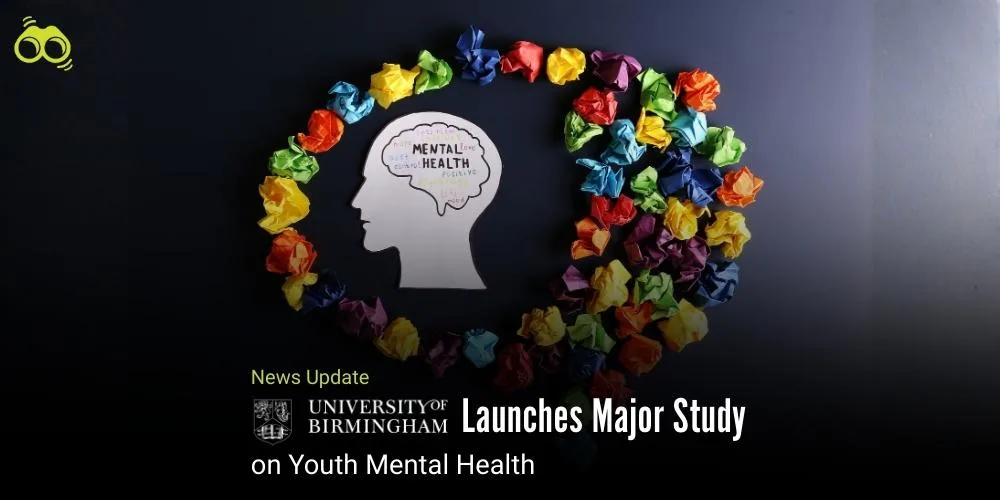
Digital Interventions for Youth Mental Health: UK Initiative Embeds Lived Experience
Mental Health Experiences of Autistic Young People UK Highlighted in New Study
Around the world, mental health issues amongst the youth are becoming an alarming concern. These unnoticed mounting problems, such as academic stress, family expectations, unemployment, and identity crisis, become hurdles in the growth of these young men and women. A very few young people seek professional assistance, as many do not wish to discuss their problems. Consequently, untreated, these issues can assume serious proportions, affecting one's health, education, relationships, and job prospects.
These problems become even more relevant for youth who hail from less privileged and underrepresented sectors, where such youth become more likely to face different challenges in seeking help. It is to understand the concerns surrounding this UK major new youth mental health research study that looks at how under-represented young people's experiences are and how online arts and culture support the mental health of marginalised young people. The first part of the scheme has been outlined in a study protocol published in BMJ Open.
The researchers emphasised that young people feel their stories have not been heard or interpreted correctly, and the study aims to listen differently. Through narrative inquiry, the project aims to account for real experiences and design mental health support systems for marginalised youth that actually work. This study is an initiative under the NIHR-funded ORIGIN programme (Optimising Cultural Experiences for Mental Health in Marginalised Young People Online). It will seek to recruit up to 100 young people aged 16-24 from diverse backgrounds, including 30 autistic young people requiring higher levels of support.
The project is grounded in the intersectional youth mental health research framework, which acknowledges that experiences are determined by interlocking identities, such as ethnicity, gender identity, sexuality, neurodiversity, socio-economic status, and place. The researchers argued that traditional analyses of a single axis don’t necessarily capture the complexities of such intersecting realities. Participants will be recruited from Sheffield, Oxfordshire, Cornwall/Devon, Blackpool, and Liverpool, as well as nationally through online channels. Collaborating with NHS waitlists and the Cornwall Intellectual Disability Equitable Research (CIDER) centre will facilitate the recruitment of autistic young people with higher support needs.
Role of Online Arts and Culture
The study capitalises on previous findings that youth online arts and culture for wellbeing can alleviate anxiety and provide an often-welcome distraction from social media use. Past trials demonstrated improvements in psychosocial wellbeing via co-designed cultural platforms ("Ways of Being"), with larger effect sizes found among young minority ethnic groups.
Yet at the same time, young people declared that existing digital solutions lack both diversification in representation and authentic human narration of stories. Hence, the new project would explore the types of cultural content that are engaging and how digital interventions for youth mental health could be tailored to fit those most frequently excluded.
Embedding Lived Experience
Another novelty of this study is the very thorough embedding of lived experience. Young people will serve as research advisors and peer researchers, youth coordinators, and co-designers. They will help shape recruitment strategies, interview methods, and data analysis. The protocol emphasised that the research is being done with young people and not on them.
Expected Outcomes
The findings are expected to contribute to digital mental health intervention development and identify systemic barriers experienced by underrepresented youth coming from vulnerable communities and contexts related to the mental health development trajectory.
Results will be disseminated predominantly to young people and other stakeholders through articles, videos, podcast series, and public events among health practitioners, policy makers, educationists, and cultural stakeholders.
Ethical Oversight
The study has been considered by the Health Research Authority and Health and Care Research Wales and has been given the green light to proceed, with safeguarding systems in place at every stage. The UK Youth Mental Health Initiatives 2025 is a reminder that digital mental health support for the youth minority offers both opportunity and threat. This project proposes using digital mental health support platforms and implementing online arts-based wellbeing programmes for youth in reducing inequality against such supports.
This narrative inquiry study of underrepresented youth mental health seeks to foster the development of more inclusive and effective support systems by listening to diverse voices and embedding lived experiences. It reflects the dawning of a growing interest in funding mental health programming for marginalised youth and commissioning innovative and equitable youth-focused mental health research in the UK.
Editor's Note
Heavy mental challenges are now facing young people all over the world. Internal pressures may not be loud, as in academic pressure, family expectations, unemployment, and identity struggles, yet they can bruise health, education, relations, and job prospects without the touch of treatment. It is mostly worse for the less privileged and underrepresented individuals who face more obstacles when it comes to seeking help. This is a step in listening to youth directly and placing their experiences at the centre of research. It utilises narrative inquiry and goes on to discover how online arts and culture can be mobilised to support marginalised youth in their mental health needs, to establish support systems more inclusive and effective. It also embeds young people in the role of advisor and co-designer to ensure the research is carried out with them, not on them. Other parts of the world have started similar initiatives. For example, the Being Initiative has mapped youth mental health needs in 13 countries from Colombia to Vietnam and will finance innovative programs to reach young people using digital tools and community-based care. Also, in Canada, Grand Challenges has supported youth-led projects using storytelling and technology to reach the most at-risk individualsGrand Challenges Canada.
Skoobuzz underlines that these initiatives show that while there are global challenges, solutions can be moulded locally via hearing and investing in youths with creative, digital and culturally relevant approaches. The UK study could ensure that mental health support for marginalised youth becomes available and meaningful.
FAQs
1. Can online arts and culture help improve mental health in young people?
Yes. Studies in the UK have shown that online arts and culture for youth wellbeing can reduce anxiety and improve mood. Creative platforms such as digital museum exhibits, theatre recordings, or co‑designed cultural websites provide positive alternatives to social media. Evidence suggests that engaging with creative online platforms can be especially beneficial for young people from minority backgrounds, helping them feel represented and connected.
2. What are the challenges faced by underrepresented youth when seeking mental health support?
Underrepresented youth often face multiple barriers. These include:
- Limited access to services in disadvantaged areas.
- Stigma and stereotypes discourage open discussion.
- Financial and social inequalities make professional care more difficult to reach.
- Lack of representation in existing support programmes can make interventions feel irrelevant. As a result, many young people from marginalised groups remain untreated, worsening long‑term outcomes.
3. Why is it important to include marginalised voices in youth mental health research?
Including marginalised voices ensures that support systems reflect real experiences rather than assumptions. Researchers argue that intersectional youth mental health research is vital because identity factors such as ethnicity, gender, sexuality, neurodiversity, and socioeconomic status overlap to shape wellbeing. Listening directly to young people helps design mental health support for marginalised youth that is inclusive, effective, and trusted.
4. How can digital platforms support the mental wellbeing of adolescents?
Digital platforms can provide accessible, flexible, and creative forms of support. They can:
- Offer digital interventions for youth mental health, such as guided storytelling or cultural engagement.
- Create safe spaces for youth wellbeing and cultural engagement.
- Reduce isolation by connecting young people with relatable content.
Provide scalable solutions that reach those excluded from traditional services. However, experts caution that platforms must be diverse, authentic, and carefully governed to avoid reinforcing inequalities.
5. Are autistic young people receiving enough mental health support?
Currently, many autistic young people in the UK do not receive adequate support. Research highlights that those requiring higher levels of assistance often face long NHS waitlists and limited tailored interventions. The new narrative inquiry study of under‑represented youth mental health aims to address this gap by recruiting autistic participants and adapting digital mental health support for youth from minority backgrounds. This approach seeks to ensure that neurodiverse voices are included in future solutions.

Skoobuzz



 Skoobuzz

 Skoobuzz


0 Comments (Please Login To Continue)