








Pressure to Study Russian in UK Schools Raises Concerns for Refugee Learners
Ukrainian Refugee Education Experience in UK Sparks Ofsted Complaint
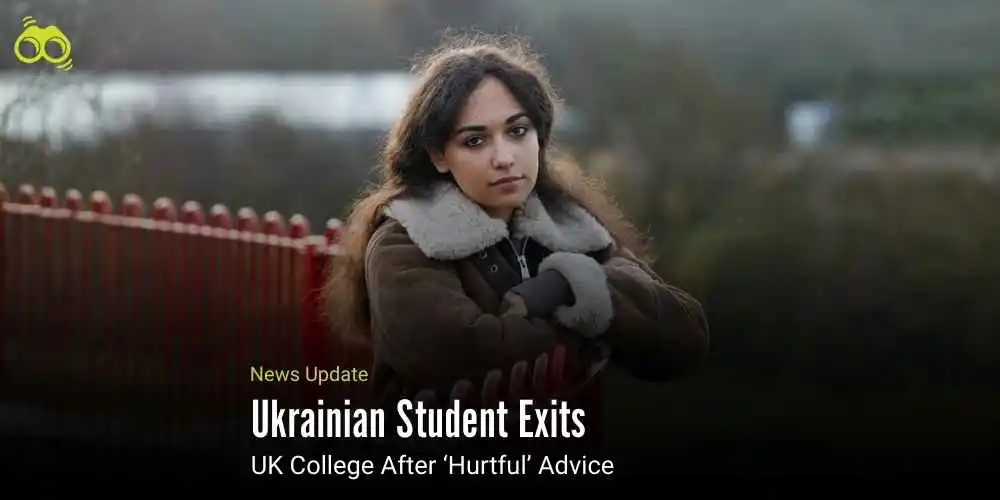
Leading to vital questions on how refugees’ needs are met within the British education system, a Ukrainian refugee has been forced out of a UK college after being urged to study Russian. The 19‑year‑old, Kateryna Endeberia, fled Ukraine with her family in 2022. She began at The Excel Academy before transferring to City of Stoke‑on‑Trent Sixth Form College.
She was taking A‑levels in Economics, Politics and Statistics but reported struggling with those subjects. Instead of providing more assistance, teachers suggested she switch to Russian. This became very difficult for her, as her father is currently serving as a soldier in Ukraine. She described the advice as “hurtful” and “insensitive” and bordering on discriminatory. Endeberia has since withdrawn and is preparing for A‑levels privately in 2026, for £1,400. Reports say she is receiving help from friends who share notes with her.
Studying Russian in UK Schools Under Pressure
Endeberia said studying Russian was against her principles, as she was born in Donetsk, where the conflict began in 2014. She emphasised that she did not want to learn the language associated with the invasion of her country. Her situation highlights the pressure to study Russian in UK schools, something other Ukrainian families have also reported.
She explained that she faced bullying at college because of her accent, and there was no empathy or tailored support offered. Instead, she said staff continued to insist she change subjects. She has filed a formal complaint through the Potteries Educational Trust and intends to escalate the case to Ofsted if the college fails to respond. This reflects growing discontent among students with UK colleges and the Ofsted system.
Contextualisation: The Wider Ukrainian Refugee Schooling Experience
This case reflects the wider Ukrainian refugee schooling experience in the UK. Many displaced students struggle to adapt to a new system, culture and language. The Guardian reported that Ukraine’s education minister had already warned the UK government that teaching Russian could retraumatise young refugees. Around 27,000 Ukrainian children are currently in British schools.
There have been increasing calls for a GCSE in Ukrainian. Children’s commissioner Rachel de Souza has urged exam boards to act, while AQA has confirmed it is considering creating such a qualification. However, this may take years to implement.
Examination: Effects of Trauma on Refugee Students’ Course Choices
Trauma clearly affects the course choices of refugee students. For Endeberia, being asked to study Russian was not simply an academic matter but a reminder of war and personal grief. Her case illustrates how Ukrainian refugees in the UK experience distress from being urged to study Russian and why education policy must be sensitive to cultural and emotional realities.
The Stoke‑on‑Trent Sixth Form College case also raises questions about how vulnerable students are supported. While the college stated that it cares for its students and follows its complaints process, this incident shows that stronger support for refugee learners across the UK is needed.
Looking Ahead: Refugees’ Future in England
Although this story concerns one student, it reflects wider challenges facing refugees in England, where language provision and pastoral care are often lacking. If the UK is serious about supporting displaced youth, policies must be inclusive, and no student should be forced to learn a language that causes distress. Introducing a GCSE in Ukrainian could be an important step. It would help students maintain their identity, avoid further trauma and feel recognised within the system.
Editor’s Note:
Kateryna Endeberia’s case, in which a Ukrainian refugee left her sixth‑form college in Stoke‑on‑Trent after being urged to study Russian, raises immediate concerns about the treatment of refugee students in the UK. How can it be appropriate for a young woman whose father is serving in the Ukrainian army to be compelled to study Russian? Such an imposition appears insensitive and shows a lack of understanding of the trauma many displaced students carry. Education should be a place of support and inclusion, not a source of further distress. The situation for refugee students in England remains mixed. While many schools and colleges are working hard to include young people from Ukraine and other conflict zones, there are serious gaps in language provision and pastoral care. Allegations of bullying, cultural insensitivity, and pressure to study Russian highlight the difficulties faced by Ukrainian students. The lack of a GCSE in Ukrainian shows how policy has lagged behind the real needs of displaced learners. Although exam boards such as AQA are considering developing one, progress is slow, and thousands of students remain without recognition of their mother tongue. This is not an isolated case. Families have reported that their children were encouraged to study Russian in UK schools, despite warnings from Ukraine’s education minister that such actions could retraumatise young refugees. With 27,000 Ukrainian children now in British schools, the issue goes far beyond one college. Complaint processes through Ofsted have their place, but they cannot replace the need for proactive empathy and inclusive policy. Other nations have acted more decisively. In Germany, universities have offered fee waivers and bridging courses for displaced students. Canada has introduced scholarship programmes and counselling services tailored to refugees. The UK has also seen positive developments: more than 70 universities now offer scholarships for refugees and asylum seekers, and organisations such as Refugee Education UK and Universities of Sanctuary are working to improve access.
Skoobuzz highlighted that the Endeberia case underscores the urgent need for enhanced measures within educational institutions. For Britain to uphold its commitment to refugees, it must guarantee that no student is forced to study a language associated with their trauma. It is vital to ensure that all young people feel acknowledged and supported throughout their educational experience.
FAQs
1. Can Ukrainian refugees go to university in the UK?
Yes. Ukrainian refugees can study at UK universities. The government has confirmed that people with permission under the Ukraine Schemes have the same access to higher education as UK citizens. This means they can apply for student loans, receive support, and pay home fees rather than international fees.
2. Are Ukrainian qualifications recognised in the UK?
Many Ukrainian qualifications are recognised, but it depends on the subject. For general study or employment, certificates and diplomas can be accepted. However, for regulated professions such as medicine, law or teaching, qualifications must be formally checked and converted through UK authorities.
3. What benefits do Ukrainians get in the UK?
Ukrainians arriving under the Homes for Ukraine or Family Scheme can access public funds. This includes Universal Credit, housing support, child benefit and council tax discounts. Emergency legislation in 2022 gave Ukrainians the same rights to claim benefits as UK residents. Their visas have been extended, allowing many to stay until at least 2026.
4. Is sixth-form college free in the UK?
Yes. Sixth‑form education is free for students aged 16–19 in England, Wales, Scotland and Northern Ireland. Funding is provided by the government, so students do not pay tuition fees. However, costs such as travel, meals or exam fees may apply in some cases.
5. Can Ukrainian refugees stay in the UK permanently after?
At present, Ukrainian refugees have temporary permission under schemes such as the Ukraine Permission Extension. This allows them to remain for several years, but time spent under these schemes does not automatically count towards permanent settlement. To stay permanently, refugees would need to switch to another visa route or meet the requirements for long residence.

Skoobuzz



 Skoobuzz

 Skoobuzz


0 Comments (Please Login To Continue)