








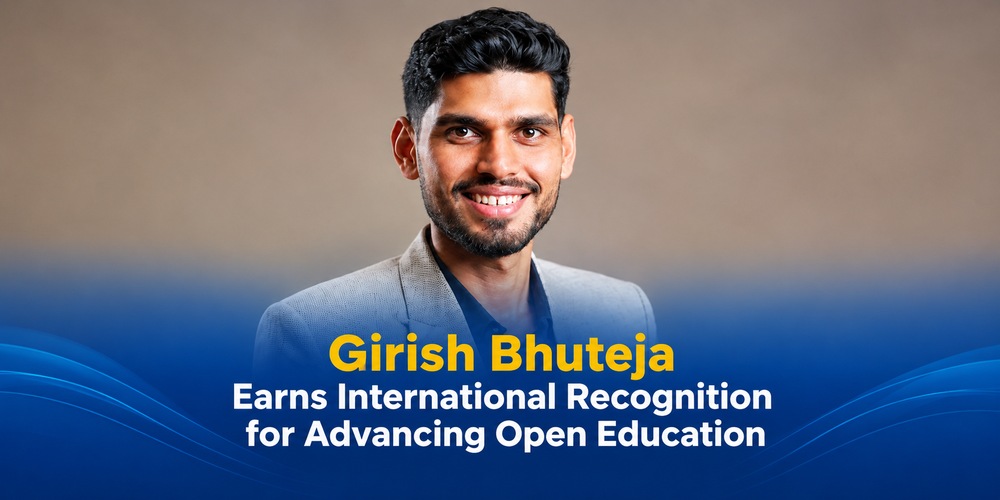
Conestoga Graduate Earns Global Recognition for Leadership in Open Education
Girish Bhuteja has been recognised internationally for accessible learning resources and championing open education
A recent graduate of Conestoga College, Girish Bhuteja, has received international recognition for his work in open education, accessibility and the development of learning resources designed to make education more affordable and inclusive for students.
Bhuteja was named a 2026 Open Education Award for Excellence recipient by Open Education Global (OEGlobal) in the Student Leader and Champion for Open Education category. The awards recognise individuals, organisations and initiatives that contribute to greater openness, accessibility and innovation across education.
Bhuteja recently graduated with distinction from Conestoga's Bachelor of Computer Science (Honours) programme. During his studies, he worked with the college's Open Learning team within Library and Learning Services, taking on both part-time and full-time co-op positions as an Open Educational Resources (OER) Projects Assistant.
From Computer Science Student to Open Education Advocate
Bhuteja's recognition reflects how technical skills can be applied beyond traditional software development to address practical challenges in education. While working with Conestoga's Open Learning team, he contributed to the development and improvement of open educational resources, bringing the perspective of a student directly into the process.
His responsibilities included identifying functionality and accessibility issues and helping improve the overall experience for students using digital learning materials. His work supported resources that were accessed by more than 1,000 students, demonstrating how relatively focused improvements to educational technology can have a broader impact across an institution.
Bhuteja worked with a range of digital and technical tools, including HTML, CSS, Pressbooks, H5P and WordPress, while also contributing to accessibility testing, workflow automation and data visualisation. Rather than focusing solely on the technical implementation of resources, his role involved understanding how students interact with them and identifying ways to make those experiences more effective.
Reflecting on his experience, Bhuteja said the most valuable lesson was learning how to turn an uncertain or poorly defined requirement into a practical solution that could benefit both students and educators.
Making Education More Affordable and Accessible
Open Educational Resources are teaching and learning materials that are openly licensed, allowing them to be accessed, adapted and shared. Their use can help reduce educational costs while giving educators greater flexibility in how learning materials are developed and delivered.
At Conestoga, Bhuteja also contributed to efforts to increase awareness of OER among students. He participated in information booths and outreach activities and helped conduct a student survey to understand how familiar learners were with open educational resources and what they needed from them.
He subsequently analysed the survey findings and developed visual materials to support advocacy and awareness efforts. His contributions also helped support the college's successful acquisition of a grant intended to sustain and expand OER development.
For Bhuteja, accessibility extends beyond whether a resource is available online. He highlighted the importance of considering both affordability and usability, noting that educational content cannot fully serve students if they cannot afford it or cannot access it effectively using the technology and accommodations they depend on.
This broader understanding of access is increasingly relevant as institutions expand their reliance on digital learning. While online resources can remove geographical and financial barriers, poorly designed platforms or inaccessible materials can create new obstacles for learners.
Student Leadership Extended Beyond the Classroom
Bhuteja's involvement in improving student opportunities was not limited to his work with the Open Learning team. He also participated in campus leadership and helped organise initiatives including Elevate Expo, Growth Summit and AI Hackathons.
These activities created opportunities for students to connect with industry professionals, explore potential career pathways and develop greater confidence in applying their knowledge beyond the classroom.
His combination of technical experience, student advocacy and leadership contributed to the profile highlighted by the Open Education Awards. Reviewers recognised his technical knowledge, empathy, curiosity and commitment to community, as well as his ability to translate the principles of openness and collaboration into practical initiatives.
The recognition also demonstrates the increasingly interconnected nature of technology and education. As universities and colleges expand digital learning, professionals who understand both technology and the student experience can play an important role in creating resources that are not only functional but also accessible and inclusive.
Conestoga Experience Supports Future Career Goals
Bhuteja said his experience at Conestoga has prepared him for a professional career in areas including software development, applied artificial intelligence and data, and business systems analysis.
His time at the college provided opportunities to combine academic learning with practical experience through coursework, a capstone project, his work with the Open Learning team and campus leadership activities.
According to Bhuteja, these experiences helped him develop the ability to approach unfamiliar problems, communicate with both technical and non-technical stakeholders and take ideas through implementation and testing.
The experience shows how higher education can give students opportunities to develop skills beyond their chosen academic discipline. In Bhuteja's case, a computer science background became a foundation for contributing to accessibility, educational technology and student engagement.
Global Awards Highlight the Value of Open Education
The Open Education Awards for Excellence recognise individuals, resources and practices that are helping expand access to education worldwide. Bhuteja was among the individual award recipients recognised internationally in 2026.
His achievement highlights the growing importance of open education at a time when institutions are looking for ways to make learning more affordable, adaptable and accessible. Openly licensed resources can allow students and educators to access materials without the same financial restrictions associated with traditional educational content.
For students entering technology-related fields, Bhuteja's journey also demonstrates the value of combining technical expertise with an understanding of real-world user needs. His international recognition came not from technical skills alone, but from applying those skills to improve how students access and experience education.
Editor’s Note
Girish Bhuteja's international recognition offers an important perspective on what student achievement can look like in a rapidly changing education landscape. His work demonstrates that contributions to higher education do not always happen through traditional academic research or classroom performance. By combining computer science skills with accessibility testing, open educational resources, student research and campus leadership, Bhuteja addressed practical barriers that can directly affect how learners participate in education. His experience also highlights the growing role of students themselves in shaping the digital learning environments they use.
The recognition is particularly relevant as institutions continue to expand digital education while facing persistent questions around affordability, accessibility and inclusion. Open educational resources can help address some of these challenges, but their effectiveness depends on whether students can actually use them. Bhuteja's work shows why technical development, accessibility and student feedback need to operate together. His journey from computer science graduate to internationally recognised open education advocate shows how higher education can create opportunities for students to turn technical knowledge into solutions with broader social and educational impact.
Frequently Asked Questions
1. Who is Girish Bhuteja?
Girish Bhuteja is a recent Conestoga College graduate who has been recognised internationally for his contributions to open education and accessible learning resources.
2. What award did Girish Bhuteja receive?
Bhuteja received a 2026 Open Education Award for Excellence from Open Education Global in the Student Leader and Champion for Open Education category.
3. What did Bhuteja study at Conestoga College?
He graduated with distinction from Conestoga's Bachelor of Computer Science (Honours) programme.
4. What is Open Educational Resources?
Open Educational Resources, or OER, are openly licensed teaching and learning materials that can be accessed, adapted and shared by educators and learners.
5. How did Bhuteja contribute to open education?
He worked with Conestoga's Open Learning team on OER development, accessibility testing, digital resource improvements, workflow automation and student outreach.
6. How many students used resources supported by his work?
His work contributed to accessible digital learning resources used by more than 1,000 students.
7. What technical skills did Bhuteja use?
His work involved tools and technologies including HTML, CSS, Pressbooks, H5P and WordPress, alongside accessibility testing, automation and data visualisation.
8. What other leadership activities did Bhuteja undertake?
He helped organise initiatives including Elevate Expo, Growth Summit and AI Hackathons, giving students opportunities to connect with industry and explore career pathways.
9. What careers is Bhuteja considering?
His Conestoga experience has prepared him for roles in software development, applied AI and data, and business systems analysis.
10. Why is open education important?
Open education can make learning resources more affordable and accessible while allowing educational materials to be adapted and shared to meet different learner needs.

Skoobuzz
 Skoobuzz
 Skoobuzz
 Skoobuzz
 Skoobuzz


0 Comments (Please Login To Continue)