








DSS Demands Union Education Minister’s Resignation Over NEET Controversy, Announces Karnataka-Wide Protest
DSS seeks Dharmendra Pradhan's resignation over NEET and announces Karnataka-wide protests on July 23.
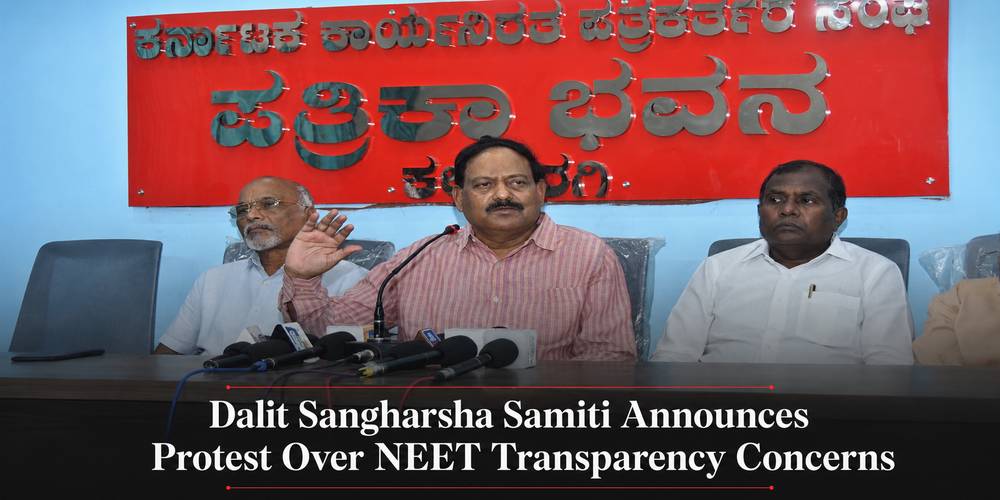
The Dalit Sangharsha Samiti (DSS) has intensified its criticism of the Union Government over the handling of the National Eligibility-cum-Entrance Test (NEET), demanding the resignation of Union Education Minister Dharmendra Pradhan and announcing statewide protests across Karnataka on July 23.
Addressing a press conference in Kalaburagi on Saturday, DSS State Convener D.G. Sagar alleged that the Centre had failed to ensure transparency and accountability in the conduct of one of India's most significant entrance examinations. According to the organisation, the alleged irregularities surrounding NEET have eroded public confidence in the examination process, warranting ministerial accountability.
Mr. Sagar urged the Union Government to remove Mr. Pradhan from the Union Cabinet, holding him politically responsible for the issues that have emerged around the examination's administration.
DSS Links NEET Concerns to Broader Questions of Education Governance
While the immediate focus of the protest is the alleged lack of transparency in NEET, the DSS framed the issue as part of a wider concern about governance in India's education system.
The organisation argued that national-level examinations determine the academic and professional futures of millions of students each year and therefore require the highest standards of transparency, institutional accountability, and public trust. It maintained that any perceived lapses in examination management have consequences that extend beyond admissions, affecting students' confidence in public institutions and the credibility of competitive examinations.
The DSS stated that ensuring fairness in entrance examinations should remain a priority for policymakers, given the high stakes associated with medical admissions and the aspirations of students across the country.
Calls for Dialogue With Sonam Wangchuk
In addition to raising concerns over NEET, the DSS criticised the Union Government's response to environmentalist and education reform advocate Sonam Wangchuk, who is currently on an indefinite hunger strike.
Mr. Sagar alleged that despite the protest continuing for several weeks, the Centre had not initiated direct discussions with Wangchuk at the protest site. He urged the government to immediately begin dialogue and address the issues raised by the activist through democratic engagement.
The DSS argued that constructive conversations with stakeholders remain essential in resolving matters of national concern and maintaining public confidence in democratic institutions.
Concerns Over Student and Youth Issues
During the press conference, Mr. Sagar further alleged that the Union Government was prioritising corporate interests over issues affecting students, young people, and the wider public.
According to the DSS, concerns surrounding education, employment opportunities, and youth welfare require greater policy attention. The organisation maintained that the government must adopt a more responsive approach to issues directly impacting students and aspirants preparing for competitive examinations.
Karnataka-Wide Demonstrations Scheduled for July 23
To press its demands, the DSS announced that demonstrations will be organised at district headquarters across Karnataka on July 23. As part of the protest, memorandums addressed to Prime Minister Narendra Modi will be submitted through the respective Deputy Commissioners. The memorandums will outline the organisation's demands, including greater accountability in the conduct of NEET, improved transparency in examination processes, and dialogue with Sonam Wangchuk regarding his ongoing protest.
The statewide demonstrations are expected to bring together DSS members and supporters from multiple districts to collectively raise concerns surrounding education governance and public accountability.
Why This Matters
The DSS's announcement reflects how the debate surrounding NEET has evolved beyond examination administration into a broader discussion about public trust in India's education system.
National entrance examinations such as NEET play a decisive role in determining access to medical education for millions of aspirants every year. Consequently, concerns over transparency, examination security, and institutional accountability often attract widespread public attention and political scrutiny.
The organisation's decision to link the NEET issue with calls for dialogue with Sonam Wangchuk also illustrates how education policy, governance, and public protests are increasingly intersecting within the broader national discourse. While the two issues are distinct, the DSS has framed both as examples of the need for greater government responsiveness and accountability.
Editor's Note
The statements and demands outlined in this article reflect the views expressed by the Dalit Sangharsha Samiti (DSS) during its press conference in Kalaburagi and should be understood within that context. The organisation has alleged irregularities in the conduct of the National Eligibility-cum-Entrance Test (NEET), called for the resignation of Union Education Minister Dharmendra Pradhan, and urged the Union Government to engage in dialogue with environmentalist Sonam Wangchuk over his ongoing hunger strike. These remain the claims and demands of the organisation.
The significance of these developments extends beyond a single protest. NEET is India's sole national entrance examination for undergraduate medical admissions, with millions of students competing annually for limited seats in government and private medical colleges. Because of its central role in shaping access to medical education, any concerns regarding transparency, examination integrity, or administrative oversight often become matters of national debate and public interest.
As this story develops, responses from the Union Government, the Ministry of Education, and other stakeholders will be important in providing a balanced understanding of the issues raised. Readers should view this report as part of an evolving public policy discussion surrounding examination governance, education reforms, and institutional accountability in India.
Frequently Asked Questions (FAQs)
1. Why is the Dalit Sangharsha Samiti (DSS) protesting?
The DSS alleges a lack of transparency in the conduct of the National Eligibility-cum-Entrance Test (NEET) and is demanding greater accountability from the Union Government. The organisation believes the concerns surrounding the examination warrant immediate attention and institutional action.
2. What are the DSS's key demands?
The organisation has called for the resignation of Union Education Minister Dharmendra Pradhan, citing alleged lapses in the conduct of NEET. It has also urged the Centre to initiate discussions with environmentalist Sonam Wangchuk regarding his ongoing hunger strike.
3. When and where will the protests take place?
The DSS has announced statewide demonstrations across Karnataka on July 23. According to the organisation, protests will be held at district headquarters across the state.
4. What will happen during the July 23 demonstrations?
During the protests, DSS members plan to submit memorandums addressed to Prime Minister Narendra Modi through the respective Deputy Commissioners. The memorandums will outline the organisation's demands related to NEET, education governance, and dialogue with Sonam Wangchuk.
5. Why is NEET a significant issue in India?
NEET is India's national entrance examination for undergraduate medical courses and serves as the gateway to admission into medical colleges across the country. Because millions of students compete for limited seats each year, concerns over transparency, fairness, and examination integrity often receive significant public and policy attention.
6. How is Sonam Wangchuk connected to the issue?
While Sonam Wangchuk's protest is separate from the NEET controversy, the DSS has linked both issues in its demands, arguing that the Centre should engage in dialogue with stakeholders and respond more effectively to concerns raised by students, activists, and civil society.
7. Has the Union Government responded to the DSS's demands?
At the time of publication, the Union Government had not publicly responded to the specific demands made by the Dalit Sangharsha Samiti during its Kalaburagi press conference.

Skoobuzz

 Skoobuzz
 Skoobuzz
 Skoobuzz
 Skoobuzz
 Skoobuzz


0 Comments (Please Login To Continue)