








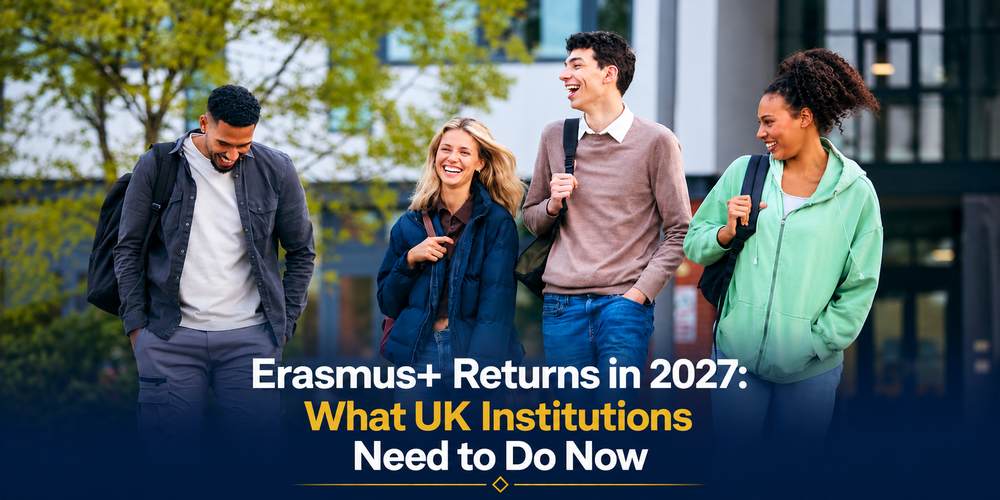
Making the Most of Erasmus+: Why Institutions Need to Start Preparing Now
institutions must look beyond funding and focus on partnerships, outcomes and impact.
The return of Erasmus+ to the UK in 2027 is likely to place international mobility firmly back on the agenda for schools, colleges and universities. While funding opportunities will understandably attract significant attention, funding alone will not determine which institutions make the most of the programme.
The institutions that stand to benefit most may instead be those that begin preparing early — building meaningful international partnerships, strengthening programme structures and ensuring mobility is connected to clear academic and employability outcomes.
The central question for institutions should therefore not simply be how much funding can be secured, but whether they are ready to create international experiences that deliver lasting value for students.
Erasmus+ Preparation Needs to Begin Before Funding Calls
Institutions should not wait for funding calls to open before considering their Erasmus+ strategy. With funding calls expected to open in late 2026 and programme delivery beginning from late 2027, institutions have an important window to develop partnerships, establish internal processes and determine what they want their international programmes to achieve.
This preparation requires institutions to look beyond individual trips and consider how international mobility can contribute to wider academic and institutional priorities. The question is increasingly shifting from where students go to what students gain from going.
International experiences can help students develop confidence, cultural awareness, communication abilities, language skills and professional networks. However, these benefits are most likely to emerge when mobility is deliberately designed around specific learning outcomes.
Moving Beyond Mobility: What Makes a Strong Partnership?
One of the defining characteristics of Erasmus+ is its emphasis on collaboration, reciprocity and long-term partnerships. This means institutions need to think strategically about who they work with and why.
Building successful international programmes requires identifying suitable European partners, establishing shared objectives and putting the operational structures in place to support collaboration. Partnerships can also extend beyond universities and colleges.
Institutions could consider working with:
- Employers and industry partners
- Local community organisations
- Research institutions
- Professional bodies
- International education networks
- Other organisations that can contribute to student learning and employability
The strongest partnerships are unlikely to be those created solely to facilitate student travel. Instead, they can become platforms for academic collaboration, research, industry engagement and long-term institutional relationships.
Start With the Student Outcomes
Before designing an international programme, institutions should determine what they want students to take away from the experience.
Depending on the programme, these outcomes could include:
- Stronger employability skills
- Greater intercultural awareness
- Improved language abilities
- International industry exposure
- Greater confidence and independence
- Understanding of global workplaces
- Stronger communication and collaboration skills
- Greater awareness of sustainability and global challenges
Clearly defining these outcomes at the beginning allows institutions to build programmes around them. This is an important distinction. International mobility should not become the outcome itself. It should be the vehicle through which meaningful learning takes place. When students understand why an international experience matters to their academic and professional development, the experience can become much more valuable than simply spending time abroad.
Embedding International Mobility Into the Curriculum
International mobility should not be viewed as the responsibility of international offices alone. Academic departments need to be involved from the earliest stages of programme development so that international experiences connect directly with teaching and learning objectives.
Embedding mobility into the curriculum can help students understand how their experiences abroad relate to their studies. It can also make it easier for institutions to evaluate and demonstrate the educational impact of international programmes. For example, a student studying business could combine an overseas placement with industry engagement, while students in sustainability-related disciplines could explore environmental practices in another country.
When international experiences are connected to academic learning, students can return with practical knowledge that complements what they have learned in the classroom.
Evidence Points to the Value of Study Abroad
The potential benefits of international mobility are increasingly reflected in research and sector evidence. A 2025 Universities UK International report highlighted positive employment outcomes associated with study abroad participation, including among graduates from less advantaged backgrounds.
This reinforces an important point for institutions: international mobility can have implications that extend well beyond the duration of the programme. For students, the value may emerge through greater confidence, stronger communication skills, intercultural competence and exposure to different professional environments. For institutions, the challenge is ensuring these potential benefits are intentionally built into programme design rather than left to chance.
Are Institutions Operationally Ready?
Strong partnerships and ambitious learning outcomes will only succeed if institutions have the operational capacity to support them. Universities and colleges should therefore begin assessing their readiness across areas such as:
- Programme administration
- Student welfare
- Accessibility and inclusion
- Risk management
- Safeguarding
- Travel and logistical arrangements
- Partner coordination
- Financial management
- Student support before, during and after mobility
As participation expands, these systems will become increasingly important. A programme can have an excellent international partner and attractive academic opportunities, but without adequate welfare, accessibility and administrative support, the student experience can suffer. Preparation, therefore needs to happen at both the strategic and operational levels.
Making International Opportunities More Inclusive
One of the major developments in international education in recent years has been the growing focus on widening participation. Institutions have increasingly recognised that international experiences should not be available only to students who already have the financial resources, confidence or personal circumstances to travel.
Financial assistance can help remove some barriers, but institutions also need to consider how programmes themselves are designed. Accessibility, academic flexibility, student support and clear communication can all influence who feels able to participate.
The return of Erasmus+ presents an opportunity to think more broadly about inclusion — not simply how many students can travel, but which students can participate and whether the experience genuinely meets their needs.
Designing Programmes for Long-Term Impact
The next generation of international mobility programmes is likely to require more structure than simply arranging travel and accommodation. Institutions may need to bring together academic learning, industry engagement, cultural experiences and international collaboration within a coherent programme.
This could involve students working with international organisations, participating in collaborative projects, undertaking placements or developing solutions to real-world challenges alongside peers from other countries. Such experiences can help students build capabilities that remain relevant after they return home.
The goal should be for students to come back not only with memories, but with tangible skills, stronger confidence, wider perspectives and experiences they can articulate to future employers.
Erasmus+ Creates a Window of Opportunity
With Erasmus+ funding opportunities expected to open before programme delivery begins in 2027, institutions have time to prepare — but that opportunity should not be mistaken for unlimited time.
Developing meaningful partnerships can take months. Establishing agreements, aligning academic priorities and building operational systems can take even longer. Institutions that begin this work early will be better positioned to respond when funding opportunities become available.
Those waiting until funding calls open may find themselves competing for opportunities without having the partnerships, programme models or internal structures necessary to deliver them effectively.
Editor’s Note
The return of Erasmus+ raises an interesting question about what we actually mean when we talk about international education. For years, mobility has often been measured through numbers: how many students travelled, how many destinations were offered and how much funding was distributed. But perhaps the more important question is what happens after the suitcase is unpacked.
Does a student return with a deeper understanding of another culture? Do they see their subject differently? Do they become more confident navigating unfamiliar environments? Does an international placement change what they believe is possible for their career?
These outcomes cannot be guaranteed simply by putting a student on a plane. International education becomes transformative when the experience has a purpose behind it. A carefully designed programme can turn travel into learning, a placement into professional development and a partnership into a lasting academic relationship.
That is why the return of Erasmus+ should perhaps be viewed as more than the return of a funding opportunity. It is an invitation for institutions to reconsider what international mobility is supposed to achieve. The temptation will be to focus on funding first. But funding is ultimately only an enabler. The harder work lies in deciding what to build with it.
The institutions that begin asking those questions now may be the ones that create international programmes students remember not simply because they visited another country, but because the experience changed how they understood their education, their careers and the wider world.
Frequently Asked Questions
1. When will Erasmus+ return to the UK?
Erasmus+ is expected to return to the UK in 2027, with funding calls anticipated to open in late 2026.
2. Why should institutions prepare for Erasmus+ now?
Developing international partnerships, designing programmes and establishing operational systems can take considerable time. Starting early can help institutions be ready when funding opportunities become available.
3. What makes a strong Erasmus+ partnership?
Strong partnerships should have shared academic objectives, clear responsibilities and a focus on long-term collaboration rather than student mobility alone.
4. What outcomes should students gain from international mobility?
Potential outcomes include stronger employability skills, intercultural competence, language abilities, confidence, international industry exposure and greater understanding of global workplaces.
5. Should international mobility be part of the curriculum?
Integrating international experiences with curriculum objectives can help students understand the academic value of mobility and allow institutions to better demonstrate its educational impact.
6. How can universities make international mobility more inclusive?
Institutions can consider financial support alongside accessibility, flexible programme structures, student welfare, clear communication and other barriers that may prevent students from participating.
7. What operational areas should institutions prepare?
Key areas include logistics, risk management, safeguarding, accessibility, student welfare, programme administration, financial management and coordination with international partners.
8. Is Erasmus+ only about student travel?
No. While mobility is an important component, Erasmus+ can also support broader partnerships and collaboration. Institutions can use international relationships to develop academic, research, industry and community engagement.
9. What is the biggest opportunity for institutions?
The biggest opportunity may be to move beyond viewing international mobility as a standalone experience and instead build structured programmes that connect academic learning, employability, international partnerships and long-term student development.

Skoobuzz
References
 Skoobuzz
 Skoobuzz
 Skoobuzz
 Skoobuzz
 Skoobuzz


0 Comments (Please Login To Continue)