








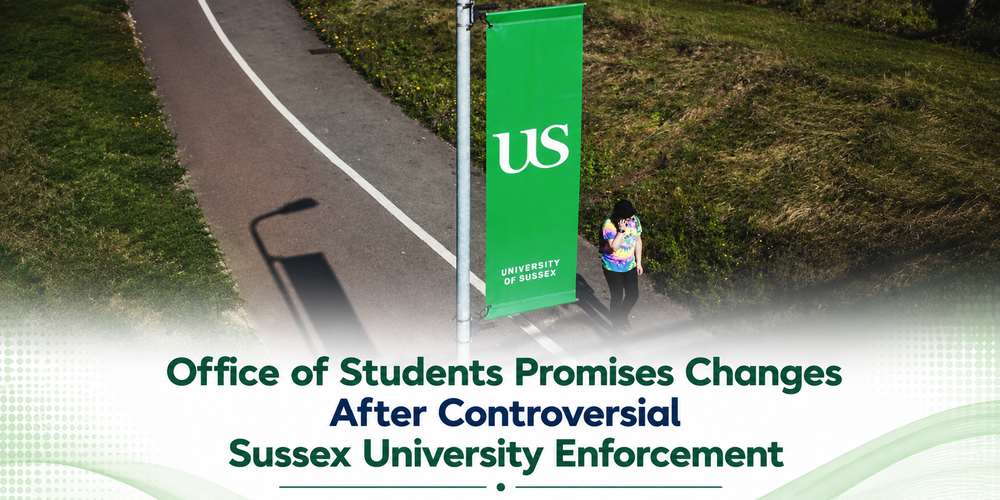
UK Higher Education Regulator Apologises for £585,000 Sussex University Fine
Office for Students acknowledges mistakes and promises reforms
England’s higher education regulator has formally acknowledged a series of mistakes in its handling of a high-profile case involving the University of Sussex, apologising after a proposed £585,000 fine against the university was overturned by the High Court. The Office for Students (OfS) had sought to impose the record penalty on Sussex after concluding that the university had breached free speech regulations in connection with its former professor Kathleen Stock. However, following a judicial review brought by the university, the High Court ruled in April 2026 that the regulator had approached the case with a closed mind and had acted with bias. The court’s findings ultimately forced the OfS to abandon the fine.
The regulator has now published a “lessons learned” report, alongside a summary of an internal review conducted by KPMG, setting out the failings identified in the handling of the Sussex case and the changes it says it intends to make. The reviews point to concerns extending beyond the individual investigation, including the regulator’s relationship with universities, the quality of its internal challenge processes, record-keeping, accountability and the culture surrounding enforcement decisions.
OfS Admits Mistakes in Sussex Case
In its statement accompanying the new review, the OfS acknowledged that mistakes had been made in the Sussex case and expressed regret over how the matter was handled. The regulator said the actions it was announcing demonstrated its intention to learn from the case and improve its approach with greater honesty and humility.
The admission follows months of scrutiny over the regulator’s decision to pursue a substantial financial penalty against Sussex. The case had attracted considerable attention because it involved questions surrounding freedom of expression in higher education, an issue that has become increasingly prominent in debates about university governance and academic freedom in the UK.
The OfS’s proposed fine related to the university’s handling of issues surrounding Kathleen Stock, a former philosophy professor whose views on transgender rights and gender identity had generated significant controversy on campus. Stock resigned from Sussex in 2021 following protests relating to her views, after which the OfS began its investigation into the university’s handling of free speech and academic freedom issues.
The regulator subsequently concluded that Sussex had failed to comply with its free speech obligations and sought to impose a £585,000 penalty. Sussex challenged the decision through judicial review, arguing that the OfS had not conducted its investigation fairly.
High Court Overturned the Fine
The dispute reached the High Court, where the university challenged the regulator’s decision-making process. In April 2026, the court ruled in favour of Sussex and overturned the enforcement action, finding significant problems with the OfS’s approach to the investigation.
Among the court’s findings was the conclusion that the regulator had “closed its mind” during the process and had acted with bias. The judgment raised questions about whether the OfS had approached the case with sufficient openness and independence before reaching its conclusions.
The decision was significant not only because it removed a £585,000 financial penalty from Sussex but also because it exposed concerns about the way the regulator itself had conducted the investigation. The subsequent reviews have provided further detail about those shortcomings and have prompted the OfS to reassess aspects of its regulatory culture and decision-making processes.
KPMG Review Identifies Wider Regulatory Problems
The OfS commissioned professional services firm KPMG to conduct an internal review following the High Court judgment. A summary of the review published on Thursday reinforced several of the concerns identified by the court.
KPMG found that the regulator had become increasingly adversarial in its dealings with higher education providers and that insufficient emphasis had been placed on maintaining constructive engagement and dialogue. According to the review, this contributed to relationships between the regulator and universities becoming increasingly confrontational.
The review also identified weaknesses in the OfS’s written records and concerns around accountability. These findings suggest that the problems in the Sussex case were not limited to one decision or one investigation team but were linked to broader organisational practices that could affect how the regulator carries out its responsibilities.
KPMG also raised concerns about the concentration of decision-making within a relatively small group of senior staff. Because the Sussex investigation was considered particularly complex, high-profile and novel, senior members of the organisation were heavily involved in both investigating and delivering the case. However, the review concluded that this concentration reduced opportunities for independent challenge, alternative perspectives and fresh scrutiny.
The findings are particularly significant for a regulator responsible for overseeing one of the UK’s most important public sectors. Independent challenge and clear accountability are central to ensuring that regulatory decisions are robust, proportionate and capable of withstanding external scrutiny.
OfS Promises Changes to Its Approach
In response to the findings, the OfS has outlined several changes designed to improve the way it works with universities and approaches enforcement action. One of the commitments in its lessons-learned report is to develop more respectful relationships with higher education providers. The regulator also said it intends to consider alternative forms of intervention where possible before resorting to formal enforcement measures such as fines.
The proposed changes indicate a shift towards greater dialogue with universities, particularly in situations where concerns can potentially be addressed without immediately escalating to punitive action. While enforcement remains an important part of the regulator’s role, the OfS has acknowledged that regulatory intervention needs to be proportionate and supported by effective engagement.
The regulator’s new leadership has also emphasised the importance of learning from the Sussex case and creating different expectations for how the organisation operates.
Sussex Welcomes Apology but Calls for More Reform
The University of Sussex welcomed the OfS’s acknowledgement of its mistakes, but the university’s vice-chancellor, Professor Sasha Roseneil, said the proposed reforms did not go far enough.
Roseneil argued that the lessons-learned report revealed deeper cultural problems within the OfS, particularly in relation to freedom of expression and the ability to challenge decisions internally. She welcomed the fact that the regulator’s new leadership appeared to be setting different expectations for the organisation, describing those expectations as more appropriate for a public institution responsible for regulating a major part of a democratic society.
However, Roseneil said the report did not fully capture the breadth or seriousness of the High Court’s findings. She also criticised the review for failing to engage directly with the University of Sussex, particularly given that the university’s lack of engagement with the regulator had itself been criticised by the court.
Her response highlights an important unresolved issue: while the OfS has accepted that mistakes were made and has identified areas for improvement, Sussex believes the regulator has not gone far enough in acknowledging the full implications of the court judgment.
New OfS Leadership Responds to the Findings
The current leadership of the OfS has sought to distinguish itself from the team involved in the original decision against Sussex. Ruth Hannant and Polly Payne, who became the regulator’s chief executives in June 2026, had no prior involvement in the decision to fine the university.
The OfS’s chair, Edward Peck, together with Hannant and Payne, thanked Sussex’s leadership for its contribution to discussions surrounding the lessons learned from the case. Their involvement comes as the regulator attempts to rebuild confidence in its approach and demonstrate that the findings of the High Court and subsequent reviews will result in meaningful organisational change.
The leadership transition could provide the regulator with an opportunity to reset its relationship with universities and introduce stronger safeguards around internal challenge, decision-making and enforcement.
What the Sussex Case Means for UK Universities
The controversy surrounding the University of Sussex has broader implications for higher education regulation in England. The OfS has considerable powers to intervene when it believes universities are failing to meet regulatory requirements, including in areas relating to free speech and academic freedom.
However, the Sussex case demonstrates that the regulator itself must be able to show that its decisions are reached through fair, independent and transparent processes. A regulator’s authority depends not only on the powers granted to it but also on the confidence of the institutions it oversees and the wider public.
The case may therefore influence how future disputes between universities and the OfS are handled. A greater emphasis on dialogue, proportionality and internal challenge could help prevent regulatory disagreements from escalating unnecessarily, while clearer accountability could strengthen the credibility of future enforcement decisions.
At the same time, universities are likely to continue facing pressure to demonstrate that they are meeting their obligations around free speech, academic freedom and student rights. The challenge for the OfS will be to enforce those requirements while ensuring that its own processes meet the standards of fairness and independence expected of a public regulator.
A Turning Point for Higher Education Regulation?
The Sussex case has developed from a dispute over one university’s handling of a controversial academic into a wider examination of how England’s higher education regulator operates.
The £585,000 fine may have been overturned, but the case has prompted questions about regulatory culture, decision-making and accountability that extend well beyond Sussex. The OfS’s apology and planned reforms represent an attempt to address those concerns, although the university’s response indicates that there remains disagreement over whether the lessons identified go far enough.
For England’s higher education sector, the effectiveness of the reforms will ultimately depend on how they are implemented. Greater engagement with universities, stronger internal challenge and clearer accountability could help establish a more balanced regulatory relationship while preserving the OfS’s ability to act when serious breaches occur.
Why This Matters
The University of Sussex case is important because it highlights the tension between strong regulatory enforcement and fair regulatory decision-making. The OfS has a significant role in protecting academic freedom and free speech across England’s universities, but the High Court judgment and subsequent reviews show that the regulator itself must be held to high standards when exercising those powers.
For universities, the case could influence how institutions respond to future OfS investigations and enforcement actions. For students and academics, it also raises broader questions about how free speech disputes should be handled within higher education and who should ultimately be responsible for determining whether universities have met their legal and regulatory obligations.
Editor’s Note:
The University of Sussex case offers an important test of how higher education regulation should work when issues of free speech, academic freedom and institutional responsibility collide. While regulators need strong powers to protect standards and uphold universities’ obligations, those powers must be exercised through processes that are fair, transparent and open to challenge.
The OfS’s decision to acknowledge mistakes and review its approach is therefore significant, but the response from Sussex shows that rebuilding trust will require more than an apology. The effectiveness of the regulator’s reforms will ultimately be judged by whether they lead to greater independence in decision-making, stronger engagement with universities and a more proportionate approach to enforcement.
Frequently Asked Questions
1. Why did the Office for Students fine the University of Sussex?
The OfS sought to impose a £585,000 fine after concluding that the University of Sussex had breached free speech regulations in connection with the university’s handling of issues surrounding former professor Kathleen Stock.
2. What happened to the £585,000 fine?
The fine was overturned after the University of Sussex successfully challenged the OfS’s decision through a judicial review. The High Court found significant problems with the regulator’s approach, including that it had closed its mind and acted with bias.
3. What has the Office for Students now admitted?
The OfS has acknowledged that it made mistakes in the Sussex case and has published a lessons-learned report outlining changes it intends to make to its regulatory approach.
4. What did the KPMG review find?
KPMG identified concerns including an increasingly adversarial relationship between the OfS and higher education providers, gaps in written records, unclear accountability and insufficient opportunities for independent challenge.
5. What changes is the OfS planning?
The regulator has said it will focus on developing more respectful relationships with universities and using alternative forms of intervention where possible before resorting to formal enforcement measures such as fines.

Skoobuzz

 Skoobuzz
 Skoobuzz
 Skoobuzz
 Skoobuzz



0 Comments (Please Login To Continue)