








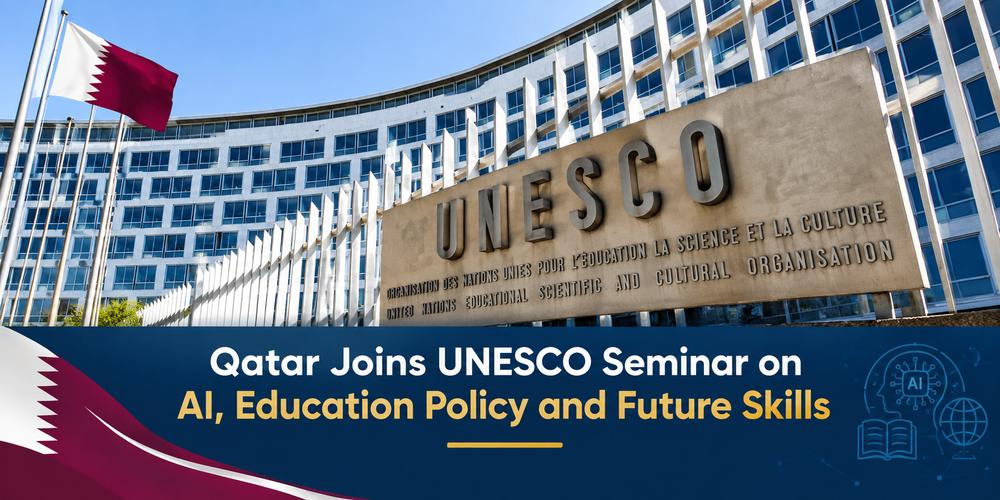
UNESCO Organizes International Seminar on AI and the Future of Education With Qatari Participation
International seminar to examine AI, skills development and the role of educators in shaping future education policy
The United Nations Educational, Scientific and Cultural Organization (UNESCO) is set to convene an international seminar at its headquarters in Paris to examine how artificial intelligence and rapid technological change are reshaping education and influencing the policies that will define its future.
The two-day seminar, scheduled to begin on September 11, will bring together education practitioners, teachers, institutional leaders and policymakers to discuss emerging challenges and opportunities across the education sector. Qatar will participate through its Ministry of Education and Higher Education (MOEHE).
The event is being organised in collaboration with the International Forum of Inclusion Practitioners (IFIP) and will focus on several key areas, including artificial intelligence in education, inclusive education, skills and vocational training, educational innovation and stronger cooperation between practitioners and policymakers.
UNESCO Seminar to Focus on AI and Education’s Future
Artificial intelligence is rapidly changing how students learn, how teachers work and how educational institutions deliver programmes. As governments and education systems respond to these changes, the seminar will explore how practitioners can have a stronger role in shaping policies surrounding emerging technologies.
Rather than examining technology in isolation, discussions will consider how AI can be introduced responsibly while ensuring that education remains inclusive and responsive to learners’ needs. Participants will also examine the practical experiences of teachers and education professionals and how these experiences can inform international policy discussions.
The involvement of Qatar through MOEHE adds a regional perspective to the discussions as education systems worldwide consider how to prepare students for an increasingly technology-driven economy.
Strengthening the Role of Teachers in Policymaking
A central objective of the seminar is to give education practitioners a stronger voice in international policy debates. Teachers and school leaders are directly exposed to changes taking place inside classrooms and educational institutions. However, their practical experiences do not always receive the same attention in international policymaking as government-level strategies and institutional data.
The seminar will explore ways to establish a more regular mechanism for representing teachers, school leaders and educational institutions in international forums. Such representation could help narrow the gap between policy design and implementation by ensuring that international recommendations reflect challenges experienced by practitioners on the ground.
Focus on Inclusive Education and Skills Development
Alongside artificial intelligence, the seminar will address inclusive education, vocational training and skills development. The rapid transformation of labour markets is increasing pressure on education systems to equip learners with skills that remain relevant as technology changes. This includes both technical capabilities and broader competencies needed to adapt to evolving workplaces.
Inclusive education will also remain an important part of the discussions, particularly as institutions consider how technological innovation can be used without widening existing educational inequalities. The seminar is expected to examine practical approaches that can support equitable access to education while encouraging innovation.
Building an International Framework for Education Practitioners
Another key focus will be the development of an international framework that could provide more consistent representation for teachers, school leaders and educational organisations in global education discussions.
The Association for World Education (AWE) initiative has proposed a framework aimed at strengthening the international representation of education leaders and organisations. The proposal reflects a broader effort to ensure that education policymaking incorporates expertise from those responsible for implementing policies in classrooms and institutions.
Greater practitioner participation could also support stronger communication between policymakers and education professionals, allowing international strategies to be tested against practical realities before being implemented on a wider scale.
Responsible Use of Artificial Intelligence in Education
The rapid adoption of AI has created new possibilities for teaching, learning and educational administration, but it has also raised questions around responsible use, access and governance. The seminar will therefore consider how education systems can approach AI in ways that support innovation while maintaining educational quality and inclusivity.
The discussions are expected to contribute to recommendations concerning the responsible use of artificial intelligence and technology, alongside broader proposals for skills development and practitioner involvement in policymaking.
UNESCO Seminar Seeks Practical Education Recommendations
The two-day programme is expected to result in practical recommendations and proposals covering several interconnected areas.
These include:
- Responsible use of artificial intelligence and technology in education
- Inclusive education and equitable access
- Skills and vocational development
- Educational innovation
- Greater participation of teachers and practitioners in policymaking
- Stronger cooperation between educators, institutional leaders and governments
By bringing these issues together, the seminar aims to connect technological change with the human and institutional realities of education.
Editor’s Note
UNESCO’s international seminar comes at a time when artificial intelligence is moving rapidly from a subject of debate to an increasingly practical part of education. While much of the conversation around AI focuses on technology, productivity and future employment, the more difficult question is how education systems can introduce these tools without losing sight of teachers, learners and inclusion.
The emphasis on giving practitioners a stronger voice is particularly relevant. Teachers and school leaders are among those most directly affected by technological and policy changes, yet international education strategies can sometimes be developed at a considerable distance from classroom realities. Bringing their experiences into global discussions could make policy more practical, adaptable and responsive.
The seminar’s broader focus on inclusive education and skills development also highlights an important connection. AI will not affect all learners or institutions equally. Without careful policy design, technological transformation could deepen existing inequalities in access, digital skills and educational opportunities.
The discussions in Paris therefore have relevance beyond AI itself. The real test for education systems will be whether technological innovation can be combined with responsible governance, teacher participation and equitable access. If the seminar succeeds in connecting international policy with practical experience, it could contribute to a more balanced approach to shaping education in the AI era.
Frequently Asked Questions
1. What is UNESCO’s international seminar about?
The seminar will examine the future of education amid rapid developments in artificial intelligence and technology, with discussions covering AI, inclusion, skills, vocational training and educational innovation.
2. When and where will the seminar take place?
The two-day international seminar will be held at UNESCO headquarters in Paris beginning September 11, 2026.
3. Will Qatar participate in the seminar?
Yes. Qatar will participate through its Ministry of Education and Higher Education (MOEHE).
4. Who is organising the seminar?
UNESCO is organising the event in collaboration with the International Forum of Inclusion Practitioners (IFIP).
5. Why will teachers and education practitioners be involved?
The seminar aims to strengthen the role of teachers, school leaders and other practitioners in international education policy discussions by bringing practical field experience into policymaking.
6. What topics will the seminar address?
Key topics include artificial intelligence in education, inclusive education, skills and vocational training, educational innovation, responsible technology use and practitioner participation in policymaking.
7. What is the proposed international framework for practitioners?
The proposed framework seeks to create more regular representation for teachers, educational leaders and institutions in international forums. The Association for World Education (AWE) has proposed an initiative supporting this objective.
8. What outcomes are expected from the seminar?
The discussions are expected to contribute to practical recommendations on responsible AI use, inclusive education, skills development, educational innovation and stronger practitioner involvement in policymaking.

Skoobuzz

 Skoobuzz


0 Comments (Please Login To Continue)