








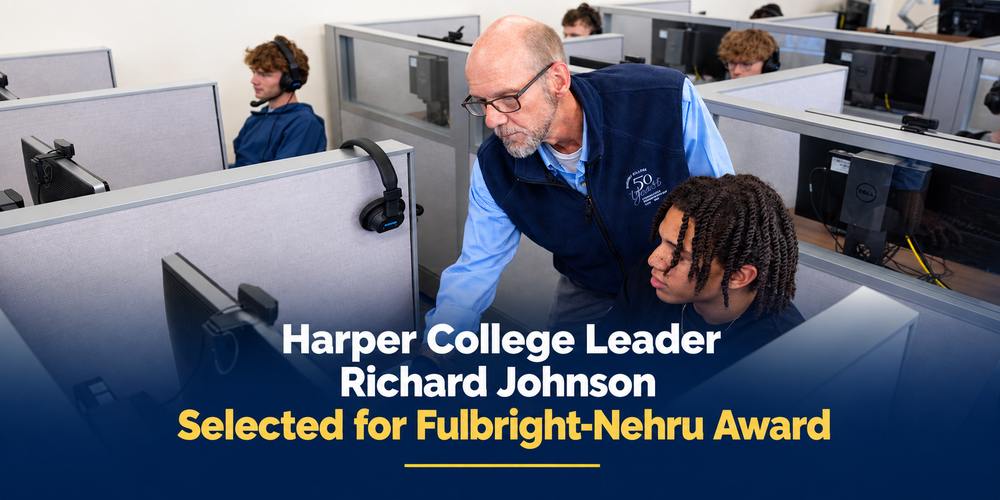
Harper College’s Richard Johnson Awarded Fulbright-Nehru Fellowship
Harper College's global education leader to visit India for a two-week programme examining higher education
Dr. Richard Johnson, director of the Center for Global Education and Engagement at Harper College, has been selected for the 2026–27 Fulbright-Nehru International Education Administrators Award, recognising his work in international education and global engagement.
As part of the prestigious fellowship, Johnson will travel to India in October 2026 to participate in a specialised programme focused on the country’s higher education and research landscape. The award is part of the Fulbright Scholar Program, a major international academic exchange initiative that supports educational and professional collaboration between the United States and countries around the world.
Richard Johnson to Explore India’s Higher Education System
The Fulbright-Nehru International Education Administrators Award is a two-week, fully funded professional development programme designed for U.S. higher education leaders. The programme allows participants to develop a deeper understanding of India’s higher education system while building relationships with institutions, education professionals and other stakeholders. For Johnson, the fellowship will provide an opportunity to examine approaches to higher education and student success in India and explore opportunities for future collaboration.
“Receiving a Fulbright International Education Administrators Award is a tremendous honor,” Johnson said.
He added that he was grateful for the opportunity to work with colleagues in India and learn from their approaches to higher education and student success. Johnson also said he hopes to bring new ideas and partnerships back to Harper College.
Programme Includes Campus Visits and Expert Engagement
During his visit, Johnson will take part in a range of academic and professional activities designed to provide first-hand insight into India’s education sector.
The programme is expected to include:
- Briefings on India’s higher education and research system
- Visits to Indian higher education institutions
- Meetings with government officials
- Discussions with international education professionals
- Professional networking opportunities
- Cultural activities
Through these engagements, participants will explore areas including academic structures, quality assurance and internationalisation strategies. The experience is intended to help U.S. higher education leaders better understand India’s educational environment while identifying opportunities for institutional partnerships and cross-cultural learning.
Strengthening International Education at Harper College
Johnson’s participation in the programme could also contribute to Harper College’s broader international education efforts. As director of the institution’s Center for Global Education and Engagement, he is responsible for work connected with international education and global engagement.
Exposure to India’s higher education practices and research environment may provide opportunities to develop new institutional relationships, exchange ideas around student success and expand international learning opportunities for Harper students and staff.
The fellowship therefore extends beyond individual professional development. Programmes such as the Fulbright-Nehru International Education Administrators Award can serve as a mechanism for building longer-term connections between higher education institutions across countries.
What Is the Fulbright-Nehru International Education Administrators Award?
The Fulbright-Nehru International Education Administrators Award is designed specifically for U.S. higher education administrators seeking greater knowledge of India’s education system. The award combines professional learning with international exchange, allowing participants to engage directly with academic institutions, policymakers and education professionals.
By bringing U.S. education leaders to India, the programme supports greater understanding between the two higher education systems and creates opportunities for future institutional cooperation.
For administrators working in international education, such exposure can be particularly valuable as colleges and universities increasingly seek partnerships that support student mobility, research collaboration and global learning.
Fulbright Programme Promotes Global Academic Exchange
The Fulbright Program is the U.S. government’s flagship international educational and cultural exchange programme. It promotes mutual understanding through academic and professional exchanges involving more than 160 countries.
Support for Fulbright activities comes from participating governments as well as host institutions, corporations and foundations around the world. The Institute of International Education implements the Fulbright U.S. Student and U.S. Scholar Programs on behalf of the U.S. Department of State. Johnson’s selection places Harper College within this wider international exchange network and highlights the role of community college leaders in advancing global engagement.
Why the Fellowship Matters for U.S.-India Higher Education Relations
The fellowship comes at a time when international higher education increasingly depends on partnerships that extend beyond student recruitment. For institutions in the United States and India, professional exchanges among higher education leaders can help develop a deeper understanding of institutional priorities, quality assurance systems, research structures and approaches to student support.
Johnson’s upcoming visit could therefore create opportunities for Harper College to strengthen connections with Indian institutions and identify models that could inform its own international education initiatives. The programme also demonstrates how academic exchange can benefit institutions at multiple levels, from individual professional development to broader institutional collaboration.
Editor’s Note
Richard Johnson’s Fulbright-Nehru fellowship is significant not simply because it recognises an individual higher education leader, but because it highlights the growing importance of international professional exchange alongside student mobility.
Higher education partnerships are often measured through visible outcomes such as overseas enrolments, exchange programmes and joint research. Yet sustained institutional relationships frequently begin with something less visible: administrators understanding how another country’s education system operates, building professional trust and identifying areas where institutions can work together.
Johnson’s two-week programme in India offers precisely that opportunity. Exposure to universities, policymakers and international education professionals can provide practical insights into quality assurance, academic structures and student success while opening the door to future collaboration.
For Harper College, the potential value lies in what happens after the fellowship. If the knowledge and relationships developed in India translate into new partnerships, international learning opportunities or improved approaches to student support, the impact could extend well beyond Johnson’s visit.
More broadly, the fellowship reflects the continuing role of the Fulbright programme in creating connections between education systems. At a time when international higher education is becoming more interconnected—and simultaneously more complex—such exchanges can help institutions move from transactional internationalisation toward deeper, more sustainable academic engagement.
Frequently Asked Questions
1. What Fulbright award has Richard Johnson received?
Richard Johnson has been selected for the 2026–27 Fulbright-Nehru International Education Administrators Award.
2. Who is Richard Johnson?
Johnson is the director of Harper College’s Center for Global Education and Engagement and works in the area of international education and global engagement.
3. When will Richard Johnson travel to India?
Johnson is scheduled to travel to India in October 2026 as part of the Fulbright-Nehru programme.
4. How long is the Fulbright-Nehru programme?
The programme is a two-week, fully funded professional development seminar for U.S. higher education leaders.
5. What will Johnson do during the India programme?
The programme includes briefings, campus visits, meetings with government officials and international education professionals, networking opportunities and cultural activities.
6. What is the purpose of the Fulbright-Nehru International Education Administrators Award?
The award allows U.S. higher education administrators to understand India’s higher education and research system while developing international partnerships and professional connections.
7. What is the Fulbright Program?
The Fulbright Program is the U.S. government’s flagship international educational and cultural exchange initiative. It supports academic and professional exchanges in more than 160 countries.

Skoobuzz
 Skoobuzz
 Skoobuzz
 Skoobuzz
 Skoobuzz


0 Comments (Please Login To Continue)